from 4 to 360h flexible workload
valid certificate in your country
What will I learn?
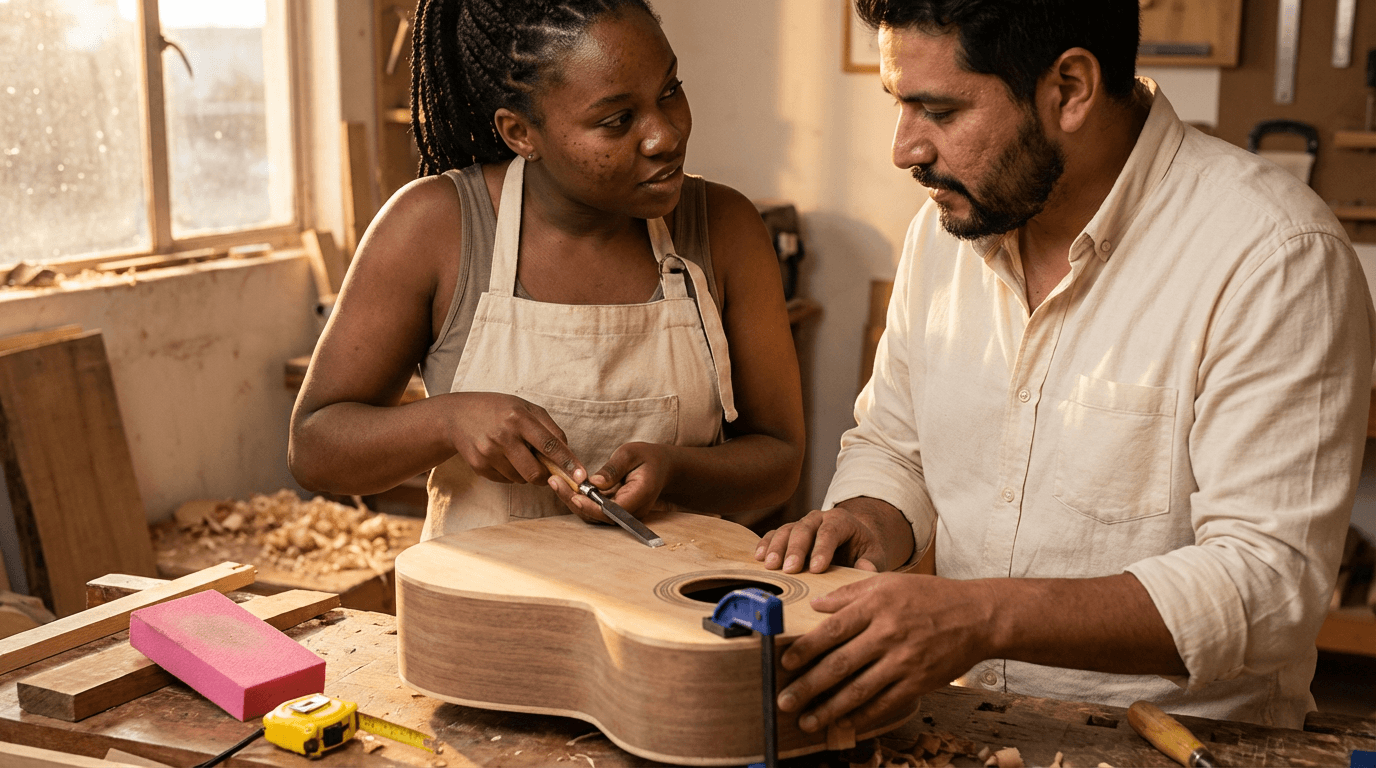
Dis course tek yuh through building and setting up a top-quality acoustic guitar from raw wood right to di final polish. Yuh wi learn bout picking wood, bracing, bending sides, neck joints, fretwork, bridge placing, finishing, and precise setup. Plus, yuh pick up key skills in inspection, repair, workshop safety, jigs, quality control, and tonal tuning fi dependable, great-sounding instruments.
Elevify advantages
Develop skills
- Precision guitar building: craft acoustic bodies, necks and bracing swiftly.
- Expert setup and fretwork: fine-tune action, relief, intonation and playability.
- Wood and material choice: pick tonewoods, glues and finishes fi true pro sound.
- Workshop tools and jigs: set up safe, efficient luthier workflows quick.
- Inspection and repair skills: spot cracks, neck problems and brace failures.
Suggested summary
Before starting, you can change the chapters and the workload. Choose which chapter to start with. Add or remove chapters. Increase or decrease the course workload.What our students say
Your classes are perfect. I purchased the one-year package and finally have the opportunity to follow various topics of my interest without needing to change platforms... I'm grateful for everything you do, I've already recommended you to other people...

Giulio CarloDigital Marketing Student
I like how the lessons are straight to the point and how I can change chapters and skip content I don't need.

Mariana FerresPhotography Student
I like the content and the way videos are presented and transcribed, which speeds up the process!

Luciana AlvarengaNail Design Student
The platform is fast, simple to use. The diversity of content and complementary videos help a lot with learning.

André FelipePrompt Engineering Student
FAQ
Who is Elevify? How does it work?
Do the courses come with a certificate?
Are the courses free?
What is the course duration?
What are the courses like?
How do the courses work?
What is the course time?
What is the cost or price of the courses?
What is an EAD or online course and how does it work?
PDF Course