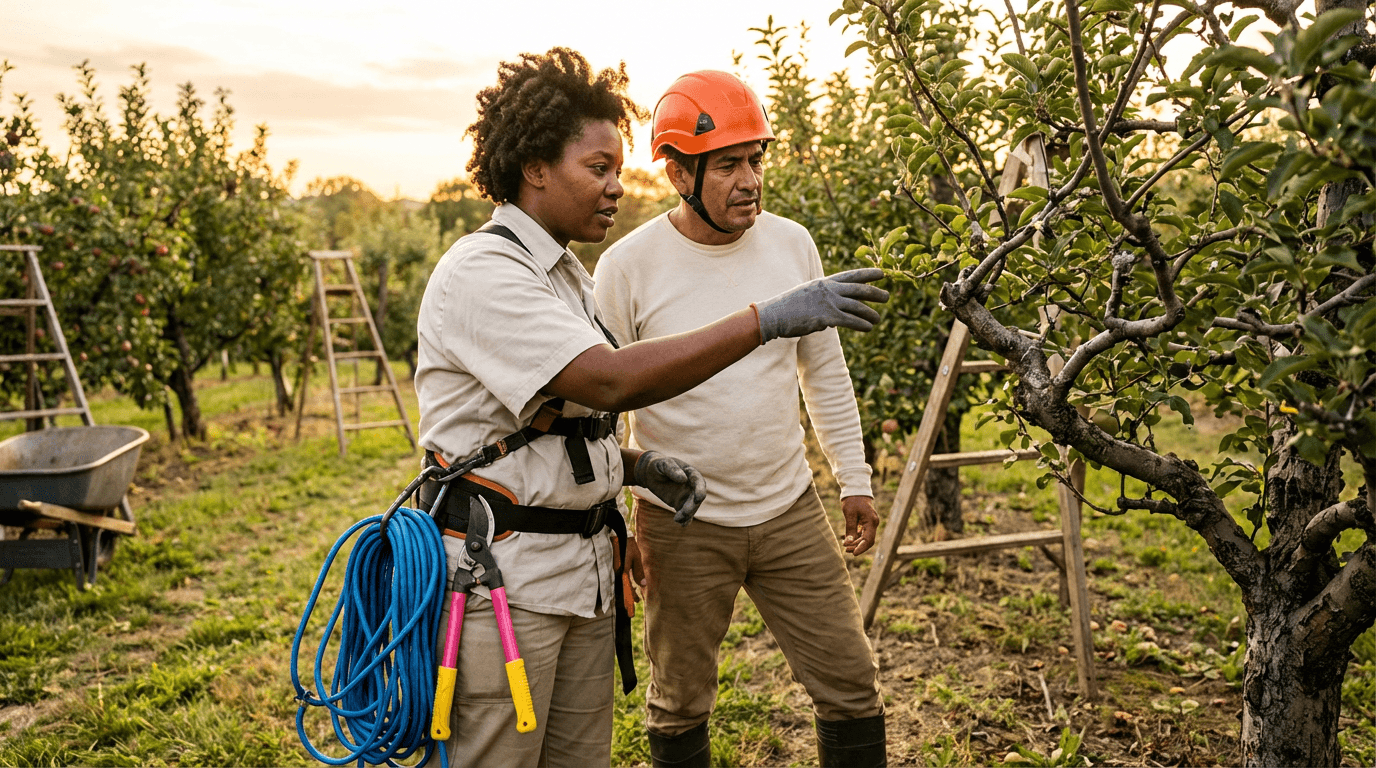
Lesson 1Rope selection and care: dynamic vs static, diameter, sheath/core, knot choices, inspection and retirement criteriaExplains arborist rope types, construction, an performance, including static vs dynamic behavior, diameter choices, an sheath-core design. Covers knot selection, inspection routines, cleaning, storage, an retirement criteria.
Static vs dynamic rope characteristicsDiameter, elongation, and hand feelCommon arborist knots and hitchesRope inspection, cleaning, and storageRetirement criteria and documentationLesson 2Work positioning, fall-arrest vs work-positioning distinctions, backup systems and redundancy (prusiks, autoblocks, progress-capturing devices)Explores safe work positioning in trees, clarifying differences between fall-arrest an work-positioning systems. Details backup methods using prusiks, autoblocks, an progress-capture devices to maintain redundancy aloft.
Work-positioning system componentsFall-arrest vs work-positioning criteriaBackup knots: prusiks and autoblocksProgress-capture devices and usesRedundancy planning in climbing systemsLesson 3Harness selection, harness fit, suspension trauma awareness and rescue considerationsFocuses pon selecting an fitting arborist harnesses fi comfort an safety. Addresses suspension trauma risks, early warning signs, an rescue strategies, including positioning, time limits, an post-rescue medical considerations.
Types of arborist harnesses and ratingsHarness adjustment and fit checksInspection, care, and retirement cuesMechanisms and signs of suspension traumaRescue planning for suspended workersLesson 4Personal protective equipment: helmets, eye/face protection, hand protection, chainsaw PPE, high-visibility and footwear standardsReviews essential arborist PPE, including helmets, eye an face protection, gloves, chainsaw protection, high-visibility garments, an footwear. Covers selection, standards, inspection, an integration wid climbing systems.
Helmet types, fit, and service lifeEye, face, and hearing protectionHand protection and glove selectionChainsaw protective legwear standardsHigh-visibility clothing and footwearLesson 5Climbing hardware and connectors: carabiners, rope rings, lanyards, cambiums savers, friction devices, ascenders, descendersDetails key climbing hardware used in arboriculture, including carabiners, rings, lanyards, friction devices, ascenders, an descenders. Emphasizes ratings, compatibility, inspection, an correct orientation to prevent failures.
Carabiner types, ratings, and locking stylesRope rings, swivels, and rigging interfacesLanyards and adjusters for positioningFriction devices, descenders, and controlAscenders, backups, and misuse preventionLesson 6Modern rope access systems: single rope technique (SRT) and double rope technique (DRT) principles, advantages, limitationsIntroduces modern rope access in tree work, comparing SRT an DRT systems. Covers core principles, equipment setups, efficiency, an limitations, plus changeovers, ascent an descent control, an rescue implications.
Core principles of SRT in arboricultureCore principles of DRT in arboricultureSRT vs DRT efficiency and limitationsTypical ascent and descent configurationsRescue planning in SRT and DRT systemsLesson 7Regulatory and site safety protocols: worksite exclusion zones, hand-signalling, traffic management for farm roads, permit-to-work basicsAddresses regulatory an site safety practices, including exclusion zones, communication, an traffic control. Introduces permit-to-work concepts, job briefings, an documentation to manage risks pon farms an roadside sites.
Job briefing and permit-to-work basicsWorksite exclusion zones and barriersHand signals and radio communicationTraffic management on farm and roadsidesIncident reporting and recordkeepingLesson 8Staying current: sources for standards and guidance (ANSI Z133, Tree Care Industry Association, International Society of Arboriculture guidance)Guides arborists in staying current wid safety standards an best practices. Highlights ANSI Z133, TCIA, an ISA resources, plus manufacturer bulletins, training updates, an methods fi integrating changes into daily work.
Overview of ANSI Z133 requirementsUsing TCIA resources and trainingISA publications and credential updatesManufacturer notices and instructionsUpdating company procedures and formsLesson 9Aerial rescue planning: rescue sequence development, patient packaging, lowered vs hauled rescue, practiced scenariosCovers pre-planned aerial rescue, from assessing di scene to executing safe, efficient rescues. Emphasizes sequence development, patient packaging, choosing haul or lower methods, an building realistic, documented practice drills.
Scene size-up and hazard controlRescue sequence and role assignmentPatient assessment and packaging methodsLowered vs hauled rescue decision-makingDesigning and documenting practice drills