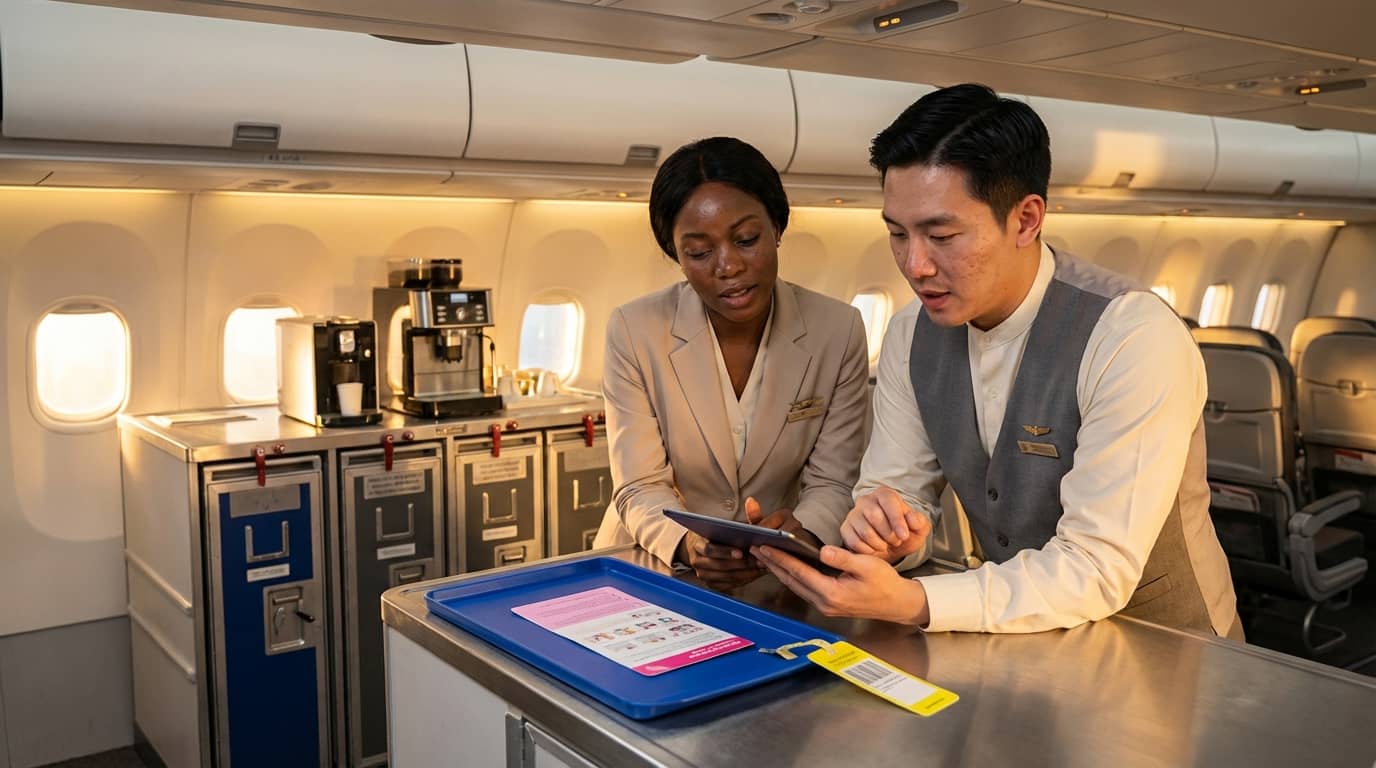
Lesson 1Communication techniques for nervous or confused passengers: de-escalation phrases, clear directions, empathy and repetitionThis lesson teaches ways to spot nervous or confused passengers, use calm words, show understanding, repeat things, and use pictures to explain, so to ease worry and stop problems from growing.
Spotting worry and confusion signsUsing calm, simple, clear wordsUnderstanding, confirming, and comfortingRepeating and showing with actionsCalming down and calling the head attendantLesson 2Passenger boarding management: priority boarding, families with children, unaccompanied minors, reduced mobility assistanceThis lesson explains how to group passengers for boarding, handle special groups like priority and families, help those with less mobility, and work with gate staff to keep boarding safe, quiet, and quick.
Boarding groups and area teamworkPriority and special guest handlingFamilies with kids and pushchairsUnaccompanied kids boarding helpAssistance for passengers with less mobilityLesson 3Required documentation and regulatory checks (IDs, licenses, manifests, NOTOC, flight plans)This lesson covers checking crew IDs and papers, passenger lists, NOTOC, and other rule documents, and working with the pilots to confirm everything is legal before closing the door.
Crew IDs, papers, and health checksPassenger lists and seat numbersNOTOC details and safety effectsFlight plans and work papersLast checks before door closeLesson 4Welcoming passengers: scripted greetings, language choices, body language, first impressionsThis lesson focuses on greeting passengers at the door, using set words, picking languages, and friendly phrases, with good posture and eye contact to make a positive, safe first meeting.
Door spots and greeting rolesUsing standard welcome words and changesLanguage pick and friendly wordsBody moves, eye contact, and smilesHandling first meetings during waitsLesson 5Crew briefing procedures: roles, special passengers, turbulence, security threats, cultural or language notesThis lesson details how crew meetings work, including job roles, safety and security talks, special passengers, turbulence plans, and notes on culture or languages that affect talking and service.
Meeting time, place, and leaderJob and area roles in the cabinReview of safety, security, and dangersSpecial passengers and health worriesTurbulence, paths, and language notesLesson 6Documentation and handover for special needs: special meals, wheelchair assistance, UMNR paperwork and briefingsThis lesson explains reviewing and noting special service needs, like special foods, wheelchair help, and unaccompanied minor handling, making sure papers, meetings, and talks among crew are correct.
Reading special service codesSpecial food lists and sharing plansWheelchair help teamworkUMNR papers and handoff chainInforming crew on special needs guestsLesson 7Personal presentation, uniform standards, grooming and professional conductThis lesson details uniform rules, grooming hopes, and clean habits, and how standing, voice tone, and good behavior shape the airline's look and build passenger trust and teamwork.
Uniform parts and right wearGrooming, hair, makeup, and extrasClean habits and scent rulesBody moves, standing, and face looksProfessional voice, words, and limitsLesson 8Carry-on baggage policies and bin management: weight/size enforcement, gate checks, securing loose itemsThis lesson explains carry-on rules, checking size and weight, when to check at gate, and loading and fixing items in overhead bins and under seats to keep safety, comfort, and on-time starts.
Standard and airline carry-on limitsMeasuring and weighing bags at gateSpotting and tagging gate-checked bagsSafe loading of overhead bins and storageFixing loose items under seats and in kitchensLesson 9Safety equipment checks: life vests, oxygen, firefighting, AED, first aid kit, emergency lightingThis lesson covers before-flight checks of life vests, oxygen setups, fire tools, AED, first aid boxes, and emergency lights, with lists, fault reports, and work with pilots and repair teams.
Cabin safety gear check listsLife vests and float checksOxygen tanks, masks, and panel checksFire tools, breathing gear, and smoke alarmsAED, first aid, and emergency light checksLesson 10Pre-flight cabin and galley inspections: seating, overhead bins, cabin cleanliness, food service setupThis lesson covers step-by-step checks of seats, belts, overhead bins, toilets, and lights, plus kitchen gear, food, and service items, ensuring the cabin is clean, full, and ready before boarding.
Seat, belt, and table checksOverhead bins, storage, and coat spotsToilet clean and supply checksKitchen gear and lock checksFood, carts, and service item counts