Lesson 1Common mistakes to avoid: misalignment, improper torque, contaminated friction surfaces, and inadequate engine supportAvoid usual errors that cause early clutch failure or safety problems. Topics include disc misalignment, wrong torque, dirty friction surfaces, and poor engine or gearbox support ways.
Recognizing disc and hub misalignmentConsequences of incorrect torque valuesPreventing oil and grease contaminationAvoiding damage from poor supportPost-repair checks for noise and judderLesson 2Flywheel service: resurfacing instructions, torque sequence and final runout checkPrepare the flywheel for reuse or replacement. Learn cleaning ways, when resurfacing is okay, torque order and values for flywheel bolts, and how to measure final runout against VW specs.
Cleaning flywheel and crank flangeResurfacing limits for dual-mass unitsFlywheel bolt torque and angle sequenceUsing threadlocker where specifiedMeasuring and interpreting flywheel runoutLesson 3Removing ancillary components: airbox, intake piping, battery, cross-members and heat shieldsRemove parts blocking access to the transmission on the Golf/GTI. You will learn safe removal of battery, airbox, intake piping, crossmembers, and heat shields while marking hardware for easy reassembly.
Battery, tray, and ECU bracket removalAirbox and intake piping removal stepsHeat shield and undertray removalFront crossmember and brace removalLabeling fasteners and clip locationsLesson 4Reassembly of removed components and torque checks: crossmember, axles, linkages, and heat shield reinstallationPut back all removed parts and check torque on key fasteners. This covers crossmember, axle, linkage, and heat shield fitting, plus final fluid fill and underbody check before road test.
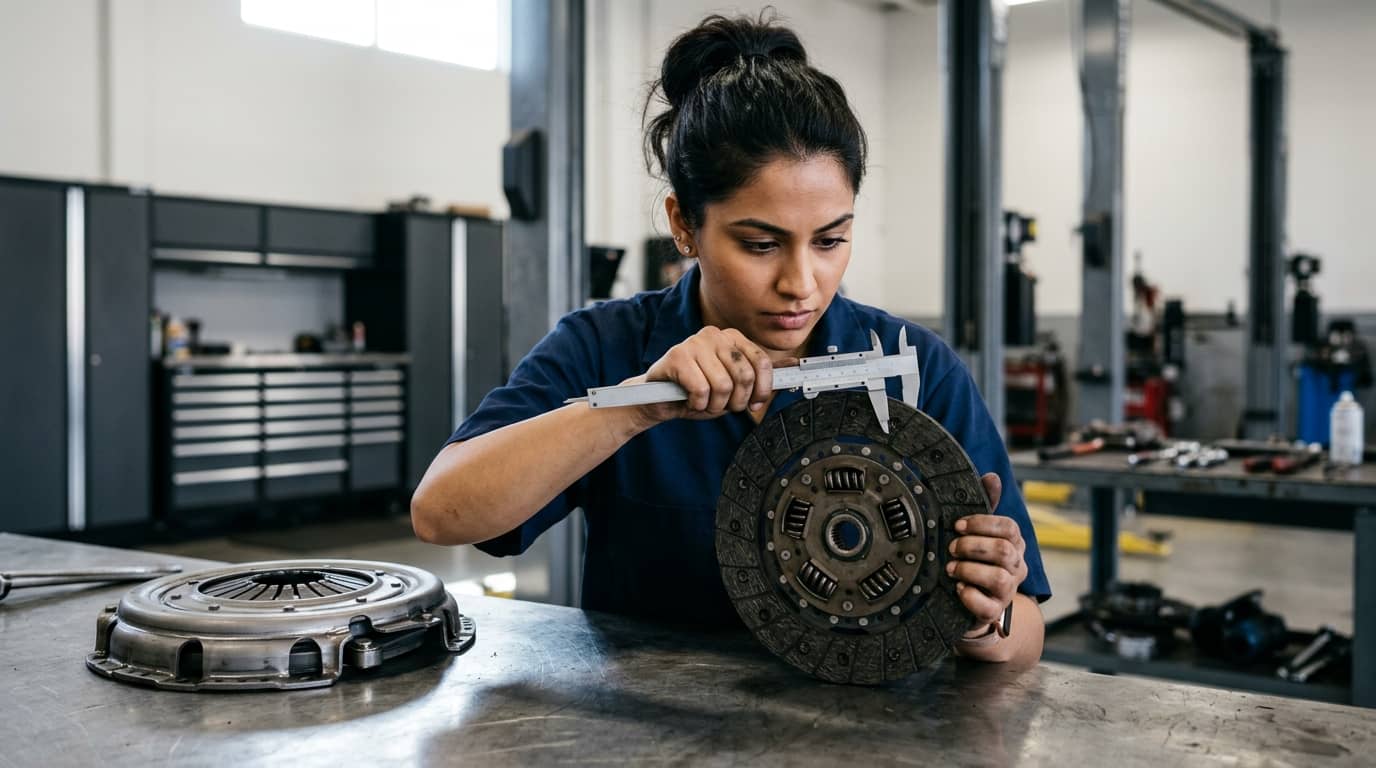
Reinstalling subframe and crossmembersRefitting axles and torquing axle nutsReattaching shifter cables and bracketsReinstalling shields, trays, and intakeRefilling gearbox oil and leak checksLesson 5Inspection protocol for removed parts: disc thickness, rivet wear, pressure plate mount face, flywheel surface and bearing checksCheck all removed clutch parts to decide what to replace. This includes disc thickness, rivet wear, pressure plate surface, flywheel condition, release bearing, pilot bearing, and fork wear spots.
Measuring disc thickness and rivet depthChecking pressure plate face and springsAssessing flywheel surface and hot spotsInspecting release and pilot bearingsExamining fork, pivot, and guide tubeLesson 6Tools and special equipment setup: impact wrenches, torque wrench, transmission jack, clutch alignment tool, engine supportSet up all tools and special gear before opening the drivetrain. This covers torque wrenches, impact tools, transmission jack, clutch alignment tools, and engine support for the Golf/GTI.
Selecting metric hand tools and socketsUsing impact tools without damageTorque wrench ranges and calibrationSetting up transmission jack safelyEngine support bar and sling optionsLesson 7Installing new clutch components: fitment order, use of alignment tool, torque specifications for pressure plate and pilot bearingInstall the new clutch kit in right order and way. You will use alignment tool, follow torque specs for pressure plate and pilot bearing, and check free movement of disc on input splines.
Confirming correct replacement partsOrienting disc and pressure plate marksUsing clutch alignment tool accuratelyTorquing pressure plate bolts in stagesInstalling pilot and release bearingsLesson 8Preparing mating surfaces: flywheel cleaning, checking pilot bore, cleaning bellhousing and clutch splinesClean and prepare all mating surfaces before new clutch install. This covers degreasing flywheel, checking crank pilot bore, cleaning bellhousing inside, and brushing clutch disc splines.
Degreasing flywheel and pressure plateInspecting and cleaning crank pilot boreCleaning bellhousing dust and oilBrushing and lubricating clutch splinesProtecting friction surfaces from greaseLesson 9Preparation and safety: workspace layout, jack and stands points, wheel chocks, battery disconnect and PPESet up a safe, good workspace for clutch service on FWD VW. Learn right jack and stand spots, wheel chocks, battery disconnect, and key PPE to stop injuries and vehicle damage.
Plan workspace layout and lightingCorrect jack and jack-stand positionsWheel chock placement and parking brake useBattery disconnect and airbag precautionsRequired PPE and safe lifting habitsLesson 10Reinstalling transmission: aligning input shaft, tightening sequence, replacing seals and fasteners to specPut transmission back on engine without forcing parts. Learn to align input shaft with clutch disc, seat bellhousing on dowels, follow tightening order, and renew seals and hardware to spec.
Aligning transmission and engine dowelsGuiding input shaft through clutch discDrawing bellhousing flush without pryingTorque sequence for bellhousing boltsReplacing seals and stretch bolts to specLesson 11Transmission unbolt and removal: bellhousing bolts, starter removal, careful gearbox lowering and common pitfallsUnbolt and remove transmission from engine safely. Details bellhousing bolt spots, starter removal, dowel alignment, and steady gearbox lowering without damaging wiring and sensors.
Identifying bellhousing bolt locationsStarter motor removal and wiring careSeparating bellhousing from dowel pinsLowering gearbox on transmission jackAvoiding strain on harnesses and hosesLesson 12Clutch assembly removal: loosening pressure plate bolts, safe support of flywheel/pressure plate, and disposal of old partsRemove clutch assembly without harming flywheel or crank. Learn right order for loosening pressure plate bolts, supporting assembly, and handling old parts for check or disposal.
Marking clutch orientation before removalLoosening pressure plate bolts evenlySafely supporting pressure plate and discRemoving and handling dual-mass flywheelBagging and labeling old parts for reviewLesson 13Supporting engine and separating transmission: engine support methods, drain gearbox oil, remove driveshafts/CV joints and linkagesSupport engine well and separate transmission without stressing mounts. Learn engine support bar setup, draining gearbox oil, removing driveshafts, CV joints, mounts, and shift linkages on 2.0 TDI FWD.
Positioning and securing engine support barDraining gearbox oil and disposing safelyRemoving driveshafts and CV jointsDisconnecting shifter cables and bracketsUnbolting transmission mounts and braces