Medical Laser Training
5/5
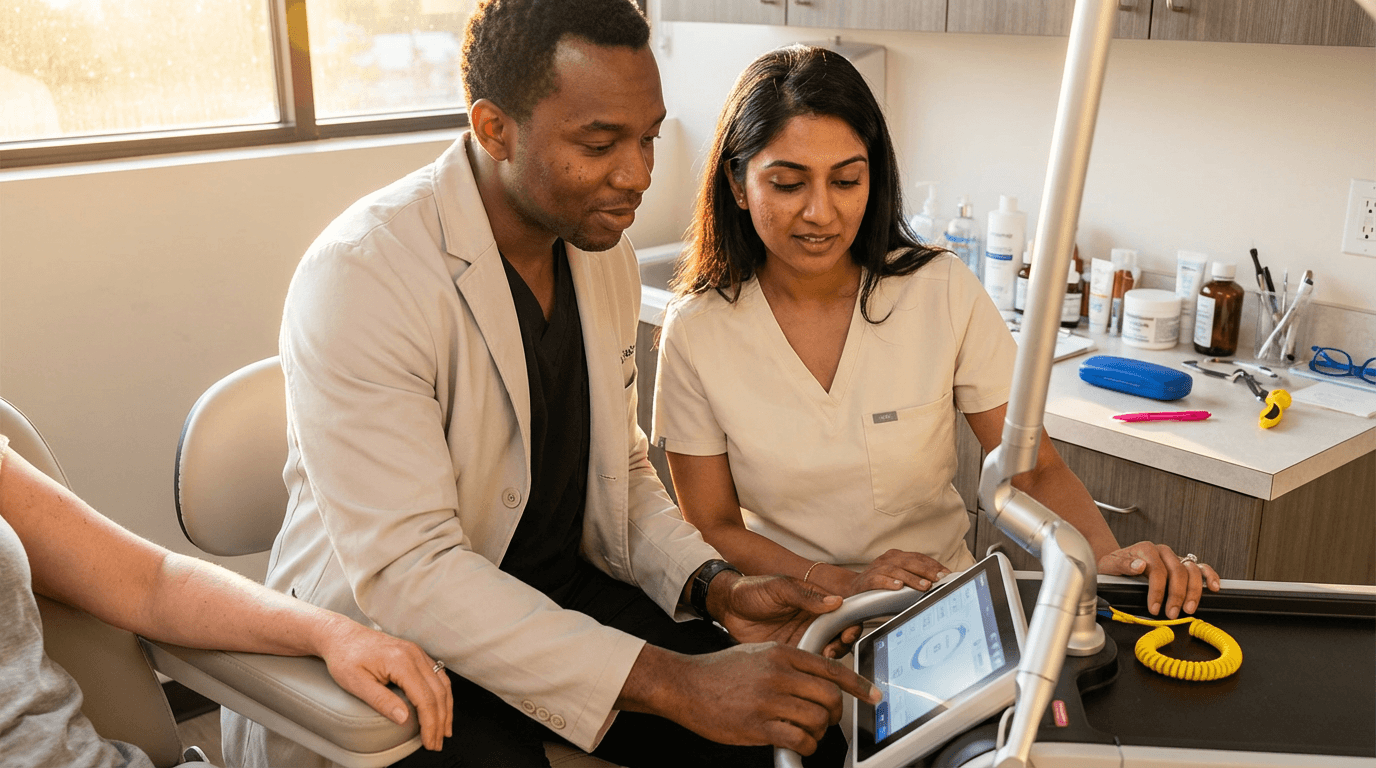
Gain expertise in using medical lasers safely for treating acne scars, reducing hair, and removing benign lesions. The course covers device-specific settings, patient selection, complication management, and clinic safety measures, enabling you to achieve consistent results while safeguarding patients and your practice.
5.0 in the evaluation
from 4 to 360h flexible workload
valid certificate in your country
What will I learn?
This course provides practical skills for safe and effective use of CO2, Nd:YAG, and IPL lasers in medical settings. You will learn patient selection, test spots, parameter settings, techniques for acne scars, hair reduction, and benign lesions, plus complication prevention, aftercare, documentation, and clinic safety protocols to ensure reliable results.
Elevify advantages
Develop skills
- Safe laser operations in clinic: perfect room setup, PPE usage, plume and fire control.
- Fractional CO2 treatments for acne scars: choose parameters, apply safely, minimise PIH risks.
- Hair removal using Nd:YAG and IPL: tailor plans to skin types, prevent burns and pigmentation issues.
- Laser removal of benign lesions: select right devices, reduce scarring, handle pigment changes.
- Managing complications: address burns, infections, scarring promptly and effectively.
Suggested summary
Before starting, you can change the chapters and workload. Choose which chapter to start with. Add or remove chapters. Increase or decrease the course workload.What our students say
Your lessons are perfect. I purchased the one-year package and finally have the opportunity to follow various topics of my interest without needing to change platforms... I thank you for everything you do, I've already recommended you to other people...

Giulio CarloDigital Marketing Student
I like how the lessons are straight to the point and how I can change chapters and skip content I don't need.

Mariana FerresPhotography Student
I like the content and the way videos are presented and transcribed, which speeds up the process!

Luciana AlvarengaNail Design Student
The platform is fast, simple to use. The diversity of content and complementary videos really help with learning.

André FelipePrompt Engineering Student
FAQ
Who is Elevify? How does it work?
Do the courses have certificates?
Are the courses free?
What is the course workload?
What are the courses like?
How do the courses work?
What is the duration of the courses?
What is the cost or price of the courses?
What is an online course and how does it work?
PDF Course