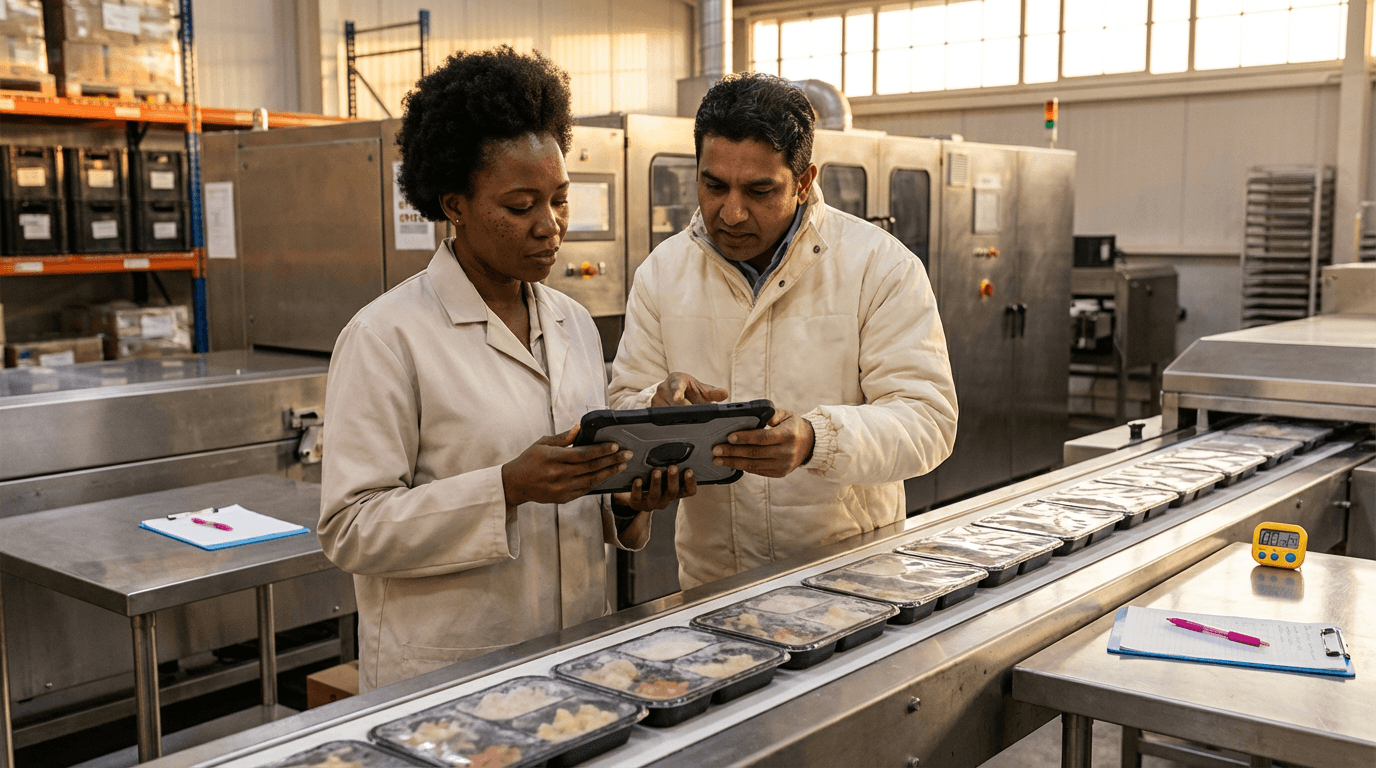
Lesson 1Hazard analysis for frozen ready meals: biological, chemical, physical hazards to considerThis part guides you through danger checks for frozen ready meals, covering germ, chemical, and physical dangers, their sources, seriousness, chance, and how results lead to control steps and CCP choices.
Process mapping for hazard reviewBiological hazards and growth factorsChemical hazards and contamination routesPhysical hazards and entry pointsRisk ranking: severity and likelihoodLinking hazards to controls and CCPsLesson 2Microbiological control program: sampling plans (ingredient, finished product), acceptance criteriaThis part explains how to plan a germ control program for frozen meals, including ingredient and finished sampling plans, test ways, acceptance rules, and how to handle bad results.
Selecting target microorganismsSampling plans for ingredientsFinished product and environmental testsMicrobiological limits and standardsActions for out-of-spec resultsProgram review and trend analysisLesson 3CCP1 — Cooking step: what can go wrong, monitoring (time/temperature probes), corrective actionsThis part covers the cooking step as CCP1, explaining what can fail, how to set time and temperature limits, use checked probes, record results, and take fix actions when key limits are missed.
Target lethality and critical limitsOven and kettle validation studiesCore temperature probing techniquesReal-time monitoring and recordsHandling undercooked product lotsTrend analysis and process improvementLesson 4Quality control for sensory attributes: texture, taste, color monitoring and acceptance criteriaThis part explains how to set measurable taste standards for frozen meals, including feel, flavor, smell, and color, and how to watch them using groups, tools, and acceptance rules linked to release choices.
Defining sensory attributes for frozen mealsReference standards and control samplesSensory panel setup and trainingInstrumental color and texture measurementsSensory acceptance limits and scoringLinking sensory results to batch releaseLesson 5Portion consistency controls: checkweighers, in-line vision systems, sampling plans and correction rulesThis part covers ways to keep portion weights and counts steady, using weight checkers, in-line sight systems, and sampling plans, plus rules for fixes, rework, and records when problems are found.
Legal and customer weight requirementsCheckweigher setup and verificationIn-line vision for portion uniformitySampling plans and control chartsCorrection rules and line adjustmentsHandling underweight and overweight unitsLesson 6CCP2 — Cooling/pre-freeze temperature control: risks of slow cooling, monitoring methods, corrective actionsThis part focuses on cooling and pre-freeze control as CCP2, explaining risks of slow cooling, target product temperatures, watching tools, and fix actions when cooling paths or equipment fail.
Microbial risks from slow coolingCooling profiles and target limitsBlast chiller and tunnel operationTemperature monitoring and loggingCorrective actions for slow coolingVerification of cooling CCP performanceLesson 7Defining Critical Control Points (CCP): selection methodology and documentationThis part describes how to find and record Critical Control Points in frozen meal making, using danger checks, choice trees, and proof data to support CCP picks, limits, watching, and duties.
Linking hazard analysis to CCP selectionUsing CCP decision trees correctlyValidating CCP effectivenessDocumenting critical limits and rationaleAssigning monitoring responsibilitiesReview and revalidation of CCPsLesson 8CCP3 — Metal detection/foreign body control: sensitivity settings, verification tests, response to failsThis part explains how to control metal and other foreign bits using metal finders and X-ray if needed, including sensitivity setting, proof, regular checks, and set responses to find fails or alarms.
Risk assessment for foreign materialsMetal detector selection and layoutSensitivity setting and test piecesRoutine performance verification testsResponse to detector alarms and failsInvestigation and preventive actionsLesson 9Allergen control and cross-contact prevention: segregation, cleaning validation, labelling controlsThis part details allergen risk handling in frozen meal plants, including mapping allergen sources, separating, proved cleaning, label control, and check activities to stop cross-touch and wrong labelling.
Allergen mapping and risk assessmentSegregation and dedicated equipmentAllergen changeover and cleaningCleaning validation and verificationLabel approval and artwork checksManaging reformulations and new allergensLesson 10Record keeping, traceability and recall preparedness: batch records, supplier certificates, lot codingThis part details how to build strong records and tracking for frozen meals, covering batch papers, supplier proofs, lot coding, and recall practice to ensure quick, aimed product pull when needed.
Mandatory production and QC recordsSupplier approval and COA managementLot coding design and label controlTraceability tests and mock recallsRecall decision trees and rolesRecord retention and data integrity