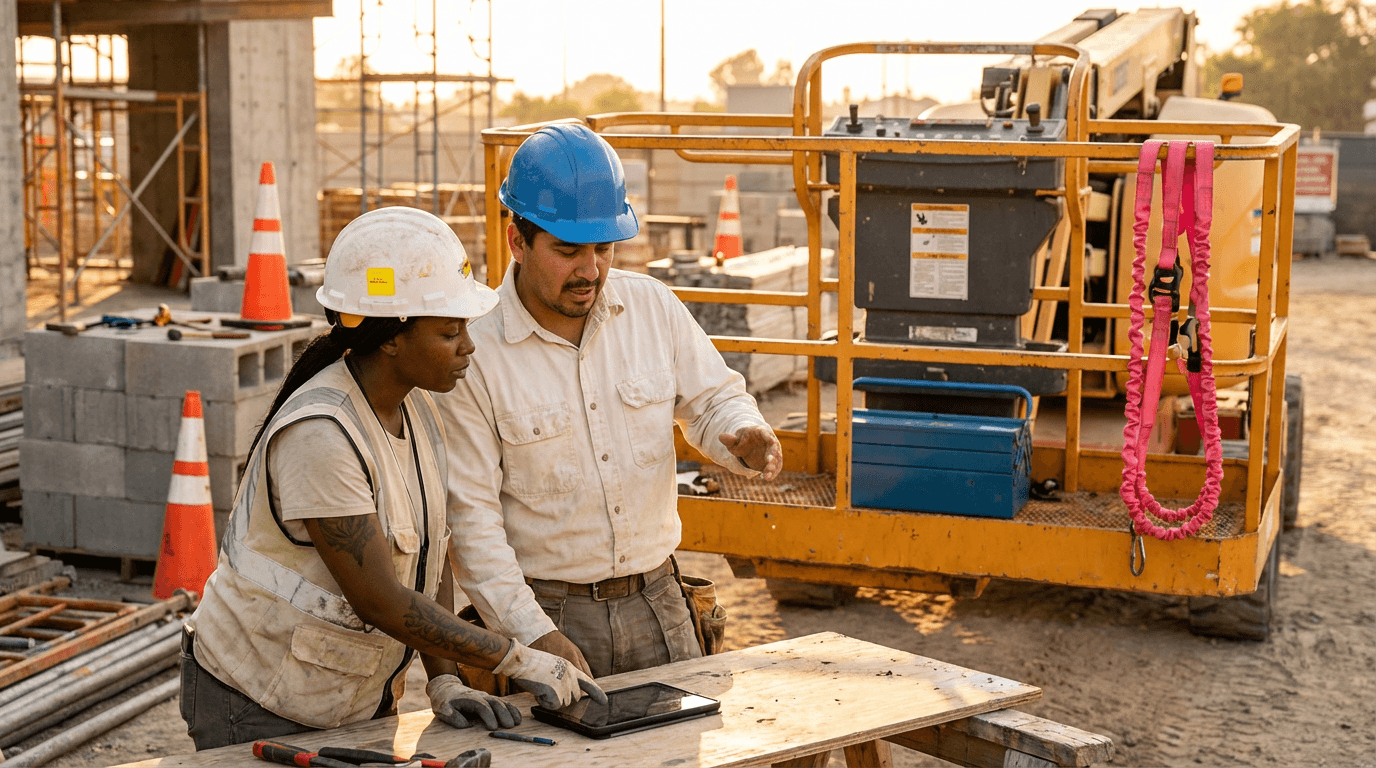
Lesson 1Finding the maker’s inspection list and operator guidesThis part teaches how to find and understand the maker’s inspection list and operator guides. Learners make sure they use the right papers, follow needed steps, and know limits, warnings, and steps for specific models.
Finding the right operator and service guidesReading warnings and limits for specific modelsFollowing the maker’s inspection listKnowing how often to inspectGetting digital or built-in papersLesson 2Power and electrical checks: batteries, wires, alternator, and isolation stepsThis part looks at MEWP power and electrical system checks. Learners check batteries, engines, wires, alternators, and isolation tools, making sure connections are tight, charge is good, and shutdown is safe before using the platform.
Checking batteries, liquid, and endsLooking at engine oil, coolant, and fuelChecking wires, joins, and cable pathsTesting alternator power and charge lightsUsing lockout and electrical isolationLesson 3Hydraulic system checks: pipes, joins, fluid amounts, leaks, and cylinder strengthThis part explains how to check MEWP hydraulic systems for leaks, damage, and work issues. Learners look at pipes, joins, cylinders, and fluid levels, spotting things that could cause sudden moves, loss of hold, or harm to the land.
Checking pipes, joins, and quick linksLooking at hydraulic fluid amount and dirtExamining cylinders, rods, and seals for harmSpotting active leaks and slow dripsHandling leaks and land protectionLesson 4Control tests: main, backup, dead-man, and emergency lowerThis part details how to test all MEWP controls before use. It includes main and backup controls, dead-man parts, speed limits, and emergency lower, making sure the machine works right and stops safe under operator orders.
Testing ground and platform main controlsChecking backup and extra control spotsLooking at dead-man controls and on switchesConfirming smooth speed and easy workTesting emergency stop and lowerLesson 5Inspection papers: filling pre-start forms, defect tags, and hold/lockout stepsThis part covers how to fill MEWP pre-start inspection papers right. Learners practice writing findings, tagging bad units, and using hold or lockout steps to stop use until fixes are checked and noted.
Filling daily pre-start formsWriting defects, patterns, and next stepsPutting defect tags and out-of-use labelsUsing hold and lockout stepsKeeping and holding inspection papersLesson 6Tyres, tracks, axles, and supports: wear, air, straightness, and ground touch areasThis part deals with checking tyres, tracks, axles, and supports. Learners check wear, air, straightness, and ground touch, making sure the MEWP has good hold, grip, and steady on the planned ground before going up.
Checking tyre wear, cuts, and side harmLooking at tyre air and foam fillChecking tracks, rollers, and tight systemsLooking at axles, centres, and steer partsConfirming support pads and ground touchLesson 7Reporting and raising issues: bad equipment reports, stop-work power, and fix check papersThis part explains how to spot unsafe MEWP states, use stop-work power, and write defects. It covers report paths, isolation steps, fix checks, and record keeping to keep bad units out of use.
Spotting big and small MEWP defectsUsing stop-work power and refusing bad gearInside report paths and talk flowTagging, locking, and taking units out of useWriting fixes and back-to-use checksLesson 8Safety tools and emergency systems: alarms, locks, platform load sensor, and lower systemsThis part covers checking and testing MEWP safety tools and emergency systems. Learners check alarms, locks, load sensors, and emergency lower parts to make sure the platform stays safe in normal and odd work.
Testing tilt, overload, and move alarmsChecking locks and limit switchesLooking at platform load sense and sensorsChecking emergency stop and lowerTesting hand lower and ground control systemsLesson 9Visual walk-around: arm, platform, controls, rails, and weld statesThis part guides a full MEWP walk-around check. Learners look at arms, platforms, controls, rails, welds, and build parts, spotting cracks, bends, rust, and missing bits before working up high.
Checking arm parts and joint pointsLooking at platform floor, gate, and foot boardsConfirming rails, mid rails, and tie pointsChecking seen welds and build membersLooking at stickers, signs, and safety labels