Beehive Products Processing (Honey, Wax, Propolis) Course
Master the complete processing chain for honey, beeswax, and propolis — from raw harvest to finished, shelf-stable products. This course covers extraction, purification, value-added formulation, quality testing, and regulatory compliance. Whether you are scaling a small apiary or launching a commercial operation, you will gain the technical skills to produce and sell hive products with confidence.
from 4 to 360h flexible workload
valid certificate in your country
What will I learn?
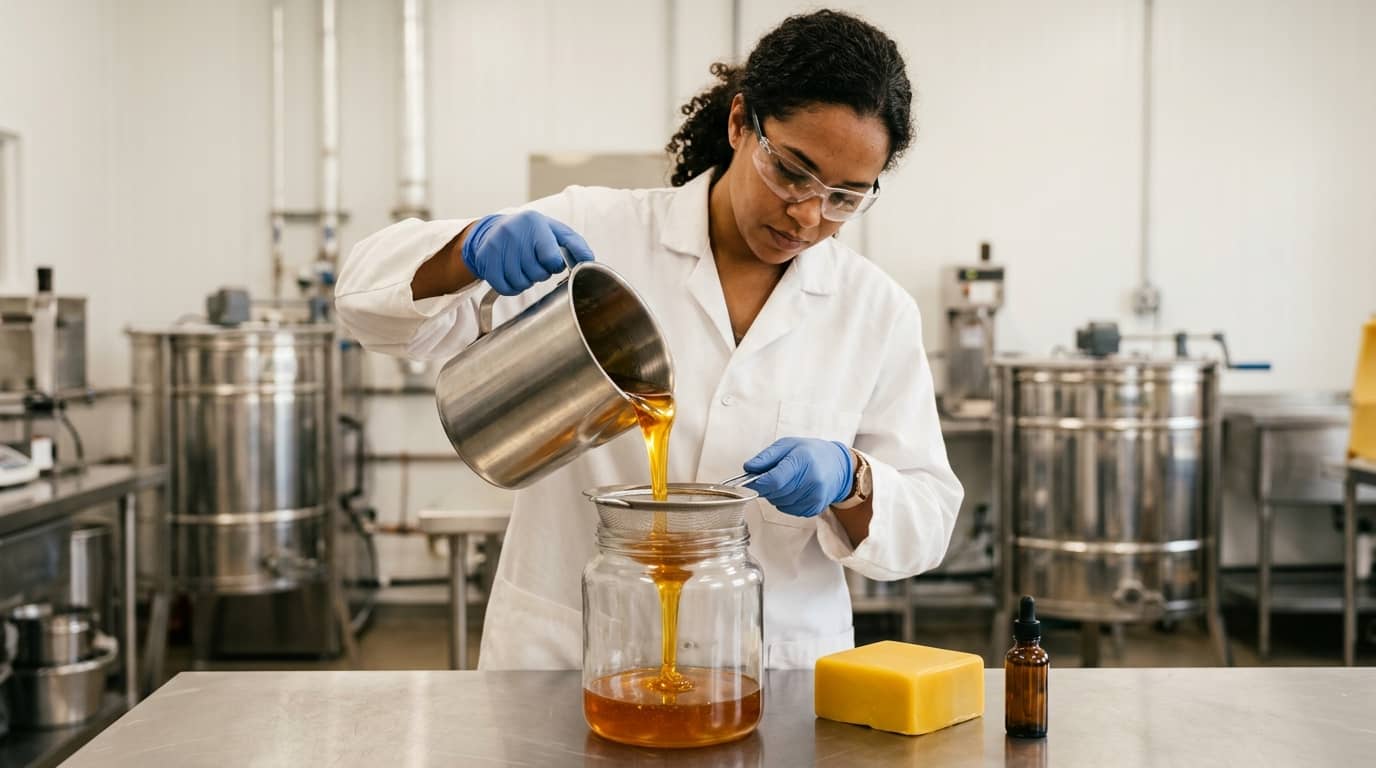
This course takes you through every stage of hive product processing, starting with raw material quality assessment and food safety fundamentals. You will learn honey extraction, moisture management, filtration, pasteurisation, and packaging for commercial shelf life. Beeswax rendering, purification, and grading methods are covered in full, alongside propolis extraction and standardisation techniques. You will also develop value-added products including cosmetics, health formats, and honey blends. The course includes GMP and HACCP implementation, traceability systems, export compliance, and business planning tools to help you run a profitable, audit-ready operation.
Elevify advantages
Develop skills
- Honey Extraction and Filtration: Operate extractors and filtration systems to produce market-ready honey.
- Propolis Standardisation: Apply ethanol and aqueous extraction methods to quantify active compounds consistently.
- Beeswax Rendering: Execute solar, steam, and hot-water methods to produce commercial-grade purified wax.
- HACCP and GMP Compliance: Build audit-ready documentation systems that meet export and certification requirements.
Suggested summary
Before starting, you can change the chapters and workload. Choose which chapter to start with. Add or remove chapters. Increase or decrease the course workload.What our students say
Your lessons are perfect. I purchased the one-year package and finally have the opportunity to follow various topics of my interest without needing to change platforms... I thank you for everything you do, I've already recommended you to other people...

Giulio CarloDigital Marketing Student
I like how the lessons are straight to the point and how I can change chapters and skip content I don't need.

Mariana FerresPhotography Student
I like the content and the way videos are presented and transcribed, which speeds up the process!

Luciana AlvarengaNail Design Student
The platform is fast, simple to use. The diversity of content and complementary videos really help with learning.

André FelipePrompt Engineering Student
FAQ
Who is Elevify? How does it work?
Do the courses have certificates?
Are the courses free?
What is the course workload?
What are the courses like?
How do the courses work?
What is the duration of the courses?
What is the cost or price of the courses?
What is an online course and how does it work?
PDF Course