


flexible workload of 4 to 360h
valid certificate in your country
What will I learn?
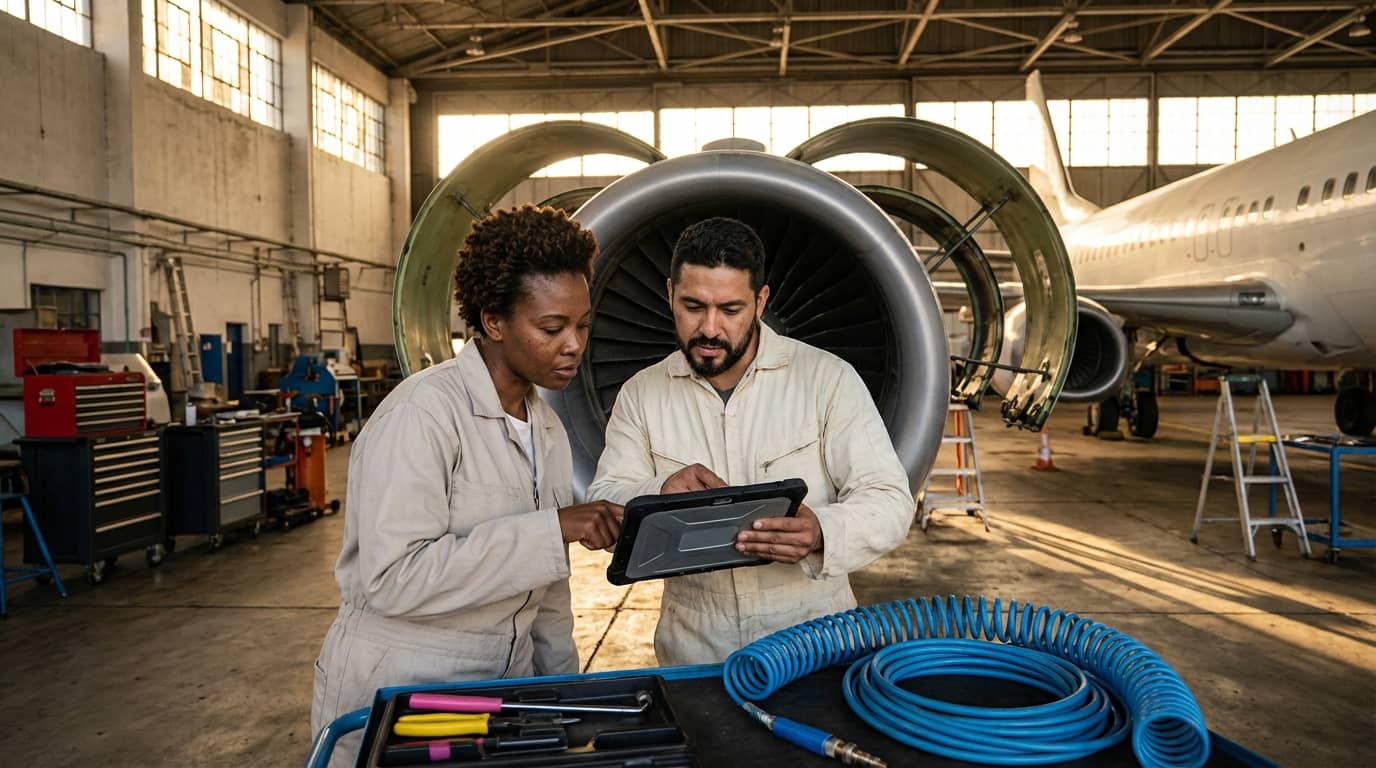
The Aircraft Mechanic Course provides targeted, practical training to troubleshoot twin-engine turboprop systems, diagnose vibration, landing gear noise, and ITT fluctuations, and plan safe, efficient repairs. Learn to use AMM, IPC, SBs, ADs, wiring diagrams, and logbooks, apply precise inspection techniques, verify fixes with structured tests, and complete compliant recordkeeping and quality sign-off for reliable, repeatable results.
Elevify advantages
Develop skills
- Plan safe, efficient aircraft repairs with clear risk, tooling, and QA steps.
- Diagnose and fix ITT fluctuations using data trends, borescope, and engine runs.
- Inspect and repair landing gear noise with precise checks, tests, and adjustments.
- Troubleshoot airframe vibration and roll using structured checks and analyzers.
- Use AMM, IPC, SBs, and ADs to document, certify, and release aircraft maintenance.
Suggested summary
Before starting, you can change the chapters and the workload. Choose which chapter to start with. Add or remove chapters. Increase or decrease the course workloadWhat our students say
Your lessons are perfect. I got the one-year package and finally have the chance to follow several topics I'm interested in without having to switch platforms... I appreciate everything you do, and I've already recommended you to others...

Giulio CarloDigital Marketing Student
I like how the lessons get straight to the point and how I can switch chapters and skip content I don't need.

Mariana FerresPhotography Student
I like the content and the way the videos are presented and transcribed, which speeds up the process!

Luciana AlvarengaNail Design Student
The platform is fast and easy to use. The variety of content and the extra videos really help with learning.

Giulio CarloPrompt Engineering Student
FAQ
Who is Elevify? How does it work?
Do the courses have certificates?
Are the courses free?
What is the course workload?
What are the courses like?
How do the courses work?
What is the duration of the courses?
What is the cost or price of the courses?
What is an EAD or online course and how does it work?
PDF Course