


industrial Safety Course
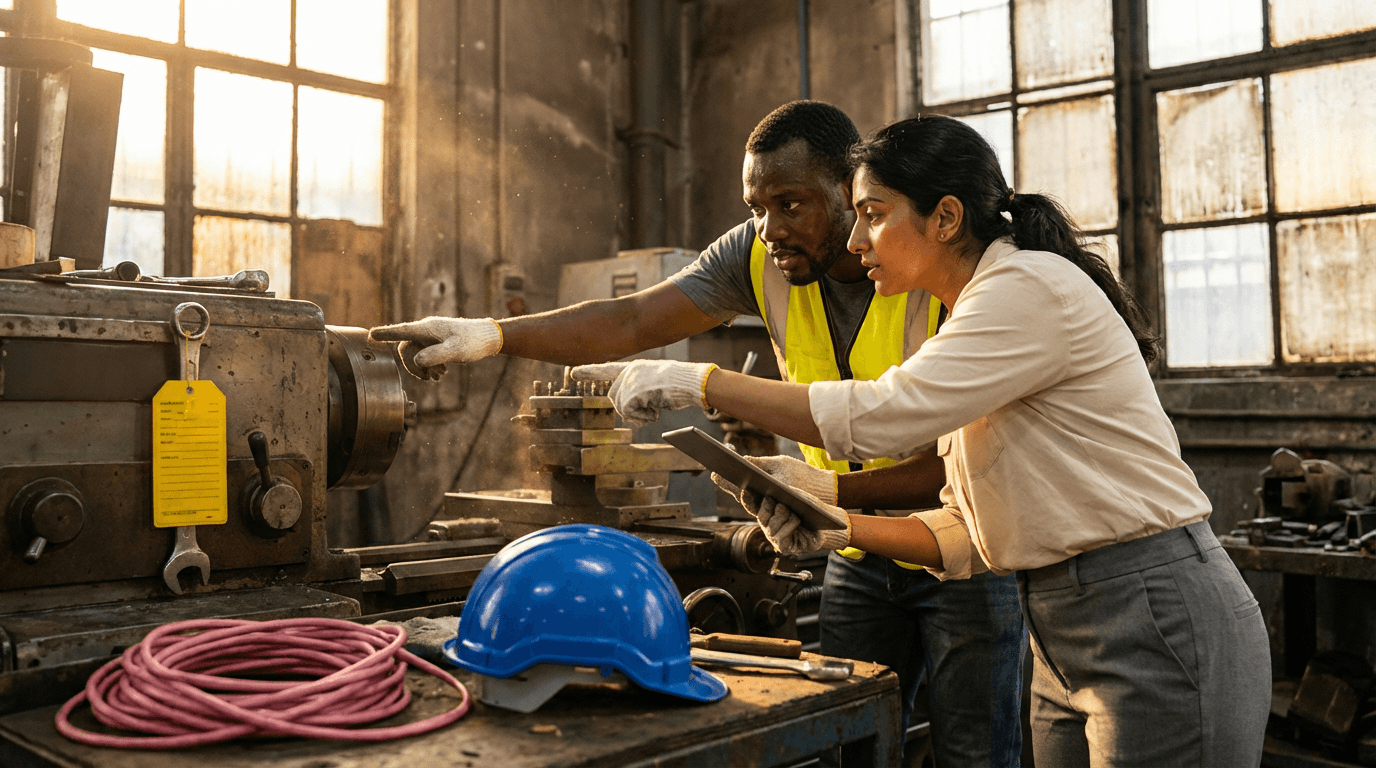
This course equips participants with essential skills for industrial safety in metal fabrication, focusing on hazard identification, control implementation, training development, and risk management to foster a safer work environment.
flexible workload of 4 to 360h
valid certificate in your country
What will I learn?
This Industrial Safety Course provides targeted, hands-on training to assist you in identifying hazards in metal fabrication, applying the hierarchy of controls, and establishing straightforward procedures for hot work, machine guarding, chemical handling, and PPE. You will learn to create effective training, toolbox talks, and risk assessments, conduct inspections and audits, and promote ongoing improvement using simple, impactful tools.
Elevify advantages
Develop skills
- Industrial hazard recognition: quickly identify fire, chemical, and ergonomic risks.
- Practical safety procedures: correctly implement LOTO, hot work, and machine guarding.
- PPE and control selection: select appropriate gear and controls for each task.
- Safety training design: develop clear, engaging toolbox talks and short sessions.
- Risk assessment in fabrication: evaluate hazards, prioritise controls, and document them.
Suggested summary
Before starting, you can change the chapters and the workload. Choose which chapter to start with. Add or remove chapters. Increase or decrease the course workloadWhat our students say
Your lessons are perfect. I got the one-year package and finally have the chance to follow several topics I'm interested in without having to switch platforms... I appreciate everything you do, and I've already recommended you to others...

Giulio CarloDigital Marketing Student
I like how the lessons get straight to the point and how I can switch chapters and skip content I don't need.

Mariana FerresPhotography Student
I like the content and the way the videos are presented and transcribed, which speeds up the process!

Luciana AlvarengaNail Design Student
The platform is fast and easy to use. The variety of content and the extra videos really help with learning.

Giulio CarloPrompt Engineering Student
FAQ
Who is Elevify? How does it work?
Do the courses have certificates?
Are the courses free?
What is the course workload?
What are the courses like?
How do the courses work?
What is the duration of the courses?
What is the cost or price of the courses?
What is an EAD or online course and how does it work?
PDF Course