Gold Leaf Gilding Course
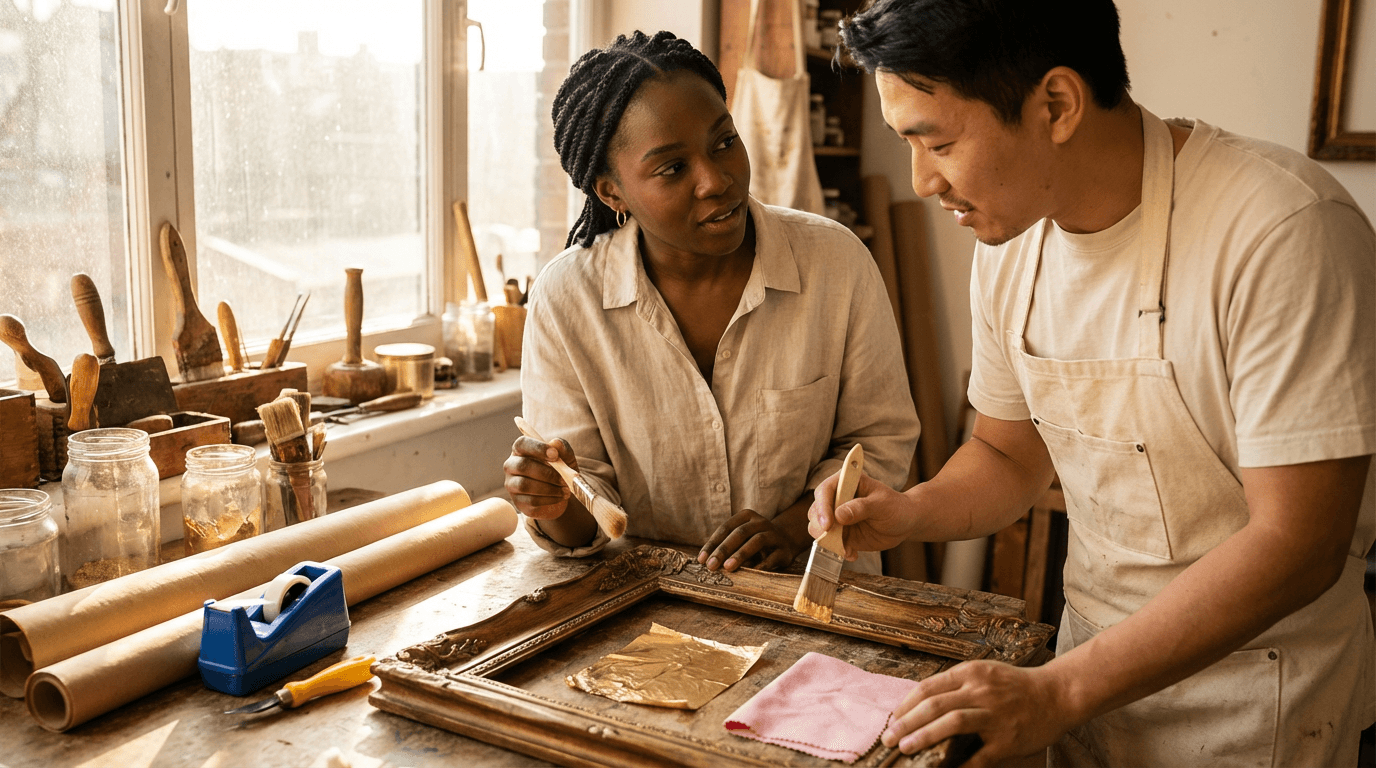
Gain expertise in professional gold leaf gilding, covering everything from preparing surfaces to final burnishing. Discover essential tools, adhesives, various leaf types, repair methods, ageing techniques, and protective finishes to ensure your frames, icons, and handmade items deliver smooth, tough, exhibition-quality results that stand the test of time.
flexible workload of 4 to 360h
valid certificate in your country
What will I learn?
This Gold Leaf Gilding Course offers hands-on, step-by-step guidance to produce perfect, long-lasting gilded surfaces. You'll master selecting real or imitation gold leaf, picking the right bases, mixing gesso and bole, using oil and water sizes, controlling stickiness, laying leaf smoothly, fixing mistakes, burnishing for shine or keeping it matte, sealing with suitable varnishes, organising projects smartly, and recording your work for top-notch outcomes.
Elevify advantages
Develop skills
- Professional gilding preparation: select bases, bole shades, and gold leaf varieties.
- Accurate adhesive management: apply, check stickiness, and time oil and water sizes.
- Skilful leaf application: cut, pick up, and place loose or transfer leaf with neat joins.
- Advanced finishing techniques: polish, age, and safeguard gold leaf for lasting beauty.
- Smart project management: calculate supplies, record processes, and achieve client-standard excellence.
Suggested summary
Before starting, you can change the chapters and the workload. Choose which chapter to start with. Add or remove chapters. Increase or decrease the course workloadWhat our students say
Your lessons are perfect. I purchased the one-year package and finally have the opportunity to follow various topics of my interest without needing to change platforms... I thank you for everything you do, I've already recommended you to other people...

Giulio CarloDigital Marketing Student
I like how the lessons are straight to the point and how I can change chapters and skip content I don't need.

Mariana FerresPhotography Student
I like the content and the way videos are presented and transcribed, which speeds up the process!

Luciana AlvarengaNail Design Student
The platform is fast, simple to use. The diversity of content and complementary videos help a lot with learning.

André FelipePrompt Engineering Student
FAQ
Who is Elevify? How does it work?
Do the courses have certificates?
Are the courses free?
What is the course workload?
What are the courses like?
How do the courses work?
What is the duration of the courses?
What is the cost or price of the courses?
What is an EAD or online course and how does it work?
PDF Course