Orthotist Course
4/5
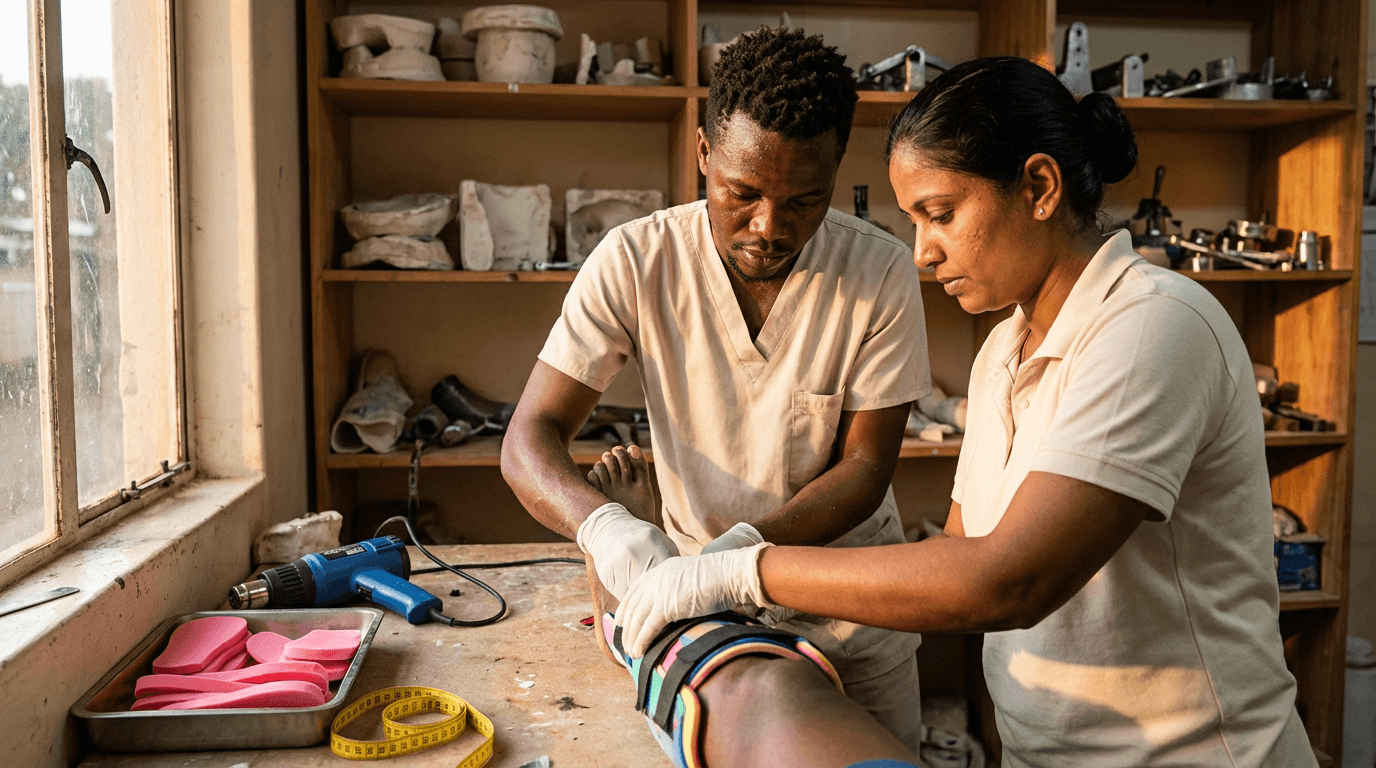
In the Orthotist Training Program, gain expertise in AFO evaluation, design, casting, fabrication, and fitting for foot drop management. Develop skills for precise clinical assessments, custom orthotic production, and effective patient care to ensure optimal gait improvement, complication prevention, and brace functionality in orthopedic practice.
4.0 in rating
4 to 360h flexible workload
certificate valid in your country
What will I learn?
This Orthotist Training Program offers a practical guide to evaluating foot drop, prescribing and fitting ankle-foot orthoses (AFOs), and addressing clinical challenges. Participants learn assessment techniques, casting methods, model preparation, thermoforming processes, finishing skills, design selection, alignment verification, and troubleshooting strategies. The program includes patient education resources, follow-up guidelines, and documentation templates to enhance safety, comfort, and walking outcomes.
Elevify advantages
Develop skills
- Advanced AFO assessment: conduct efficient gait and balance evaluations focused on stroke patients.
- Precision casting: accurately capture foot and ankle contours for superior custom AFOs.
- AFO design selection: choose appropriate materials and trim lines based on foot drop mechanics.
- Expert fabrication: thermoform, refine, and adjust AFOs for optimal comfort and longevity.
- Clinical fitting mastery: resolve pain, pressure, and gait problems during brief follow-up sessions.
Suggested summary
Before starting, you can change the chapters and the workload. Choose which chapter to start with. Add or remove chapters. Increase or decrease the course workload.What our students are saying
Your classes are perfect. I purchased the one-year package and finally have the opportunity to follow various topics of interest without needing to switch platforms... I thank you for everything you do, I've already recommended you to other people...

Giulio CarloDigital Marketing Student
I like how the lessons are straight to the point and how I can change chapters and skip content I don't need.

Mariana FerresPhotography Student
I like the content and the presentation style and video transcription, which speeds up the process!

Luciana AlvarengaNail Design Student
The platform is fast, simple to use. The diversity of content and complementary videos really help with learning.

André FelipePrompt Engineering Student
FAQ
Who is Elevify? How does it work?
Do the courses have certificates?
Are the courses free?
What is the course workload?
What are the courses like?
How do the courses work?
What is the duration of the courses?
What is the cost or price of the courses?
What is an EAD or online course and how does it work?
PDF Course