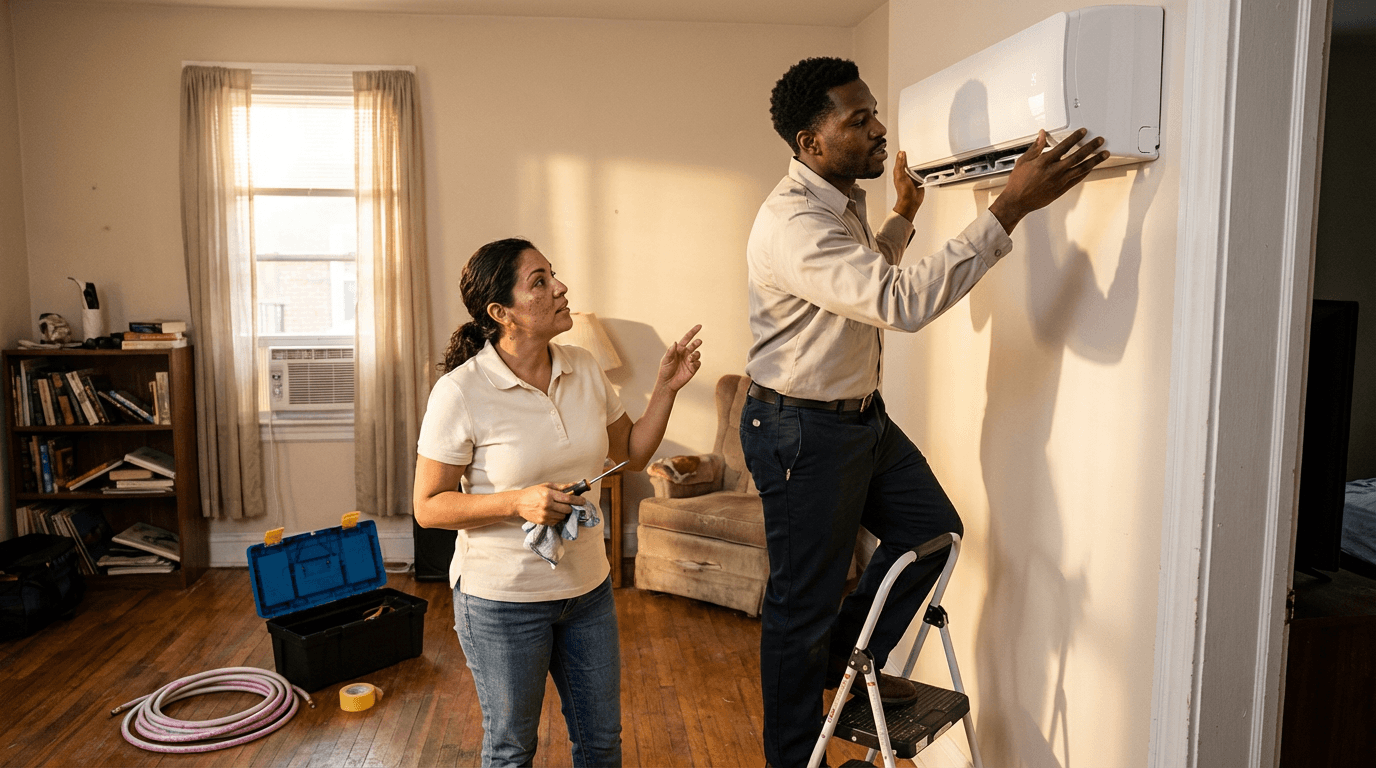
Lesson 1Site preparation and protection: covering furniture, protecting electronics, electrical isolation and safe work zone setupLearn how to prepare the work area to prevent damage and contamination. This section covers covering furniture, shielding electronics, isolating power when needed, and organizing a safe, efficient work zone for AC cleaning tasks in Canadian residences.
Assess room layout and airflow pathsCover furniture and soft furnishingsProtect electronics from moisture and dustFloor protection and containment barriersTemporary power isolation when requiredOrganizing tools and safe access pathsLesson 2Indoor unit disassembly: removing front panel, filters, vertical/horizontal louver handling, and accessing evaporator and blowerThis section explains how to safely disassemble indoor units for deep cleaning. Learn to remove front panels and filters, handle vertical and horizontal louvers, and gain access to the evaporator coil and blower without damaging components.
Power off and pre-disassembly checksRemoving front covers and trim piecesSafe removal and labelling of filtersHandling vertical and horizontal louversAccessing evaporator coil and drain panAccessing blower wheel and housingLesson 3Outdoor coil and fan cleaning: fin-safe brushing, coil cleaner application, rinsing, straightening fins with fin combs, motor/electrical enclosure careThis section covers safe and effective outdoor coil and fan cleaning in Canadian weather. Learn fin-safe brushing, selecting and applying coil cleaners, low-pressure rinsing, straightening fins, and protecting motors and electrical enclosures from water.
Pre-inspection of coil and fan assemblyFin-safe dry brushing and debris removalChoosing suitable coil cleaner productsLow-pressure rinse and runoff controlStraightening fins with fin comb toolsShielding motors and electrical boxesLesson 4Maintenance schedule recommendations: filter change frequency, seasonal inspections, professional cleaning intervals, and homeowner guidance to reduce odors and mold riskThis section provides practical maintenance schedules that balance performance, cost, and indoor air quality. Learn filter change intervals, seasonal inspection tasks, professional cleaning timing, and homeowner tips to reduce odours and mould in Canadian homes.
Setting filter change frequenciesSeasonal inspection task checklistIntervals for deep professional cleaningSchedules for high-dust or humid sitesDocumenting maintenance for clientsHomeowner guidance to limit mould riskLesson 5Reassembly, leak and operational tests after cleaning: ensuring no water ingress, fan balance, vibration, airflow and odor checksUnderstand how to reassemble units after cleaning and verify correct operation. You will learn to check for leaks, confirm fan balance and vibration, measure airflow, and perform odour and noise checks before handing the system back.
Reinstalling panels, filters, and coversVerifying drain connections and sealsChecking fan balance and vibrationConfirming airflow and temperature splitOdour, noise, and visual final checksDocumenting results and client briefingLesson 6Drain tray and condensate line cleaning: mechanical clearing, wet/dry vacuum, enzyme treatments, and verifying trap and slopeThis section details how to clear and clean drain trays and condensate lines to prevent leaks, odours, and microbial growth. You will learn mechanical clearing, vacuum methods, enzyme use, and how to confirm proper trap design and line slope.
Inspect tray condition and standing waterMechanical clearing of visible blockagesUsing wet or dry vacuum on drain linesApplying enzyme or bio cleaners safelyVerifying trap configuration and slopeTesting drainage and checking for leaksLesson 7Evaporator coil and blower cleaning methods: coil cleaners (neutral foaming vs acidic), soft brushes, low-pressure rinse, avoiding fin damage and moisture controlLearn best practices for cleaning evaporator coils and blowers without causing damage or moisture issues. Topics include neutral versus acidic cleaners, soft brushing, controlled rinsing, and managing drying to prevent microbial regrowth in humid Canadian areas.
Assessing coil fouling and access limitsSelecting neutral or acidic coil cleanersSoft brushing along fin directionLow-pressure rinse and overspray controlCleaning blower wheel and housing safelyDrying strategies to avoid regrowthLesson 8Mold, odor and allergen remediation steps compatible with HVAC components (biocides, enzyme cleaners, and safe concentrations)Learn targeted methods to remediate mould, odours, and allergens while protecting HVAC materials. Topics include selecting compatible biocides and enzyme cleaners, safe concentrations, dwell times, and ventilation during and after treatment.
Identifying microbial growth and odoursChoosing HVAC-safe biocidal productsUsing enzyme cleaners on organic filmsDilution, dwell time, and rinse needsProtecting coils, plastics, and sealsPost-treatment ventilation and checksLesson 9Filter cleaning and replacement criteria: filtration types, washing techniques, drying, and when to recommend HEPA/pleated upgrades for allergiesExplore filter types, cleaning methods, and replacement criteria that affect airflow and indoor air quality. You will learn washing and drying techniques, when to replace filters, and when to suggest HEPA or pleated upgrades for sensitive users.
Common AC filter media and ratingsVisual inspection and pressure drop cuesSafe washing and rinsing techniquesProper drying and reinstallation stepsWhen to replace instead of clean filtersRecommending HEPA or pleated upgradesLesson 10Safe power isolation and lockout procedures for indoor and outdoor unitsUnderstand how to safely isolate power before cleaning or servicing indoor and outdoor units. This section covers identifying disconnects, lockout and tagout steps, verification of zero energy, and documenting safe restoration of power.
Identify breakers and local disconnectsConfirm correct circuit using test toolsLockout and tagout device applicationVerify zero voltage at key terminalsControl stored energy and moving partsRestoring power and removing lockout