FVK Training
Master FVK design for hybrid metal-composite structures. Gain expertise in material selection, structural design, manufacturing processes, failure analysis, and inspection techniques to confidently produce lighter, stronger, high-temperature industrial components.
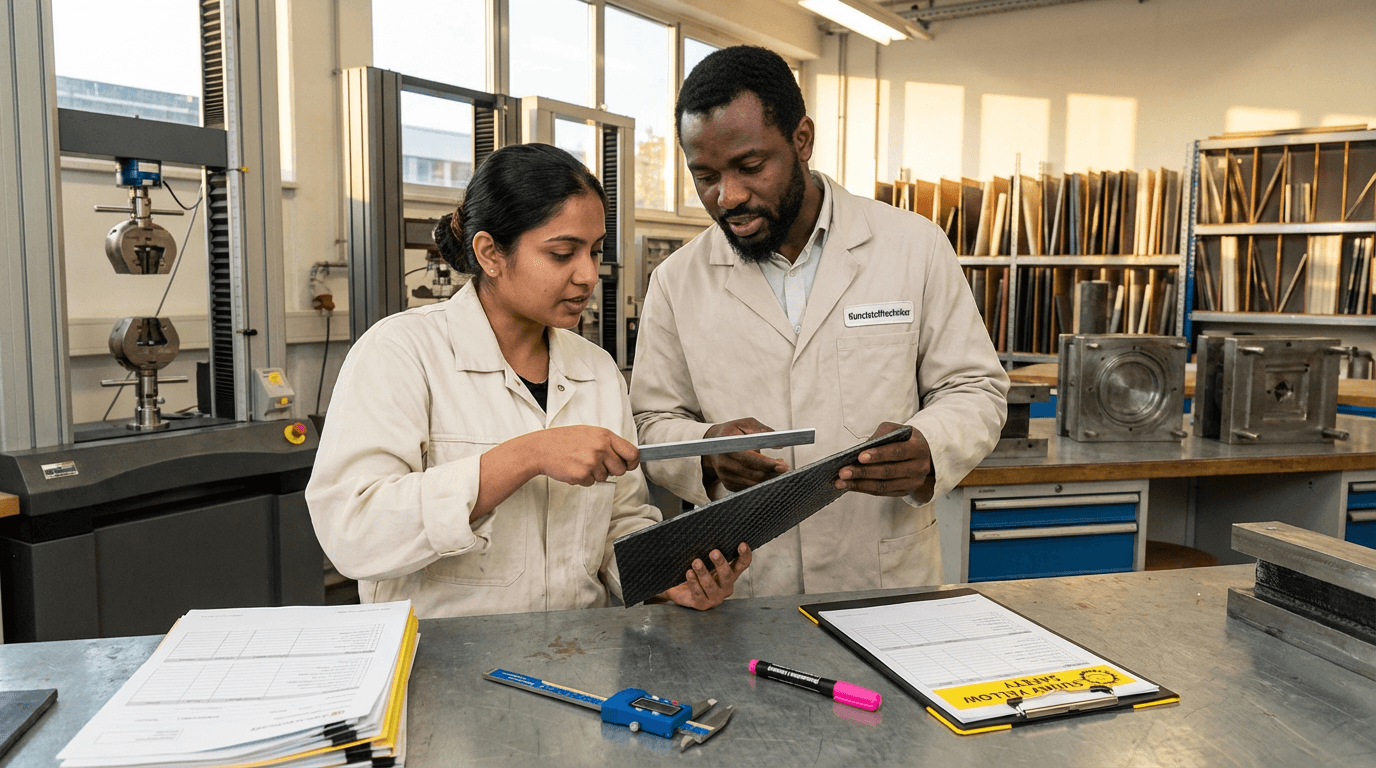
4 to 360h flexible workload
certificate valid in your country
What will I learn?
Acquire practical skills to design and manufacture reliable fiber-reinforced components for high-temperature environments. Cover composite fundamentals, fiber architecture, hybrid FVK-metal arm design, process selection, quality control, nondestructive testing, failure analysis, lifecycle planning, and datasheet-based material selection for safe, durable, lightweight structures.
Elevify advantages
Develop skills
- Design hybrid FVK-metal arms by optimizing load paths, joints, and cross-sections efficiently.
- Select FRP materials by matching fibers, resins, and datasheets to high-temperature applications.
- Control composite production by setting key process parameters for consistent quality.
- Apply NDT on FRP structures to quickly detect delamination, voids, and joint defects.
- Predict FRP durability by assessing fatigue, environmental factors, and failure modes for safe service life.
Suggested summary
Before starting, you can change the chapters and the workload. Choose which chapter to start with. Add or remove chapters. Increase or decrease the course workload.What our students are saying
Your classes are perfect. I purchased the one-year package and finally have the opportunity to follow various topics of interest without needing to switch platforms... I thank you for everything you do, I've already recommended you to other people...

Giulio CarloDigital Marketing Student
I like how the lessons are straight to the point and how I can change chapters and skip content I don't need.

Mariana FerresPhotography Student
I like the content and the presentation style and video transcription, which speeds up the process!

Luciana AlvarengaNail Design Student
The platform is fast, simple to use. The diversity of content and complementary videos really help with learning.

André FelipePrompt Engineering Student
FAQ
Who is Elevify? How does it work?
Do the courses have certificates?
Are the courses free?
What is the course workload?
What are the courses like?
How do the courses work?
What is the duration of the courses?
What is the cost or price of the courses?
What is an EAD or online course and how does it work?
PDF Course