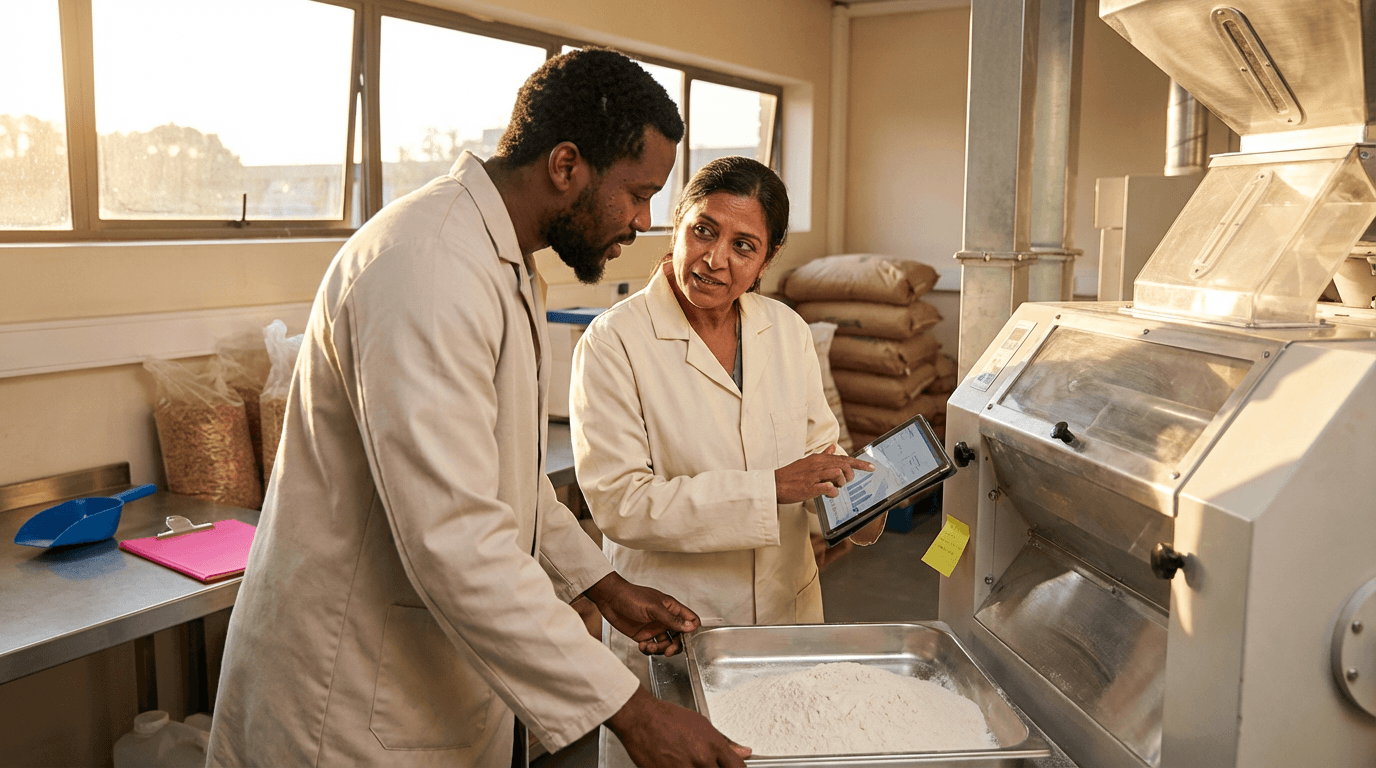
Lesson 1Conditioning/tempering: hydration targets, time/temperature effects on bran toughness and endosperm friability, typical moisture adjustments (1.5–3% increase) and soaking timesThis lesson details pre-mill wheat tempering. It calculates water adds, targets per wheat, time/temp on bran/endosperm, usual soaks.
Moisture addition and target calculationsTempering time and temperature effectsSingle versus multistage temperingMonitoring kernel hardness and friabilityTypical soaking times and adjustmentsLesson 2Purifiers and scourers: role in bran removal and semolina quality for high extraction; particle size and airflow tuningThis lesson focuses purifiers/scourers cleaning middlings. It shows air, shake, sieve for bran off, settings for semolina clean/yield, surface clean.
Purifier construction and working principleAirflow, deck load, and vibration tuningMiddlings sizing and sieve selectionSemolina purity versus yield tradeoffsScourer types and operating parametersLesson 3Reduction system (reduction rolls): gradual size reduction, control of starch damage, and reduction sequencingThis lesson analyzes reduction grinding middlings to flour. It covers smooth rolls, step size cut, feed spread, starch/heat control, passage order.
Role of reduction versus break systemSmooth roll surface and feed distributionGradual reduction and stock recyclingStarch damage and temperature controlReduction and sizing passage sequencingLesson 4Breaking system (break rollers): function, roll configuration, crack sizing, and typical roll gap/speed considerationsThis lesson checks break system opening kernels with low flour harm. It covers roll types, patterns, gaps, speeds, feed for clean endosperm, less bran dust.
Objectives of the break systemRoll surface, corrugation, and spiralBreak roll gap and differential settingsBreak release, sizing, and tailingsMonitoring bran powder and speck levelsLesson 5Grain reception and intake: sampling protocols, official tests to run on arrival, storage segregation and blending logisticsThis lesson explains grain intake from truck to silo. It details sample plans, quality/safety tests, grading, quality splits, blend plans for steady milling.
Truck inspection and unloading safetyRepresentative sampling and sample handlingOfficial quality and food safety testsGrading, rejection, and acceptance criteriaSegregation and blending in silo managementLesson 6Blending and millstream recombination: blending logic to meet extraction/ash targets, use of midstreams and tailstreamsThis lesson explains blending millstreams to hit flour specs. It sorts core, mid, tail streams, ash and colour checks, yield goals, and auto scales for steady quality.
Classification of millstreams by qualityAsh, color, and protein profilingBlending logic for extraction targetsUse of midstreams and tailstreamsAutomated scales and recipe controlLesson 7Cleaning: equipment (scourers, aspirators, destoners, magnetic separators, sieves), objectives and typical operational settingsThis lesson reviews cleaning to prep wheat for temper. It covers scalp, air, stone remove, metal catch, scour, settings to cut dust, stones, metals, seeds sans good grain loss.
Cleaning flow sheet and line layoutScalpers, sieves, and aspiration unitsDestoners and gravity separationMagnetic separators and metal controlScourers and surface dust removalLesson 8Sifting plans and plansacker operation: plans, purifier passages, and how sieving fractions are arranged to control ash and particle sizeThis lesson describes sifting setups, plansifters, plansackers. It shows sieve order, purifier links, plans for ash, size, stream sorts.
Plansifter layout and flow diagramsSieve cloth selection and maintenancePlansacker operation and bag changeoverPurifier passages within the sifting planGranulation and ash control by streamsLesson 9Critical control points where poor settings harm quality: conditioning moisture/time, roll gaps and differential, sifter mesh/openings and airflowThis lesson spots key points where bad settings hurt yield or quality. It eyes temper moisture/time, break/reduction roll gaps, sifter mesh/air for ash, starch, specks.
Tempering moisture targets and timingRoll gap setting and differential controlFeed rate, roll wear, and temperatureSifter mesh selection and maintenanceAirflow balance and tailing managementLesson 10Flour conditioning and fortification: tempering, emulsifier or improver additions, storage in silos and microbial controlThis lesson covers post-mill flour tempering and boosting. It hits even moisture, adds vitamins, minerals, improvers, silo air, germ checks for safe flour.
Post-milling flour tempering objectivesVitamin and mineral premix handlingEmulsifiers and functional improversFlour silo design and aeration controlMicrobial risks and mitigation stepsLesson 11Finished flour packing and storage: protecting against moisture uptake and oxidation, traceability and labelingThis lesson covers packing, labelling, storing flour to keep quality. It handles moisture, oxygen, pack types, tracking, and warehouse ways against bugs, lumps, dirt.
Bagging lines and bulk loading systemsPackaging materials and barrier propertiesMoisture and oxygen control in storageLabeling, coding, and traceability recordsWarehouse hygiene, pests, and stock rotation