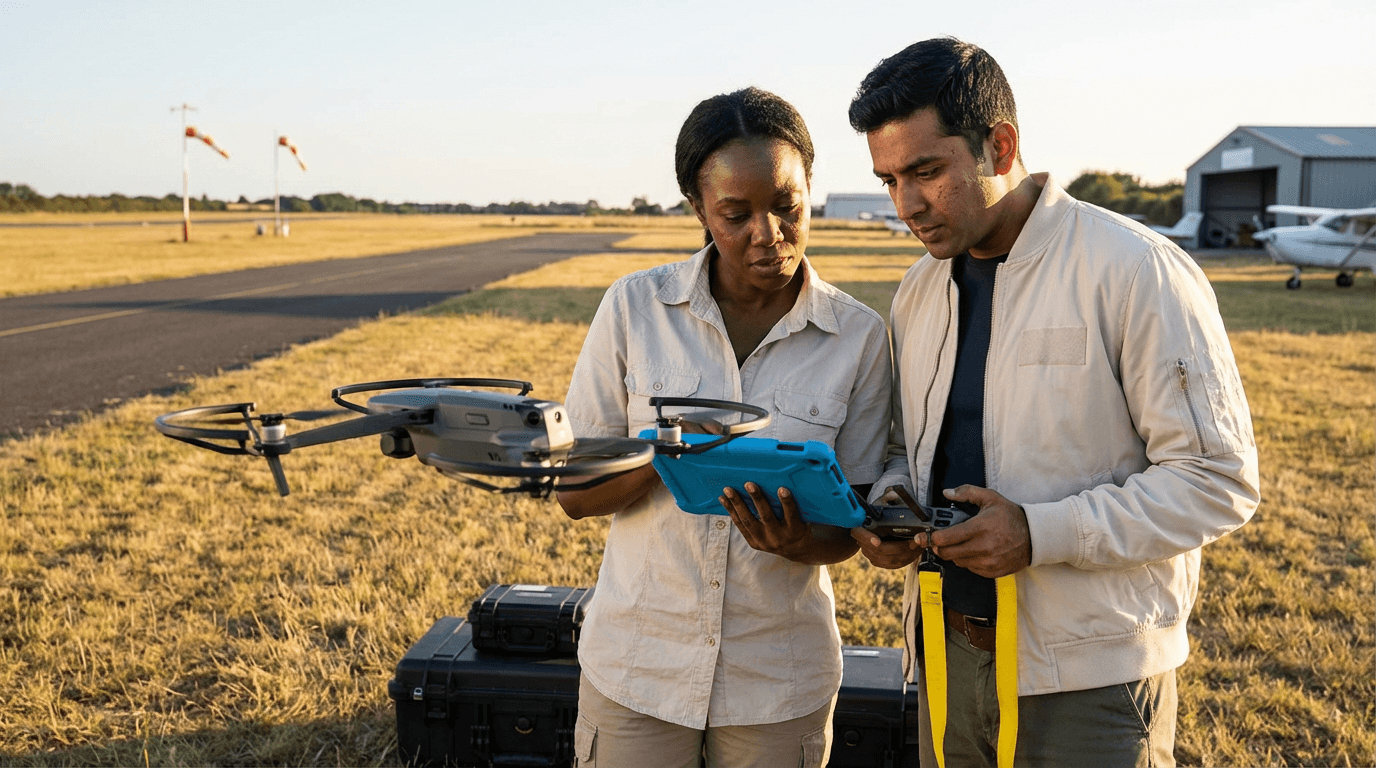
Lesson 1Visual line of sight and crew roles: PIC, VO, observer, data manager, client liaisonArrange teams to ensure visual line of sight and secure work. You will outline roles for PIC, visual observers, and data handlers, establish contact ways, and align with clients on Botswana site duties.
Regulatory basics of visual line of sightDefining PIC authority and dutiesUsing visual observers and spottersData manager and payload operator tasksClient liaison and on-site briefingsLesson 2Selecting cameras and sensors for construction monitoring: RGB, wide-angle, nadir vs oblique, video codecs, resolution and dynamic rangeChoose cameras and sensors suited to building oversight. You will assess RGB choices, lens lengths, nadir and oblique angles, codecs, quality, and range to aid progress monitoring and reports in Botswana.
Choosing RGB cameras for site monitoringWide-angle versus longer focal lengthsNadir versus oblique capture strategiesVideo codecs, bitrates, and file sizesResolution, bit depth, and dynamic rangeLesson 3UAS platform selection: fixed-wing vs multirotor trade-offs, payload capacities, endurance, and certification statusAssess UAS types and fit them to task needs. You will balance fixed-wing and multirotor pros in stamina, load, start needs, and approvals, selecting frames that satisfy Botswana rules and client wants.
Fixed-wing versus multirotor capabilitiesPayload capacity and gimbal compatibilityEndurance and coverage rate comparisonsLaunch, recovery, and site constraintsCertification, approvals, and documentationLesson 4Flight performance planning: speed, endurance, battery counts, estimated flight time per battery, thermal effects on performancePlan flight output to prevent surprises aloft. You will forecast speed, stamina, and time per battery, factor in load and weather, and reserve extras for safe, foreseeable operations in Botswana.
Estimating cruise speed and ground speedCalculating endurance with payload weightEstimating flight time per battery packPlanning fuel and battery safety reservesThermal and wind effects on performanceLesson 5Flight pattern design: mapping grid (orthomosaic), linear corridor inspections, orbit/pano shots, waypoint cinematographyStudy flight designs for mapping, checks, and film work. You will create grids, paths, circles, and waypoint trails that honour airspace, lower risks, and yield useful images for processing or clients in Botswana.
Designing orthomosaic mapping grid patternsPlanning linear corridor inspection flightsOrbit and panorama shot design and safetyWaypoint paths for repeatable cinematographyManaging turns, wind, and ground speedLesson 6Altitude, overlap, and GSD planning for photogrammetry: calculating GSD, front/side overlap, and mission altitudeUnderstand how height, overlap, and ground sample distance link in mapping tasks. You will compute GSD, fix front and side overlaps, and select height to weigh coverage, detail, and time in Botswana.
Relating sensor size, focal length, and GSDCalculating mission altitude from target GSDChoosing front and side overlap percentagesAdjusting overlap for terrain and structuresBalancing GSD, coverage, and flight timeLesson 7Telemetry, logging, and onboard settings: logging frequency, camera settings, shutter speed, ND filters, and anti-vibration mountingControl telemetry, records, and onboard setups for dependable data. You will adjust log rates, camera exposure, ND filters, and cut vibrations to guard gear and secure top imagery and logs in Botswana.
Configuring flight controller log settingsChoosing camera modes and exposure valuesSetting shutter speed for motion controlSelecting and sizing ND filtersAnti-vibration mounting and balance checksLesson 8Mission segmentation: number of sorties, battery change logistics, hot/cold swap proceduresSplit big tasks into safe, handleable flights. You will set flight numbers, arrange battery changes, manage hot or cold swaps, and assign ground team jobs to cut delays and risks in Botswana.
Dividing missions into logical sortiesEstimating sorties from area and GSDPlanning battery staging and rotationHot swap versus cold swap proceduresCrew roles during battery changeoversLesson 9Takeoff/landing zone layout and ground control: marking pads, clearing obstacles, controlling public accessGrasp selecting and readying safe takeoff and landing areas. You will mark spots, remove dangers, handle public entry, and add ground points for precise mapping and consistent missions in Botswana.
Selecting safe launch and recovery areasMarking pads and orienting to windClearing obstacles and FOD from the zoneControlling public and vehicle accessPlacing and surveying ground control points