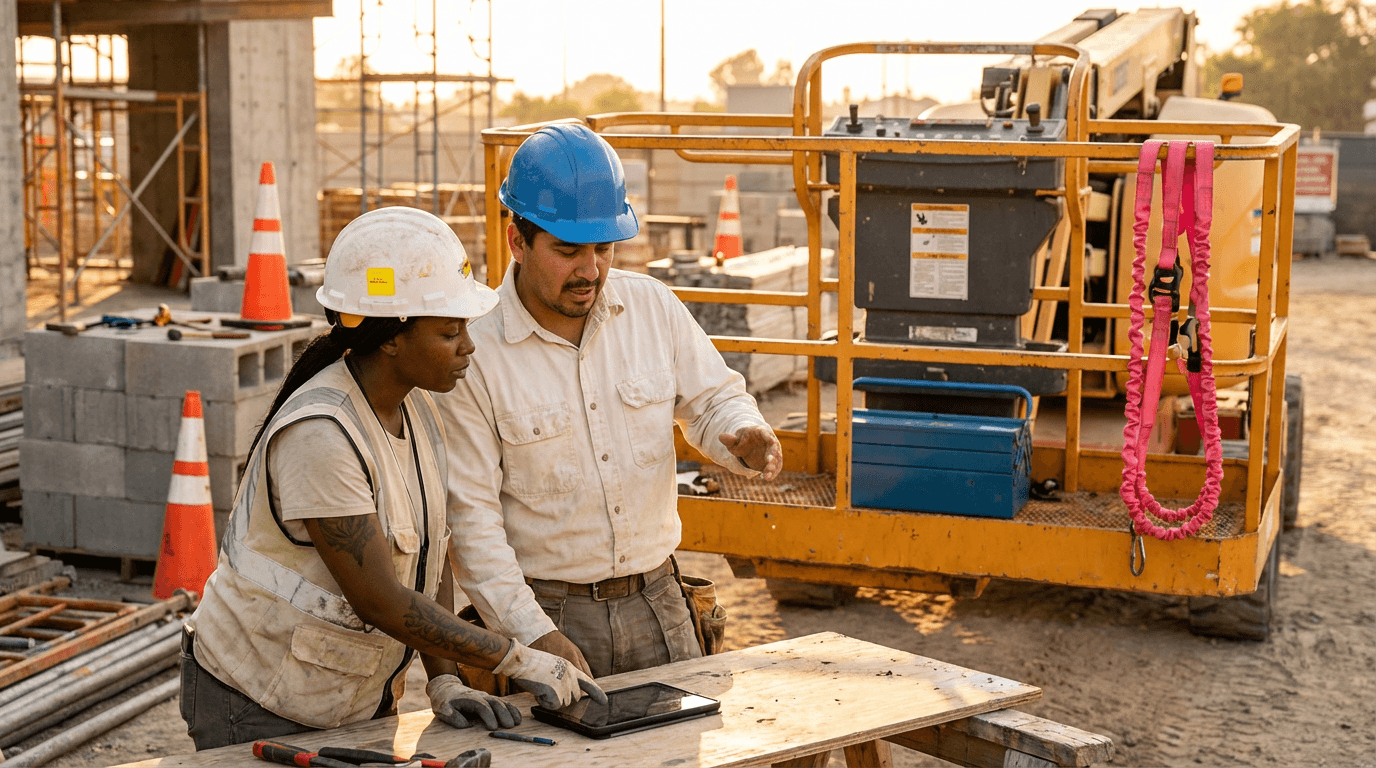
Lesson 1Finding the maker’s inspection list and operator guidesThis part teaches how to find and understand the maker’s inspection list and operator guides. Learners make sure they use the right papers, follow needed steps, and know limits, warnings, and procedures for specific models.
Finding the right operator and service guidesReading warnings and limits for specific modelsFollowing the maker’s inspection listKnowing requirements for inspection timesGetting digital or built-in papersLesson 2Powertrain and electrical checks: batteries, wiring, alternator, and isolation stepsThis part looks at MEWP powertrain and electrical system checks. Learners check batteries, engines, wiring, alternators, and isolation tools, making sure connections are safe, charge is right, and shutdown is safe before using the platform.
Checking batteries, electrolyte, and terminalsLooking at engine oil, coolant, and fuel systemsChecking wiring, connectors, and harness pathsTesting alternator output and charge signsUsing lockout and electrical isolation stepsLesson 3Hydraulic system checks: hoses, fittings, fluid levels, leaks, and cylinder strengthThis part explains how to check MEWP hydraulic systems for leaks, damage, and performance problems. Learners look at hoses, fittings, cylinders, and fluid levels, spotting issues that could cause sudden moves, loss of support, or harm to the environment.
Checking hoses, fittings, and quick couplersLooking at hydraulic fluid level and dirtExamining cylinders, rods, and seals for damageSpotting active leaks and seepage patternsDealing with leaks and environmental controlsLesson 4Control functions test: main, backup, dead-man, and emergency loweringThis part details how to test all MEWP control functions before use. It includes main and backup controls, dead-man features, speed limits, and emergency lowering, ensuring the machine responds right and stops safely under operator orders.
Testing ground and platform main controlsChecking backup and extra control spotsLooking at dead-man controls and enable switchesConfirming proportional speed and smooth workTesting emergency stop and emergency loweringLesson 5Inspection records: filling pre-start forms, fault tagging, and holding/lockout stepsThis part covers how to fill MEWP pre-start inspection records properly. Learners practice noting findings, tagging faulty units, and using holding or lockout steps to stop use until fixes are checked and noted.
Filling daily pre-start inspection formsNoting faults, trends, and follow-up actionsUsing fault tags and out-of-service labelsPutting in place holding and lockout stepsStoring and keeping inspection recordsLesson 6Tyres, tracks, axles, and outriggers: wear, pressure, alignment, and ground contact areasThis part deals with checking tyres, tracks, axles, and outriggers. Learners check wear, pressure, alignment, and ground contact, ensuring the MEWP has good support, grip, and steadiness on the planned surface before lifting.
Checking tyre wear, cuts, and sidewall damageLooking at tyre pressure and foam-filled stateChecking tracks, rollers, and tension systemsLooking at axles, hubs, and steering partsConfirming outrigger pads and ground contactLesson 7Reporting and escalation: faulty equipment reporting, stop-work power, and fix check papersThis part explains how to spot unsafe MEWP conditions, use stop-work power, and note faults. It covers reporting paths, isolation steps, fix checks, and record-keeping to keep faulty units out of use.
Spotting critical and minor MEWP faultsUsing stop-work power and refusing unsafe equipmentInternal reporting paths and communication flowTagging, locking out, and removing units from useNoting fixes and return-to-use checksLesson 8Safety devices and emergency systems: alarms, interlocks, platform load cell, and descent systemsThis part covers checking and testing MEWP safety devices and emergency systems. Learners check alarms, interlocks, load-sensing tools, and emergency descent features to ensure the platform stays safe in normal and unusual operations.
Testing tilt, overload, and motion alarmsChecking interlocks and limit switchesLooking at platform load-sensing and load cellsChecking emergency stop and emergency loweringTesting manual descent and ground control systemsLesson 9Visual walk-around: boom, platform, controls, guardrails, and weld conditionsThis part guides a step-by-step MEWP walk-around check. Learners look at booms, platforms, controls, guardrails, welds, and structure parts, spotting cracks, bends, rust, and missing bits before working at height.
Checking boom sections and joint pointsLooking at platform floor, entry gate, and toe boardsConfirming guardrails, midrails, and tie pointsChecking visible welds and structure membersLooking at decals, placards, and safety labels