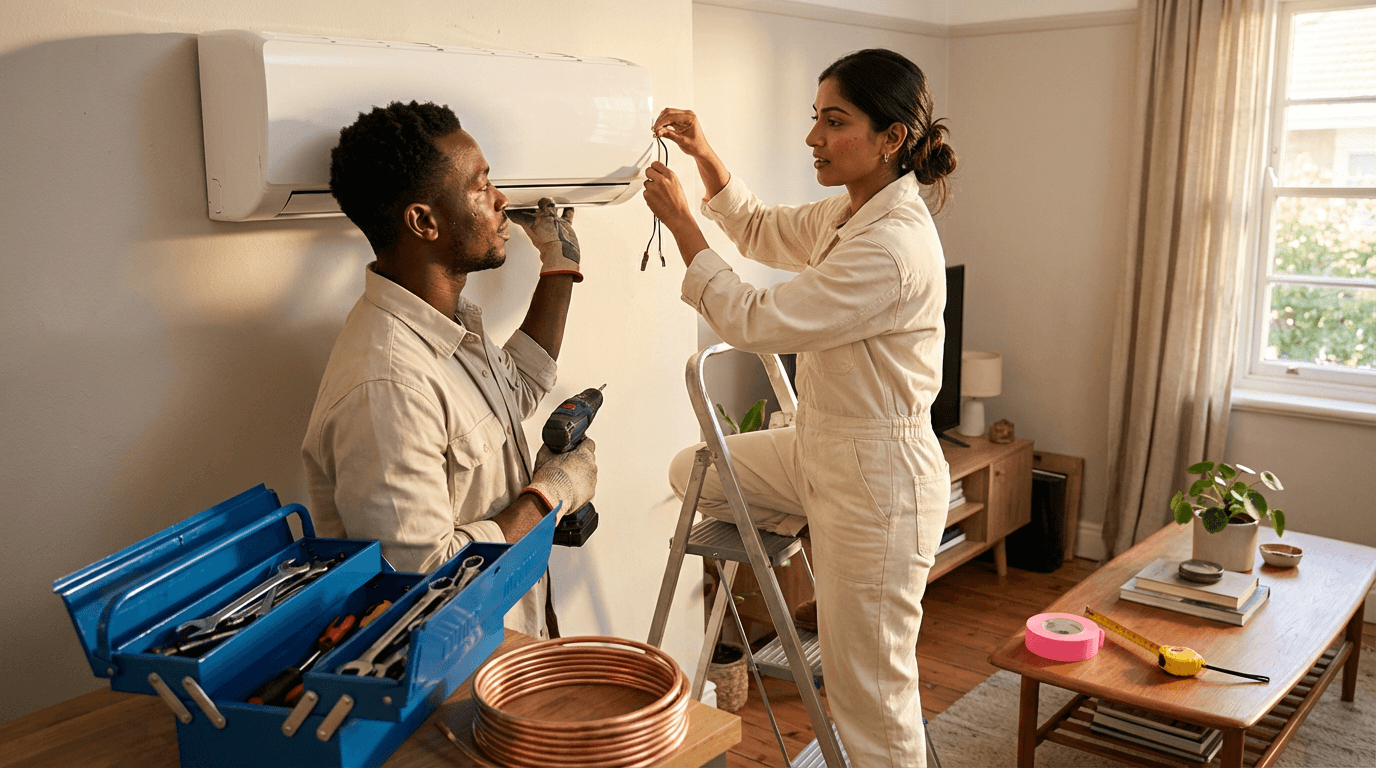
Lesson 1Indoor unit mounting: placement heights, refrigerant line chase entry, drip tray orientationExplains correct indoor unit positioning for comfort, service access, and drainage. Details line set routing, wall penetrations, and drip tray orientation to prevent leaks, noise, and future maintenance issues.
Select optimal wall and mounting heightPlan refrigerant line chase and routingDrill and seal wall penetrationsSet and level indoor mounting plateOrient and test condensate drip trayLesson 2Electrical connections, phase checks, and safety interlocks prior to energizingDetails safe electrical terminations, conductor sizing, and grounding. Includes phase rotation checks, control wiring, and verification of safety interlocks before energizing the split system.
Verify supply voltage and breaker sizeTerminate power and ground conductorsConnect control and communication wiringCheck phase rotation on three-phase unitsTest safety interlocks and fusesLesson 3Documenting settings and handing over basic operation notes to ownerFocuses on documenting final settings, control parameters, and test results. You will prepare owner handover notes, basic operating instructions, and maintenance reminders for a professional closeout.
Record final control and timer settingsLog pressures, temperatures, and testsCreate basic user operation guideExplain filter cleaning and maintenanceObtain owner sign-off and warranty docsLesson 4Vacuuming and evacuation: pump selection, target vacuum level, moisture removal proceduresGuides you through pump selection, hose setup, and achieving target vacuum. Emphasizes deep evacuation, moisture removal, micron gauge use, and decay tests to confirm system dryness and tightness.
Select appropriate vacuum pump sizeConnect hoses and core removal toolsPull vacuum to target micron levelPerform standing vacuum decay testRecognize signs of moisture or leaksLesson 5Leak detection and pressure testing: dry nitrogen pressure test, electronic leak detector useExplains how to pressurize with dry nitrogen, isolate sections, and monitor pressure decay. You will learn safe regulator use, soap solution techniques, and electronic leak detector application.
Set up nitrogen cylinder and regulatorPressurize system to test pressure limitsCheck joints with soap solutionUse electronic leak detector correctlyRecord test pressure and durationLesson 6Wall bracket and mounting frame installation: levelling, anchor selection for masonry or stud wallsDetails how to install wall brackets and frames for secure support. Focuses on levelling, anchor choice for masonry or stud walls, load paths, corrosion protection, and verifying pull-out resistance and stability.
Assess wall type and load capacityChoose anchors for masonry or studsMark, drill, and clean anchor holesLevel brackets and tighten fastenersVerify bracket alignment and rigidityLesson 7Start-up sequence and commissioning checks: superheat/subcooling measurement, stable temperature verification, drainage test, noise and vibration checksWalks through initial start-up, including mode selection, superheat and subcooling checks, and temperature stability. Also covers condensate drainage tests, noise, and vibration evaluation.
Follow manufacturer start-up sequenceMeasure superheat and subcoolingVerify supply and return temperaturesTest condensate drainage performanceAssess operating noise and vibrationLesson 8Site preparation and pre-installation checks: tools, permits, clearances, materials checklistCovers site readiness before work begins, including tool selection, permit verification, and safe clearances. You will also build a materials checklist to avoid delays and ensure code-compliant, efficient installation.
Verify site access and work area safetyConfirm permits, codes, and utility locationsCheck indoor and outdoor unit clearancesPrepare complete tools and materials listInspect structure for mounting suitabilityLesson 9Outdoor unit installation: base pad or brackets on exterior wall, anti-vibration pads, clearance and airflow clearance distancesDescribes outdoor unit placement on pads or wall brackets, with attention to clearances, airflow, vibration control, and service access. Includes snow, flooding, and noise considerations for long-term reliability.
Select base pad or wall bracket systemSet required service and airflow clearancesInstall and position anti-vibration padsLevel unit and secure to supportsPlan for drainage, snow, and floodingLesson 10Refrigerant line installation: cutting, deburring, bending, flare vs brazing workflow, torque and sealing practicesCovers cutting, deburring, and bending copper lines without kinking. Compares flaring and brazing workflows, torque values, and sealing practices to ensure leak-free, code-compliant refrigerant piping.
Measure, cut, and deburr copper tubingUse bending tools to avoid kinksPrepare and form accurate flaresApply torque to flare nuts correctlyInsulate and support line sets properlyLesson 11Opening service valves, refrigerant release procedure and handling captive refrigerant systemsExplains opening service valves and releasing factory charge without introducing contaminants. Covers captive refrigerant systems, valve stem handling, and documenting final operating pressures.
Identify service valves and capsBackseat and crack valves correctlyRelease captive refrigerant safelyCheck for leaks after opening valvesRecord operating pressures and temps