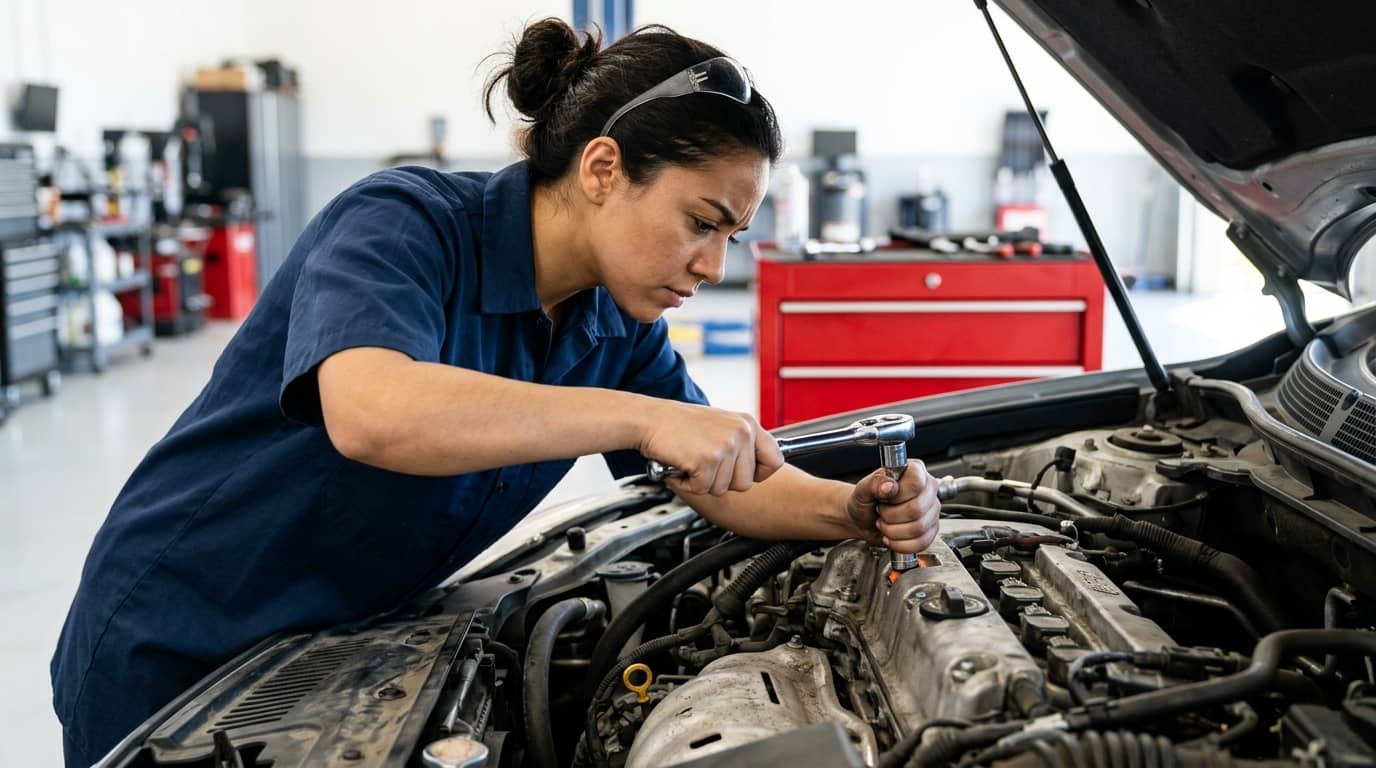
Automotive Technical Training Course
Get the hands-on technical knowledge that automotive shops demand, from engine internals and electrical systems to advanced diagnostics and hybrid technology. This comprehensive training covers every major vehicle system, giving you the skills to diagnose faults, perform quality repairs, and work safely in a professional shop environment. Whether you're starting your career or levelling up your expertise, this course delivers real-world competency that employers recognise.
What you'll learn:
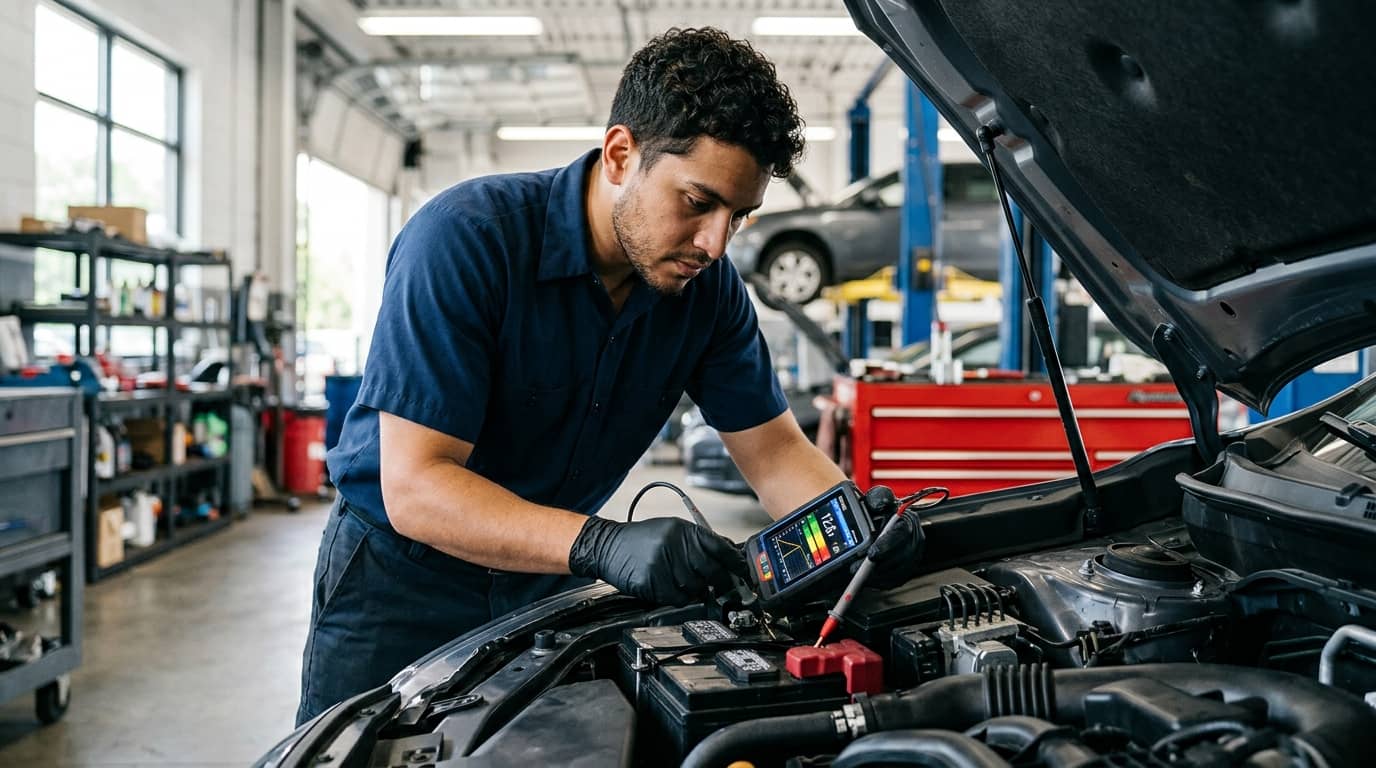
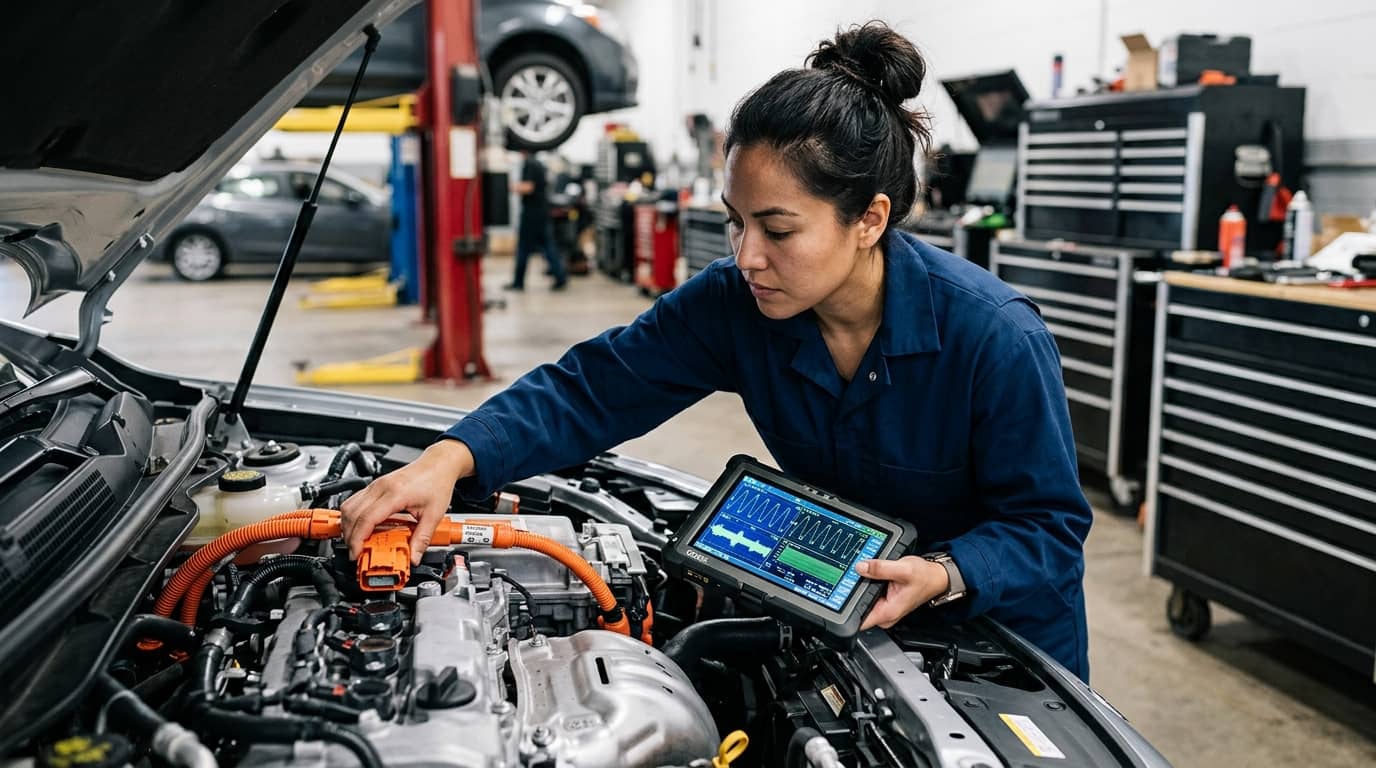
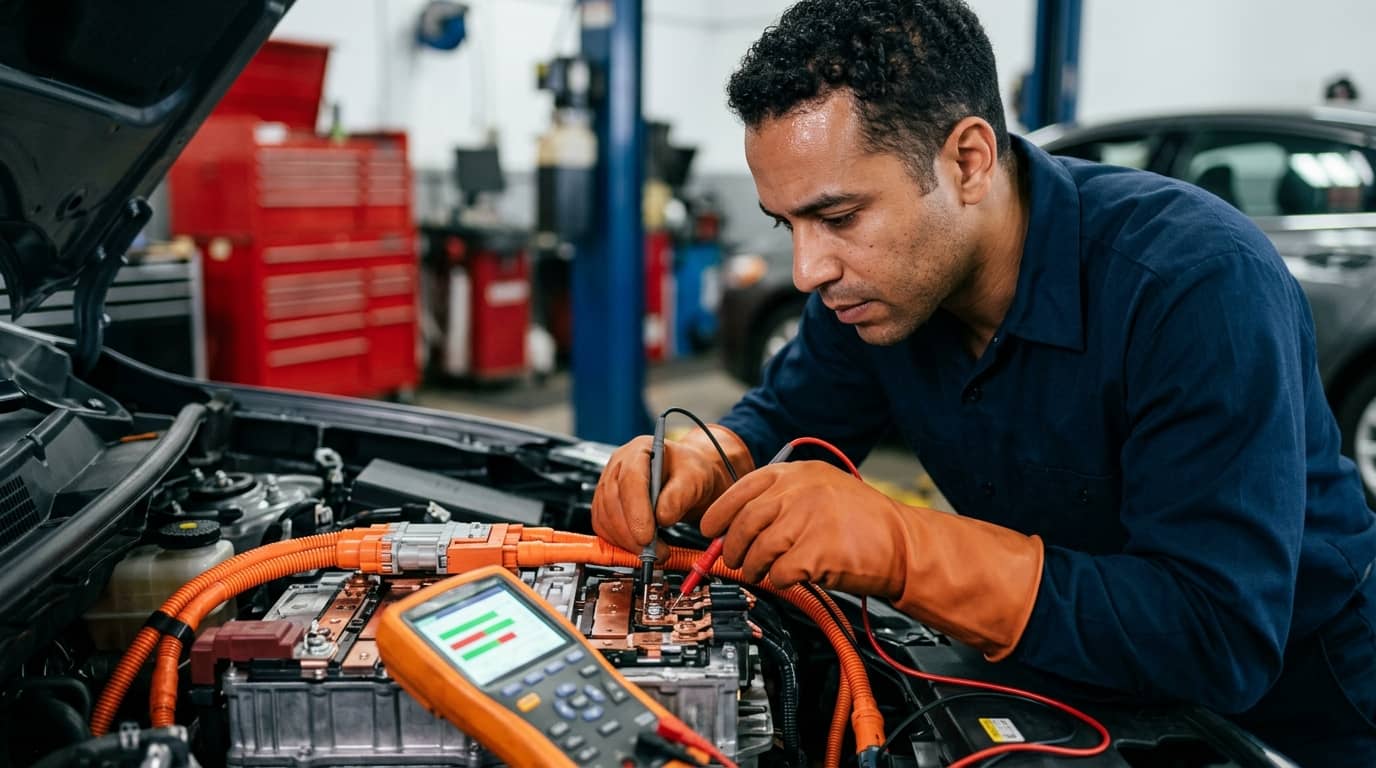
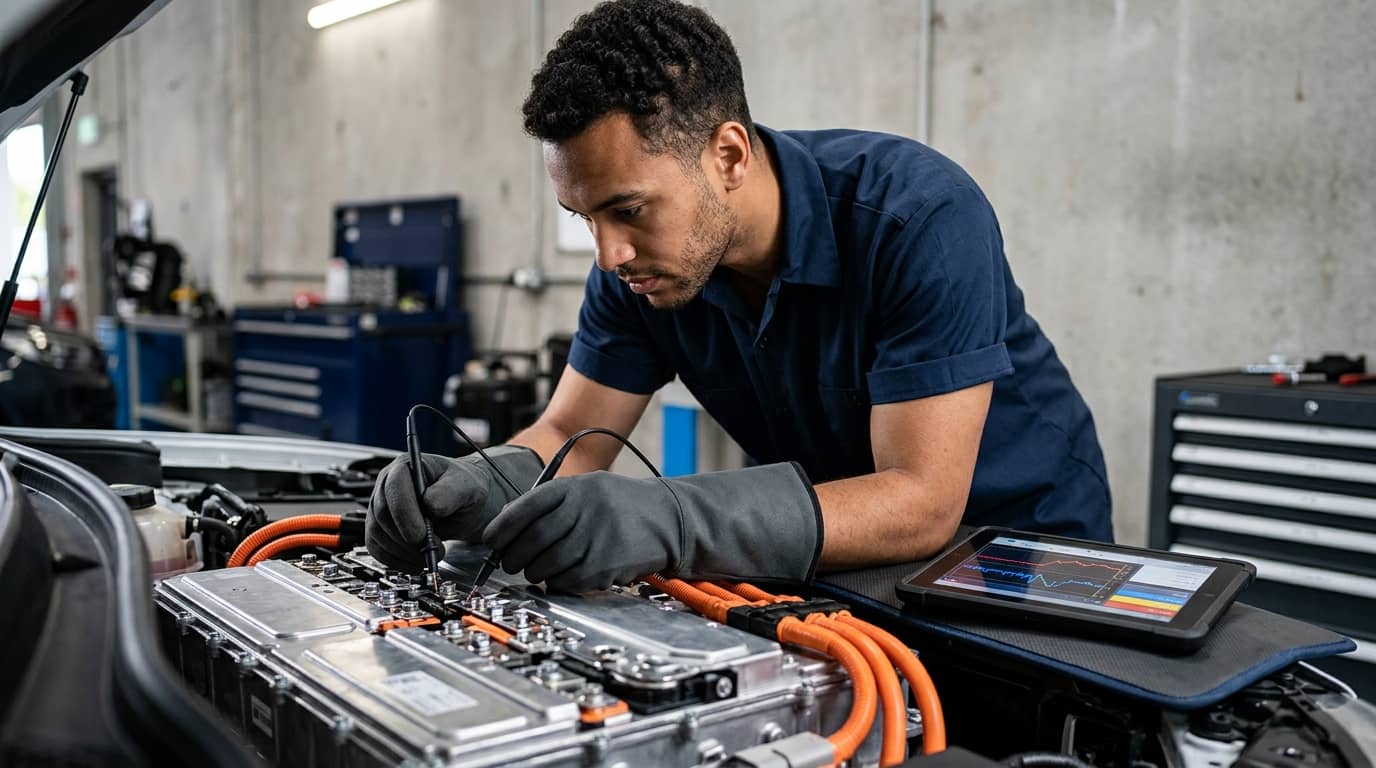
You'll build a complete understanding of how modern vehicles work, starting with engine theory, fuel and ignition systems, and automotive electrical circuits. You'll learn to use scan tools, oscilloscopes, and multimeters to diagnose drivability faults, read OBD data, and interpret diagnostic trouble codes. The course covers brake hydraulics, steering geometry, wheel alignment, and transmission operation for both manual and automatic systems. You'll also get into hybrid and electric vehicle architecture, CAN bus network diagnostics, and high-voltage safety procedures. Shop documentation, customer communication, and career development round out your training.
How you study in practice Automotive Technical Training Course
How you practise Automotive Technical Training Course
For businesses looking to train their team
With Elevify for businesses, the course includes exercises and examples tailored to your own business and the way your company needs.

Course content
8 Chapters • 40 LessonsDuration between 4 and 360 hours (you decide)
Chapter 1HideHide detailsSee detailsAutomotive Industry and Vehicle Fundamentals
Automotive Industry and Vehicle Fundamentals
Lesson 1 • Service Documentation and Work Orders
Explains how to read, complete, and file repair orders and service records. Accurate documentation supports quality control and customer communication.
Lesson 2 • Shop Safety and Hazard Awareness
Covers personal protective equipment, chemical handling, and fire prevention in automotive shops. Establishes the safety baseline required for all hands-on lab work.
Lesson 3 • Vehicle Classification and Architecture
Introduces body styles, drivetrain layouts, and chassis types across passenger and commercial vehicles. Provides the vocabulary needed for all subsequent diagnostic discussions.
Lesson 4 • Major Systems Overview
Surveys engine, gearbox, braking, steering, and electrical systems at a conceptual level. Connects each system's function to overall vehicle performance.
Lesson 5 • Tools, Equipment, and Workspace Organisation
Identifies hand tools, power tools, and lifting equipment used in automotive service. Proper tool selection and workspace organisation reduce errors and improve efficiency.
Chapter 2HideHide detailsSee detailsEngine Theory and Internal Combustion
Engine Theory and Internal Combustion
Lesson 1 • Engine Performance Measurement
Introduces compression testing, leak-down testing, and oil pressure measurement as diagnostic tools. Data interpretation links measured values to specific mechanical conditions.
Lesson 2 • Four-Stroke Combustion Cycle
Details intake, compression, power, and exhaust strokes with valve timing relationships. Understanding the cycle is prerequisite to all engine diagnosis tasks.
Lesson 3 • Lubrication and Cooling Systems
Explains oil circulation paths, pump types, and coolant flow through the engine. Proper thermal management prevents premature wear and catastrophic failure.
Lesson 4 • Engine Block and Rotating Assembly
Examines cylinder block, crankshaft, connecting rods, and pistons as an integrated assembly. Component relationships determine displacement, balance, and durability.
Lesson 5 • Cylinder Head and Valvetrain
Covers combustion chamber design, valve operation, and camshaft drive systems. Valvetrain condition directly affects compression, power output, and emissions.
Chapter 3HideHide detailsSee detailsFuel and Ignition Systems
Fuel and Ignition Systems
Lesson 1 • Air Induction and Throttle Control
Examines air filter, mass airflow sensor, throttle body, and intake manifold design. Airflow accuracy is critical for proper air-fuel ratio calculation by the ECM.
Lesson 2 • Ignition Timing and Advance
Explains base timing, electronic advance strategies, and knock sensor feedback. Correct timing maximises power whilst preventing detonation damage.
Lesson 3 • Fuel and Ignition System Diagnostics
Applies fuel pressure testing, injector balance tests, and ignition scope analysis to real faults. Systematic diagnosis reduces misdiagnosis and unnecessary parts replacement.
Lesson 4 • Ignition System Components
Details spark plugs, ignition coils, crankshaft position sensors, and ignition modules. Each component's condition affects spark energy, timing, and combustion efficiency.
Lesson 5 • Fuel Delivery and Injection Systems
Covers fuel tank, pump, filter, pressure regulator, and injector operation in modern systems. Fuel delivery integrity is the foundation of combustion quality.
Chapter 4HideHide detailsSee detailsAutomotive Electrical Systems
Automotive Electrical Systems
Lesson 1 • Electrical Fault Diagnosis and Repair
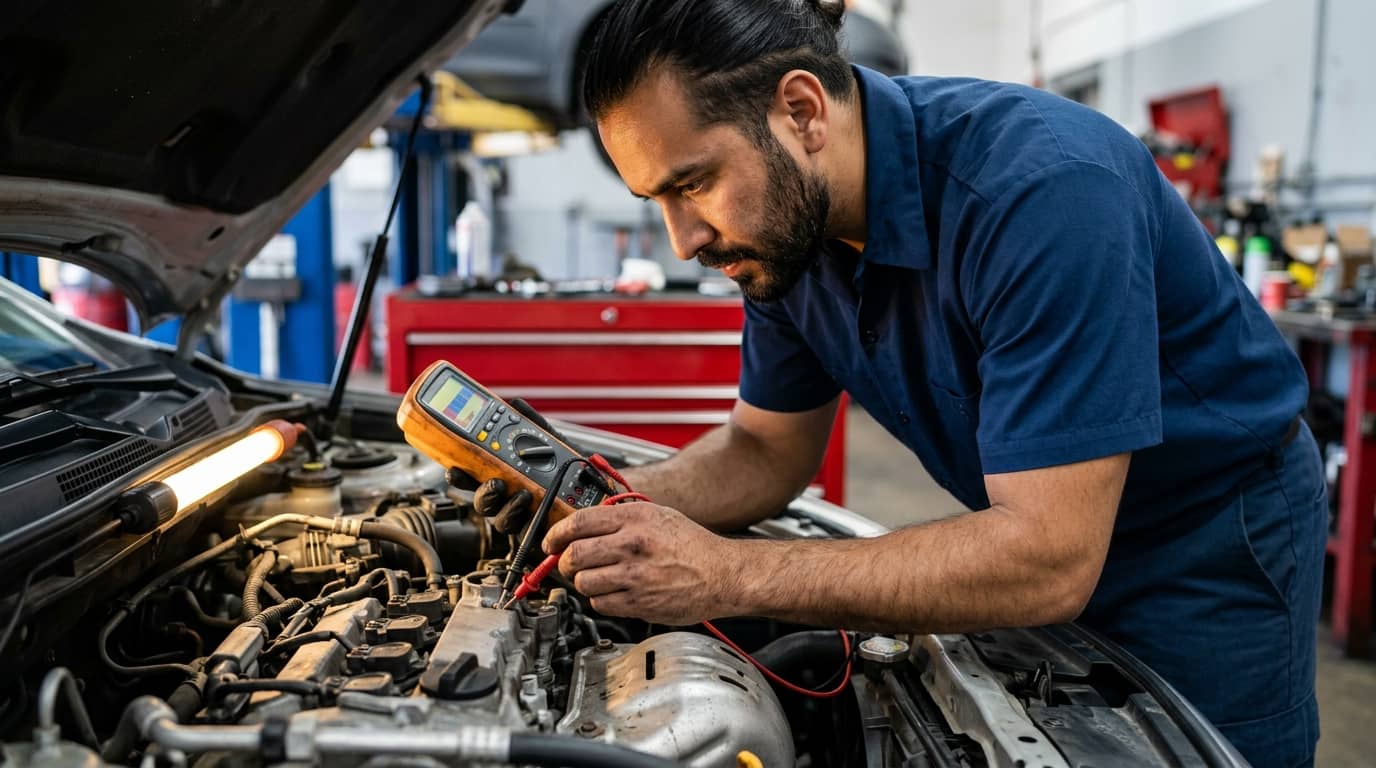
Applies multimeter, test light, and oscilloscope techniques to open, short, and high-resistance faults. Repair methods include splicing, terminal replacement, and harness repair.
Lesson 2 • Starting System Diagnosis
Details starter motor operation, solenoid function, and cranking circuit voltage drops. Voltage drop testing pinpoints resistance faults without component replacement.
Lesson 3 • Electrical Fundamentals and Circuit Theory
Covers voltage, current, resistance, and Ohm's Law as applied to automotive circuits. These principles underpin every electrical diagnosis performed in subsequent sections.
Lesson 4 • Battery and Charging System
Examines battery construction, state of charge, and alternator output regulation. A healthy charging system is prerequisite to reliable operation of all vehicle electronics.
Lesson 5 • Wiring Diagrams and Circuit Tracing
Teaches schematic symbols, wire colour codes, and connector identification in service diagrams. Accurate diagram reading is the fastest path to fault isolation.
Chapter 5HideHide detailsSee detailsEngine Management and Diagnostics
Engine Management and Diagnostics
Lesson 1 • OBD Protocols and Scan Tool Use
Introduces OBD communication protocols, PID data streams, and freeze frame data interpretation. Scan tool proficiency accelerates diagnosis and reduces diagnostic time.
Lesson 2 • Engine Control Module Operation
Explains ECM architecture, sensor inputs, actuator outputs, and closed-loop control strategies. The ECM integrates all powertrain data to optimise combustion and emissions.
Lesson 3 • Oxygen and Exhaust Gas Sensors
Covers narrowband and wideband oxygen sensors, catalyst monitors, and exhaust gas recirculation feedback. Sensor accuracy directly controls fuel trim and emissions compliance.
Lesson 4 • Fuel Trim Analysis and Diagnosis
Teaches short-term and long-term fuel trim interpretation to identify lean and rich conditions. Fuel trim data narrows fault location before component testing begins.
Lesson 5 • Drivability Fault Diagnosis
Applies a structured diagnostic process to hesitation, stalling, rough idle, and misfire complaints. Systematic workflow prevents parts-swapping and confirms root cause before repair.
Chapter 6HideHide detailsSee detailsBraking, Steering, and Suspension Systems
Braking, Steering, and Suspension Systems
Lesson 1 • Steering System Components and Service
Covers rack-and-pinion and recirculating-ball steering, power assist types, and tie rod service. Steering component wear directly affects vehicle handling and tyre wear.
Lesson 2 • Disc and Drum Brake Service
Details brake disc and drum inspection, pad and shoe replacement, and brake caliper service procedures. Correct friction material selection and hardware installation ensure even braking.
Lesson 3 • Anti-Lock Braking and Stability Systems
Explains wheel speed sensors, ABS modulator operation, and traction and stability control integration. ABS diagnosis requires scan tool data and sensor signal verification.
Lesson 4 • Suspension Geometry and Wheel Alignment
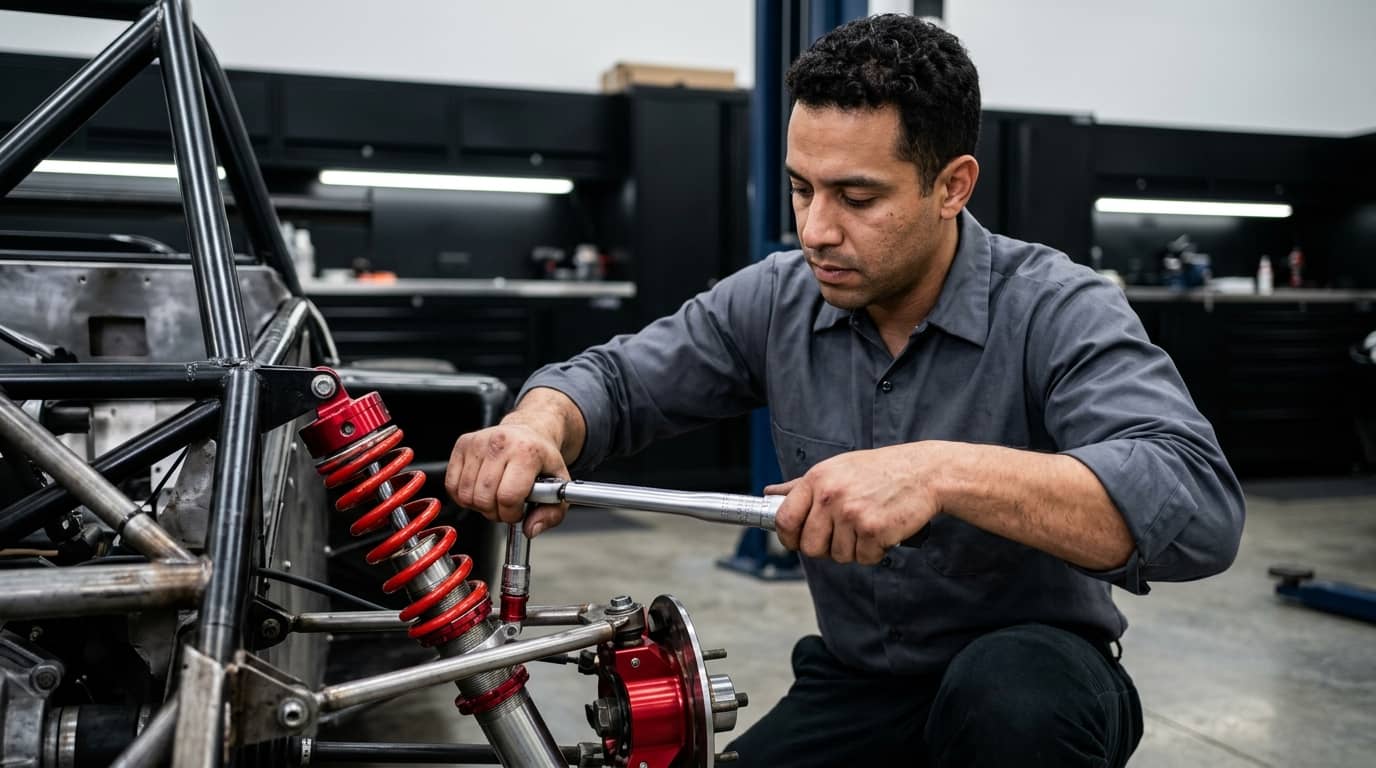
Teaches camber, caster, toe, and thrust angle concepts and their effect on tyre wear and handling. Alignment measurement and adjustment complete the chassis service process.
Lesson 5 • Hydraulic Brake System Fundamentals
Covers master cylinder, brake pipes, proportioning valves, and Pascal's Law in brake circuits. Hydraulic integrity is the foundation of safe stopping performance.
Chapter 7HideHide detailsSee detailsTransmission and Drivetrain Systems
Transmission and Drivetrain Systems
Lesson 1 • Manual Transmission and Clutch
Covers gear ratios, synchroniser operation, and clutch hydraulic or mechanical linkage systems. Clutch diagnosis distinguishes slipping, dragging, and chatter conditions accurately.
Lesson 2 • Transfer Cases and Four-Wheel Drive
Explains part-time and full-time four-wheel drive systems, transfer case operation, and engagement mechanisms. Proper mode selection and fluid maintenance prevent premature wear.
Lesson 3 • Continuously Variable and Dual-Clutch Transmissions
Introduces CVT belt-and-pulley systems and dual-clutch gearbox architecture and control. These designs require unique fluid specifications and electronic calibration procedures.
Lesson 4 • Driveshaft, Axle, and Differential
Covers U-joint and CV joint operation, axle shaft types, and open and limited-slip differentials. Drivetrain vibration diagnosis requires understanding of joint angles and balance.
Lesson 5 • Automatic Transmission Fundamentals
Explains torque converter, planetary gearsets, and hydraulic control circuits in automatic gearboxes. Understanding shift logic is prerequisite to electronic gearbox diagnosis.
Chapter 8HideHide detailsSee detailsAdvanced Diagnostics and Hybrid Systems
Advanced Diagnostics and Hybrid Systems
Lesson 1 • Oscilloscope Diagnostics for Sensors and Actuators
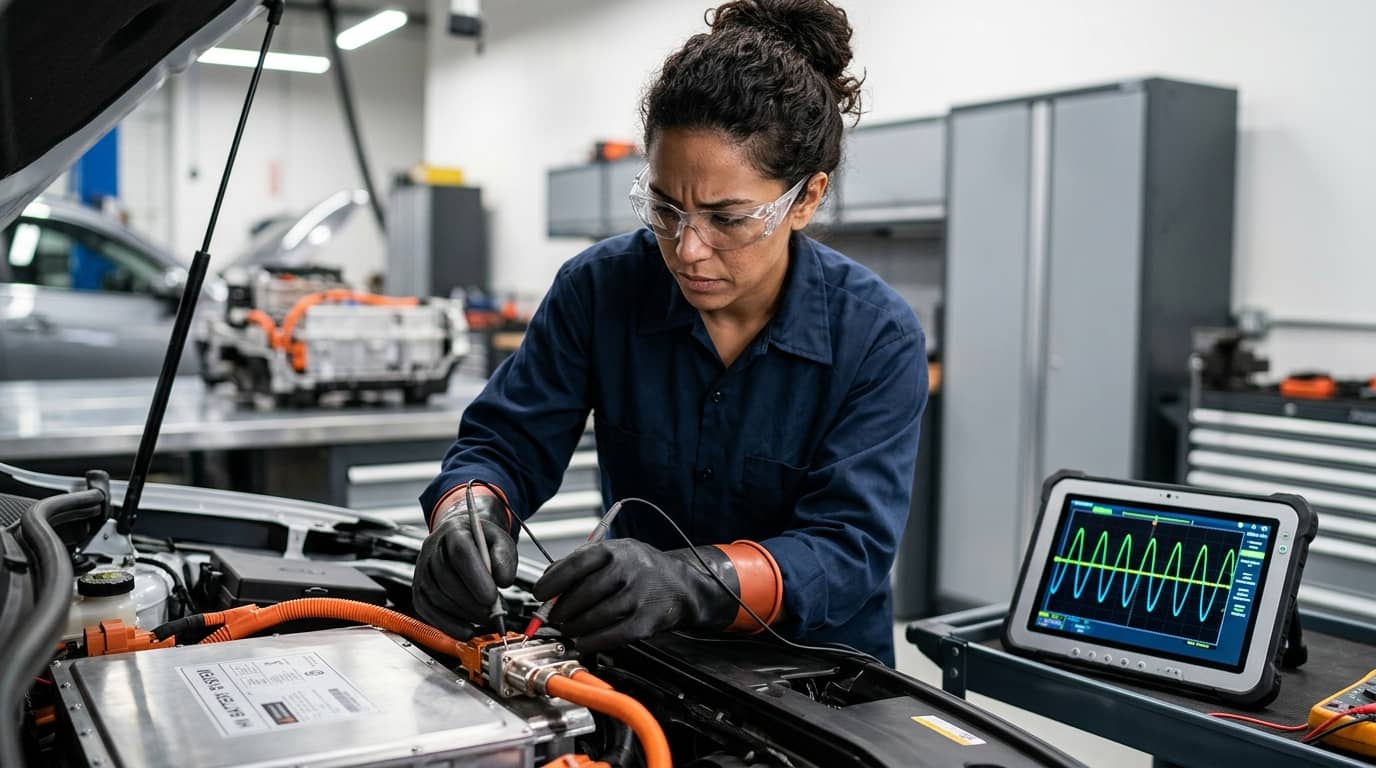
Uses oscilloscope waveform analysis to evaluate sensor signal quality and actuator response times. Waveform comparison to known-good patterns isolates intermittent and degraded faults.
Lesson 2 • High-Voltage Safety and Service Procedures
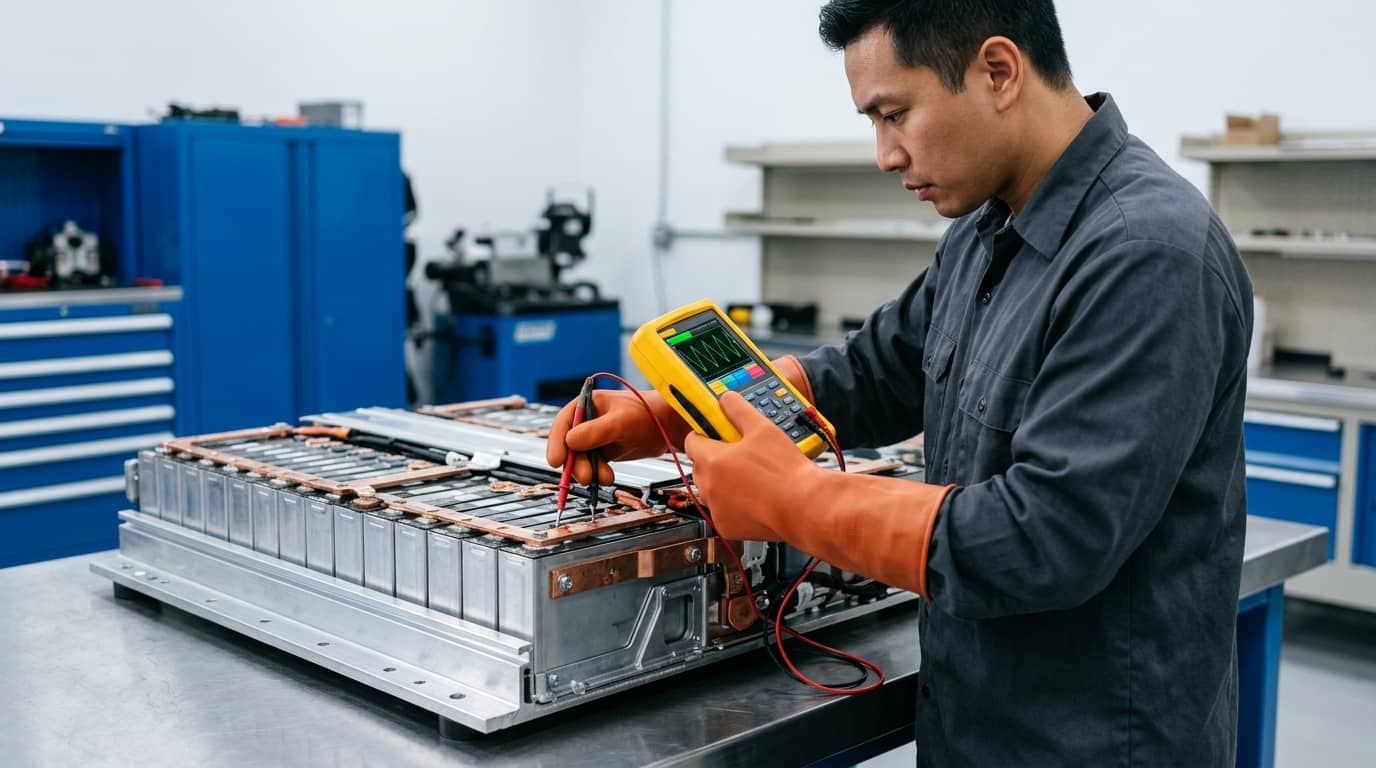
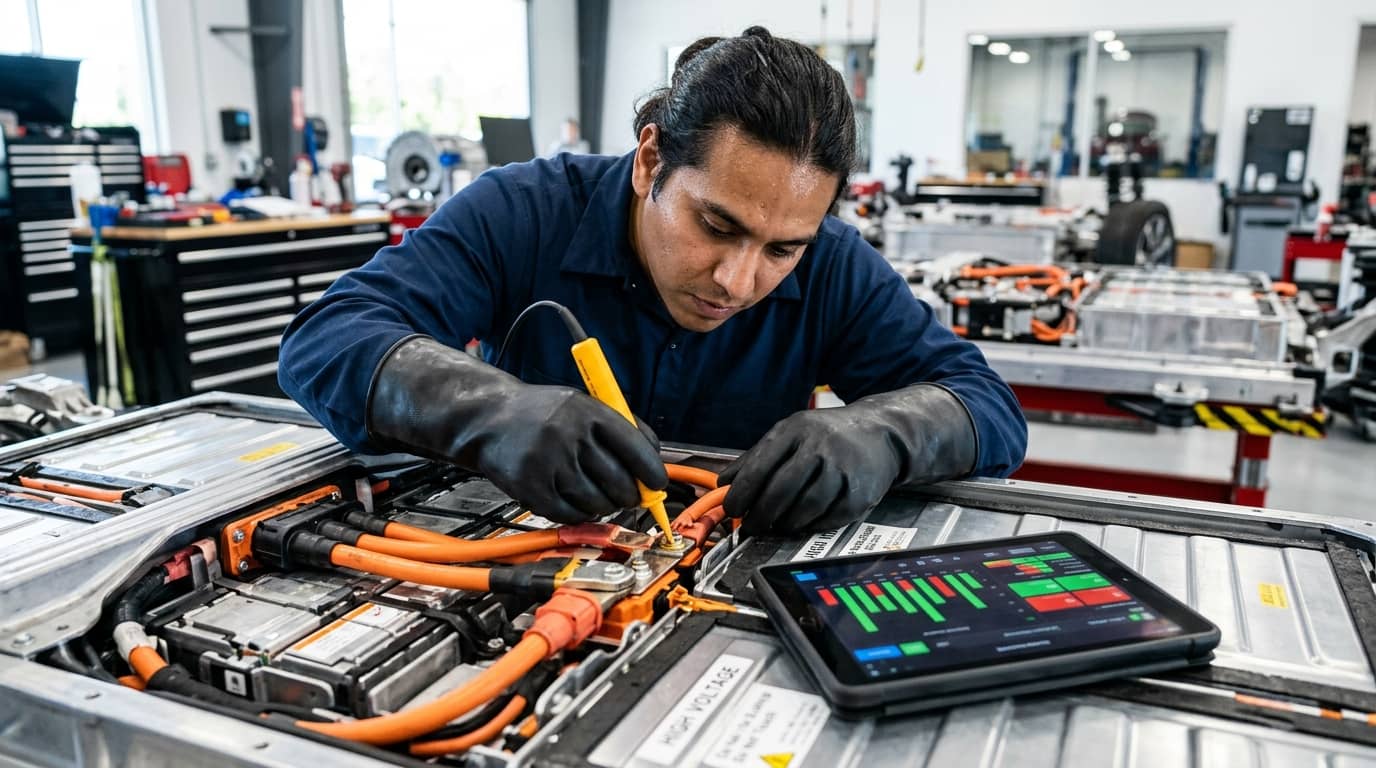
Covers high-voltage PPE, isolation procedures, interlock systems, and safe manual service disconnect. Compliance with high-voltage safety protocols is mandatory before any HV work.
Lesson 3 • Hybrid and Electric Vehicle Architecture
Introduces series, parallel, and series-parallel hybrid configurations and battery management systems. Understanding architecture is required before any high-voltage service is attempted.
Lesson 4 • Hybrid System Diagnostics and Fault Codes
Applies scan tool data, high-voltage circuit testing, and battery state-of-health analysis to hybrid faults. Accurate diagnosis prevents unnecessary high-voltage component replacement.
Lesson 5 • Vehicle Communication Networks
Covers CAN bus, LIN, and MOST network architectures, module addressing, and network fault diagnosis. Network faults can disable multiple systems and require systematic isolation.

Your valid completion certificate
This course is for you:
Recent high school graduates exploring skilled trades as a career path.
Career changers seeking stable, hands-on work in the automotive industry.
Shade-tree mechanics ready to turn weekend hobby skills into paid work.
Lube technicians wanting to advance beyond basic maintenance service roles.
Military veterans transitioning into civilian mechanical or fleet service careers.
Service writers who want deeper technical knowledge to support their team.
What our students say
Hear from those who've already studied with us:
Your lessons are perfect. I purchased the one-year package and finally have the opportunity to follow various topics of interest without needing to change platforms... I'm grateful for everything you do, I've already recommended you to other people...

I like how the lessons are straight to the point and how I can change chapters and skip content I don't need.

I like the content and the way videos are presented and transcribed, which speeds up the process!

The platform is fast and simple to use. The diversity of content and complementary videos really help with learning.

Top upskilling courses










FAQ
Who is Elevify? How does it work?
Do the courses have certificates?
Are the courses free?
What is the course workload?
What are the courses like?
How do the courses work?
What is the duration of the courses?
What is the cost or price of the courses?
What is an EAD or online course and how does it work?
PDF Course