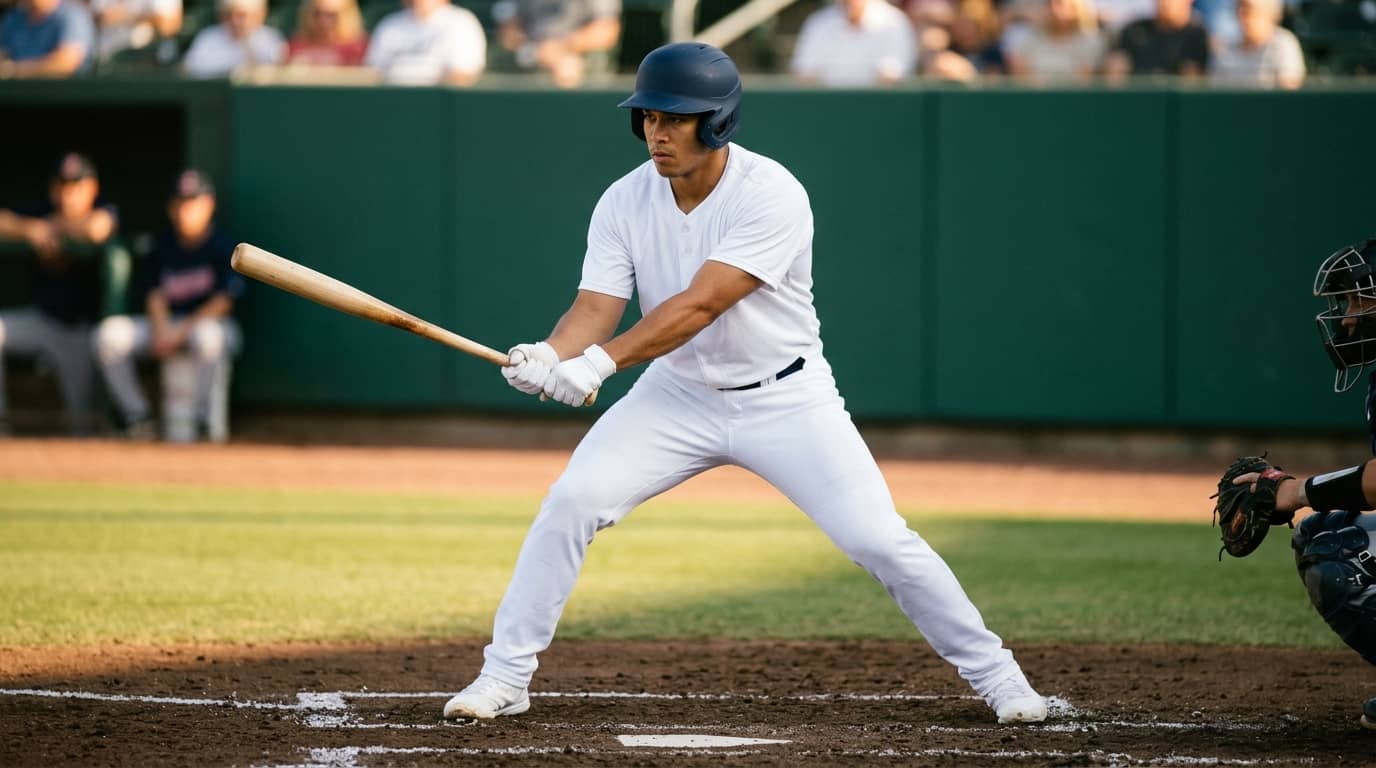
Baseball Course
Master every dimension of baseball, from fundamental rules and mechanics to advanced pitching strategy and analytics. This course covers hitting, fielding, baserunning, coaching, and sports psychology in one complete programme. Whether you're a player, coach, or serious fan, you'll build real, applicable baseball knowledge from the ground up.
What you'll learn:
This course takes you through the complete game of baseball, starting with pitch layout, rules, and player positions before moving into throwing mechanics, hitting fundamentals, and pitching delivery. You'll learn how to execute bunts, steals, and situational hitting, and how to coordinate team defence with cut-offs, double plays, and defensive alignments. The programme also covers advanced topics including pitch sequencing, bullpen management, baseball analytics, and catcher-specific skills. Strength training, mental performance, and coaching methods round out the full curriculum.
How you study in practice Baseball Course
How you practise Baseball Course
For businesses looking to train their team
With Elevify for businesses, the course includes exercises and examples tailored to your own business and the way your company needs.

Course content
8 Chapters • 39 LessonsDuration between 4 and 360 hours (you decide)
Chapter 1HideHide detailsSee detailsIntroduction to Baseball Fundamentals
Introduction to Baseball Fundamentals
Lesson 1 • Core Rules and Game Structure
Explains innings, outs, scoring, and win conditions. Provides the rule framework students need before studying strategy and technique.
Lesson 2 • History and Origins of Baseball
Traces baseball's evolution from 19th-century origins to modern professional leagues. Establishes cultural context that informs rules and traditions covered throughout the course.
Lesson 3 • Positions and Player Roles
Defines all nine defensive positions and their primary responsibilities. Prepares students to understand team coordination and positional strategy.
Lesson 4 • The Baseball Pitch and Equipment
Identifies pitch dimensions, zones, and required equipment for play. Connects physical environment to positional roles and gameplay mechanics introduced later.
Chapter 2HideHide detailsSee detailsThrowing and Catching Mechanics
Throwing and Catching Mechanics
Lesson 1 • Fielding Ground Balls
Teaches approach angles, glove-to-ground positioning, and transfer speed for ground balls. Directly prepares students for infield defensive drills.
Lesson 2 • Catching Fly Balls and Line Drives
Develops tracking skills and glove positioning for aerial catches. Builds the aerial fielding competency required for outfield and infield play.
Lesson 3 • Footwork and Body Mechanics
Covers stance, weight transfer, and stride for generating throwing power. Proper footwork reduces injury risk and improves throw consistency.
Lesson 4 • Throwing Accuracy and Distance
Applies grip and mechanics to develop throws across varying distances and match situations. Connects technique to real defensive scenarios introduced in later chapters.
Lesson 5 • Grip and Arm Action for Throwing
Teaches four-seam and two-seam grips alongside proper arm path mechanics. Correct grip directly affects throw accuracy and velocity covered in later sections.
Chapter 3HideHide detailsSee detailsHitting Fundamentals and Bat Control
Hitting Fundamentals and Bat Control
Lesson 1 • Plate Discipline and Pitch Recognition
Develops the ability to identify pitch type and location early in flight. Plate discipline reduces strikeouts and sets up the situational hitting covered later.
Lesson 2 • Load, Stride, and Timing
Covers the weight shift, leg kick or toe-tap, and stride timing relative to pitch delivery. Proper timing is the prerequisite for generating bat speed.
Lesson 3 • Stance, Grip, and Setup
Establishes the pre-swing foundation including foot placement, grip pressure, and bat angle. A sound setup directly enables the rotational mechanics taught next.
Lesson 4 • Follow-Through and Finish
Explains the role of a complete follow-through in maximising power and bat speed. Reinforces full-body mechanics introduced in earlier sections.
Lesson 5 • Swing Path and Contact Zone
Teaches hip rotation, bat path, and the contact zone for pitches in different locations. Students learn to match swing plane to pitch plane for solid contact.
Chapter 4HideHide detailsSee detailsPitching Mechanics and Pitch Types
Pitching Mechanics and Pitch Types
Lesson 1 • Delivery Mechanics and Release
Covers stride direction, hip-shoulder separation, arm path, and release point. Proper mechanics maximise velocity whilst minimising arm stress.
Lesson 2 • Breaking Balls and Off-Speed Pitches
Introduces curveball, slider, and changeup grips, spins, and movement profiles. Each pitch is taught as a complement to the fastball established in the prior section.
Lesson 3 • Pitching from the Stretch
Adapts full-delivery mechanics to the stretch position used with runners on base. Connects pitching mechanics to the baserunning and defensive scenarios covered later.
Lesson 4 • Pitching Stance and Windup
Establishes the set position and full windup as the starting point of every delivery. Consistent setup is the foundation for repeatable mechanics throughout the chapter.
Lesson 5 • Fastball Command and Location
Teaches four-seam and two-seam fastball grips with emphasis on hitting quadrants of the strike zone. Command of the fastball is required before adding secondary pitches.
Chapter 5HideHide detailsSee detailsBaserunning and Sliding Techniques
Baserunning and Sliding Techniques
Lesson 1 • Leading Off and Stealing Bases
Teaches primary and secondary leads, jump timing, and steal reads. Aggressive baserunning creates scoring opportunities addressed in the strategy chapter.
Lesson 2 • Running Out of the Batter's Box
Covers first-step quickness, running lane rules, and rounding first base. Establishes the starting point of every baserunning sequence.
Lesson 3 • Situational Baserunning Decisions
Applies baserunning skills to match situations including force plays, sacrifice flies, and rundowns. Connects individual technique to team offensive strategy.
Lesson 4 • Rounding Bases and Taking Extra Bases
Develops efficient base-rounding angles and decision-making for advancing extra bases. Proper routes reduce time between bases and increase scoring chances.
Lesson 5 • Sliding Mechanics and Safety
Teaches pop-up, hook, and headfirst slides with emphasis on safety and avoiding tags. Proper sliding technique prevents injury and improves safe-call rates.
Chapter 6HideHide detailsSee detailsDefensive Positioning and Team Defence
Defensive Positioning and Team Defence
Lesson 1 • Cutoff and Relay Systems
Teaches cutoff routes, relay positioning, and communication for balls hit to the outfield. Efficient relay systems prevent extra bases and are central to team defence.
Lesson 2 • Outfield Communication and Priorities
Establishes priority rules, communication calls, and backup responsibilities amongst outfielders. Prevents collisions and ensures every ball has a designated fielder.
Lesson 3 • Defensive Alignment by Situation
Covers standard, shifted, and drawn-in alignments based on batter tendencies and match context. Situational alignment is the foundation of all team defensive concepts.
Lesson 4 • Bunt Defence and First-and-Third Plays
Covers defensive assignments for sacrifice bunts and first-and-third steal situations. These high-frequency match scenarios require coordinated positional responses.
Lesson 5 • Double Play Execution
Develops footwork, feed types, and pivot mechanics for turning double plays. The double play is the highest-value defensive skill built on prior throwing mechanics.
Chapter 7HideHide detailsSee detailsOffensive Strategy and Match Situations
Offensive Strategy and Match Situations
Lesson 1 • Small Ball and Manufacturing Runs
Develops strategies for scoring without extra-base hits using speed, bunts, and baserunning. Small-ball tactics are essential when facing dominant pitching.
Lesson 2 • Situational Hitting Approaches
Teaches adjustments for hit-and-run, opposite-field hitting, and driving in runners. Situational awareness transforms individual hitting skill into team offensive production.
Lesson 3 • Bunting Techniques and Applications
Covers sacrifice bunt, bunt for a hit, and squeeze bunt mechanics and placement. Bunting is a precision skill that advances runners and creates scoring opportunities.
Lesson 4 • Late-Game Offensive Adjustments
Covers pinch-hitting, pinch-running, and offensive decisions in close late-inning situations. These decisions require integrating all prior offensive knowledge under pressure.
Lesson 5 • Lineup Construction Principles
Explains the roles of each lineup spot and how player attributes match positional batting order slots. Lineup construction maximises run-scoring potential across nine innings.
Chapter 8HideHide detailsSee detailsAdvanced Pitching and Match Management
Advanced Pitching and Match Management
Lesson 1 • Bullpen Roles and Management
Defines starter, long reliever, setup, and closer roles and the decision logic for each. Bullpen management directly affects match outcomes and pitcher health.
Lesson 2 • In-Game Pitching Adjustments
Covers mechanical corrections, grip changes, and strategic pivots made during a match. Adaptability separates effective pitchers from one-dimensional throwers.
Lesson 3 • Pitch Sequencing and Tunnelling
Teaches how to sequence pitches to exploit batter weaknesses and create deception. Effective sequencing multiplies the value of each individual pitch type learned earlier.
Lesson 4 • Pitcher Conditioning and Arm Care
Establishes workload management, recovery protocols, and arm-strengthening routines. Sustainable arm health is the prerequisite for long-term pitching effectiveness.
Lesson 5 • Reading and Attacking Hitter Weaknesses
Develops the ability to identify and exploit mechanical and mental weaknesses in opposing hitters. Combines scouting information with pitch selection for strategic advantage.

Your valid completion certificate
This course is for you:
Youth player: eager to build correct habits before bad ones form.
High school athlete: looking to earn a starting spot through smarter preparation.
Adult recreational player: wanting to compete with more confidence and consistency.
First-time coach: needing a structured framework to teach and manage a team.
Devoted fan: ready to move beyond watching and truly understand the game.
Athletic trainer: expanding expertise to support baseball-specific conditioning and recovery.
What our students say
Hear from those who've already studied with us:
Your lessons are perfect. I purchased the one-year package and finally have the opportunity to follow various topics of interest without needing to change platforms... I'm grateful for everything you do, I've already recommended you to other people...

I like how the lessons are straight to the point and how I can change chapters and skip content I don't need.

I like the content and the way videos are presented and transcribed, which speeds up the process!

The platform is fast and simple to use. The diversity of content and complementary videos really help with learning.

Top upskilling courses


FAQ
Who is Elevify? How does it work?
Do the courses have certificates?
Are the courses free?
What is the course workload?
What are the courses like?
How do the courses work?
What is the duration of the courses?
What is the cost or price of the courses?
What is an EAD or online course and how does it work?
PDF Course