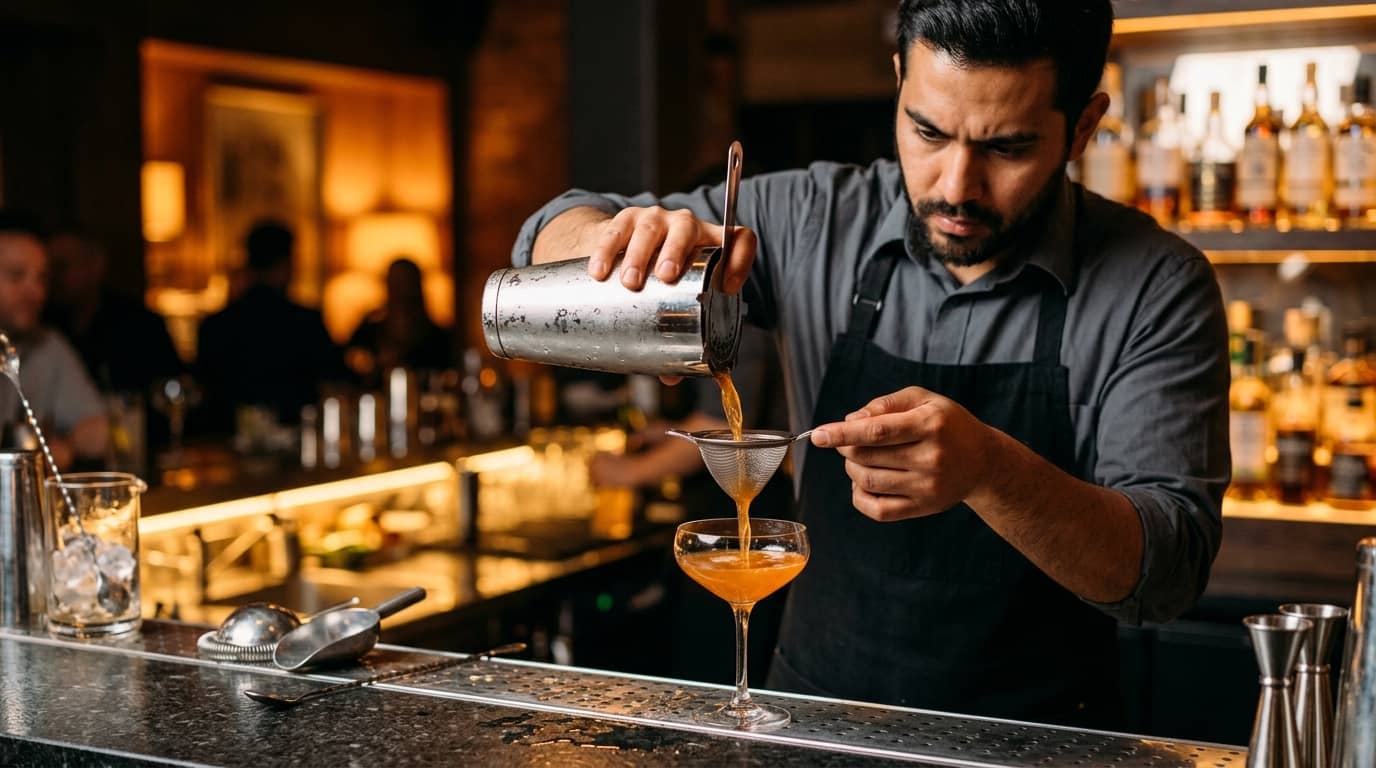
Bartender Training Course
Get the hands-on skills you need to work behind any bar with confidence. This Bar Attendant Course covers everything from responsible alcohol service and cocktail preparation to stock control and guest engagement. Whether you are starting fresh or levelling up, this course gives you the practical knowledge employers are looking for.
What you'll learn:
You will learn how to operate a bar professionally, from setting up your workstation to closing out a shift. The course covers responsible service of alcohol, including how to spot intoxication and handle refusals correctly. You will build solid knowledge of spirits, wine and beer, and develop real cocktail-making skills using industry-standard tools and techniques. Guest service, upselling and complaint handling are covered in depth so you can perform under pressure. You will also learn stock management, cash handling and how to use POS systems accurately.
How you study in practice Bartender Training Course
How you practise Bartender Training Course
For businesses looking to train their team
With Elevify for businesses, the course includes exercises and examples tailored to your own business and the way your company needs.

Course content
8 Chapters • 35 LessonsDuration between 4 and 360 hours (you decide)
Chapter 1HideHide detailsSee detailsIntroduction to Bar Operations
Introduction to Bar Operations
Lesson 1 • Professional Standards and Personal Presentation
Establishes grooming, uniform, and behavioural standards expected in licensed venues. Connects personal presentation to brand image and guest perception.
Lesson 2 • Roles and Responsibilities of Bar Staff
Defines the duties of bar attendants, supervisors, and support staff. Clarifies accountability structures that underpin professional conduct in all subsequent chapters.
Lesson 3 • Workplace Health and Safety Basics
Introduces hazard identification, safe lifting, and spill management in bar settings. Provides the safety foundation required before handling equipment and beverages.
Lesson 4 • The Bar Environment and Layout
Covers the physical structure of a bar, including front-of-house and back-of-house zones. Establishes spatial awareness essential for efficient service throughout the course.
Chapter 2HideHide detailsSee detailsResponsible Service of Alcohol
Responsible Service of Alcohol
Lesson 1 • Identifying Intoxication and At-Risk Patrons
Trains staff to observe behavioural and physical cues indicating intoxication or vulnerability. Builds observational skills applied throughout service interactions.
Lesson 2 • Refusing Service and Managing Refusals
Covers legal duty to refuse service and de-escalation techniques for difficult interactions. Equips staff to handle refusals safely whilst maintaining venue reputation.
Lesson 3 • Alcohol and Its Effects on the Body
Explains how alcohol is absorbed, metabolised, and how it affects behaviour and coordination. Provides the physiological basis for all responsible service decisions.
Lesson 4 • Regulatory Compliance and Venue Obligations
Outlines licensing conditions, age verification requirements, and venue duty-of-care obligations. Ensures staff understand the legal context governing every service interaction.
Chapter 3HideHide detailsSee detailsBar Equipment and Tools Mastery
Bar Equipment and Tools Mastery
Lesson 1 • Measuring and Pouring Tools
Covers jiggers, pourers, and free-pour techniques for accurate spirit measurement. Consistent measurement directly impacts drink quality and cost control.
Lesson 2 • Cocktail Preparation Equipment
Introduces shakers, mixing glasses, strainers, and bar spoons used in cocktail production. Mastery of these tools is prerequisite to the cocktail preparation chapters.
Lesson 3 • Cleaning and Sanitizing Bar Equipment
Details cleaning schedules, sanitising solutions, and food-safe hygiene standards for all bar tools. Hygiene compliance protects guests and meets regulatory requirements.
Lesson 4 • Glassware Types and Proper Handling
Identifies glassware categories and their correct use for specific beverages. Proper handling reduces breakage and ensures hygienic presentation throughout service.
Lesson 5 • Draught Beer and Dispensing Systems
Explains keg connections, gas pressure, and tap operation for draught beer service. Correct system management prevents waste and maintains beer quality.
Chapter 4HideHide detailsSee detailsBeverage Knowledge: Spirits and Liqueurs
Beverage Knowledge: Spirits and Liqueurs
Lesson 1 • Liqueurs and Specialty Spirits
Identifies liqueur families, sweetness levels, and their role as cocktail modifiers. Expands the flavour toolkit students apply in cocktail and mixed drink preparation.
Lesson 2 • Vodka, Gin, and Tequila
Examines clear and botanical spirits, their base ingredients, and production distinctions. Builds the product knowledge needed for cocktail construction in later chapters.
Lesson 3 • Introduction to Distillation and Spirit Categories
Explains the distillation process and how it produces distinct spirit categories. Provides the production framework that contextualises all spirit knowledge in this chapter.
Lesson 4 • Whiskey, Rum, and Brandy
Covers production regions, grain or base ingredients, and flavour profiles of brown spirits. Enables accurate recommendations and upselling based on guest preferences.
Chapter 5HideHide detailsSee detailsBeverage Knowledge: Wine and Beer
Beverage Knowledge: Wine and Beer
Lesson 1 • Wine Service Techniques
Teaches correct opening, pouring, and temperature service for still and sparkling wines. Correct technique enhances guest experience and prevents costly errors.
Lesson 2 • Beer Service and Quality Standards
Covers correct glassware, pour angles, and head management for bottled and draught beer. Consistent quality service builds guest loyalty and reduces product waste.
Lesson 3 • Wine Fundamentals for Bar Staff
Covers grape varieties, wine regions, and the difference between still, sparkling, and fortified wines. Provides the vocabulary and context for confident wine service.
Lesson 4 • Beer Styles and Flavour Profiles
Introduces lager, ale, stout, and craft beer categories with their defining characteristics. Enables staff to match beer styles to guest taste preferences accurately.
Chapter 6HideHide detailsSee detailsCocktail Preparation and Techniques
Cocktail Preparation and Techniques
Lesson 1 • Cocktail Construction Methods
Teaches shaking, stirring, building, and blending as the four primary cocktail methods. Each method is matched to appropriate drink styles for consistent results.
Lesson 2 • Garnishing and Presentation Standards
Covers garnish preparation, glassware selection, and visual presentation for cocktails. Consistent presentation reinforces brand standards and elevates guest perception.
Lesson 3 • Syrups, Infusions, and Fresh Ingredients
Explains preparation of house syrups, fresh juices, and infused spirits used in cocktail recipes. Quality ingredients directly determine the flavour balance of finished drinks.
Lesson 4 • Classic Cocktail Recipes
Covers the preparation of foundational cocktails that form the basis of most bar menus. Mastery of classics provides the template for all creative variations.
Lesson 5 • Speed and Efficiency During Service
Develops mise en place habits and multi-order management skills for high-volume service. Efficiency under pressure is the hallmark of a professional bar attendant.
Chapter 7HideHide detailsSee detailsGuest Service and Sales Techniques
Guest Service and Sales Techniques
Lesson 1 • Menu Knowledge and Recommendations
Trains staff to describe menu items confidently and tailor recommendations to guest preferences. Product knowledge converts inquiries into sales and builds trust.
Lesson 2 • Upselling and Revenue Generation
Introduces ethical upselling techniques including premium spirit substitutions and add-ons. Applied consistently, these skills increase average spend without pressuring guests.
Lesson 3 • Welcoming and Engaging Guests
Covers greeting techniques, reading guest cues, and establishing rapport quickly at the bar. First impressions set the tone for the entire service interaction.
Lesson 4 • Handling Complaints and Service Recovery
Provides a structured approach to resolving drink complaints and service failures at the bar. Effective recovery turns dissatisfied guests into loyal patrons.
Chapter 8HideHide detailsSee detailsBar Management and Stock Control
Bar Management and Stock Control
Lesson 1 • Opening and Closing Bar Procedures
Details the systematic tasks required to open and close a bar safely and efficiently. Consistent procedures ensure readiness for service and secure venue closure.
Lesson 2 • Stock Receiving and Storage
Covers delivery checking, correct storage conditions, and stock rotation for all bar products. Proper storage preserves product quality and prevents financial loss.
Lesson 3 • Waste Reduction and Cost Control
Identifies sources of bar waste and applies portion control and spillage reduction strategies. Cost control directly impacts venue profitability and staff performance reviews.
Lesson 4 • Inventory Management and Par Levels
Teaches par level setting, stocktaking procedures, and variance identification for bar inventory. Accurate inventory management reduces over-ordering and stockouts.
Lesson 5 • Cash Handling and Point-of-Sale Systems
Covers accurate cash handling, POS operation, and end-of-shift reconciliation procedures. Financial accuracy protects the business and the individual staff member.

Your valid completion certificate
This course is for you:
First-time job seekers: looking to enter the hospitality industry with credible skills.
Retail or food service workers: ready to transition into a bar environment professionally.
Hospitality students: wanting practical bar knowledge to complement their formal studies.
Career changers: drawn to the energy of bar work and seeking structured training.
Venue support staff: barbacks or floor staff aiming to step behind the bar.
Hobbyist entertainers: passionate about cocktails and wanting professional-level technique.
What our students say
Hear from those who've already studied with us:
Your lessons are perfect. I purchased the one-year package and finally have the opportunity to follow various topics of interest without needing to change platforms... I'm grateful for everything you do, I've already recommended you to other people...

I like how the lessons are straight to the point and how I can change chapters and skip content I don't need.

I like the content and the way videos are presented and transcribed, which speeds up the process!

The platform is fast and simple to use. The diversity of content and complementary videos really help with learning.

Top upskilling courses








FAQ
Who is Elevify? How does it work?
Do the courses have certificates?
Are the courses free?
What is the course workload?
What are the courses like?
How do the courses work?
What is the duration of the courses?
What is the cost or price of the courses?
What is an EAD or online course and how does it work?
PDF Course