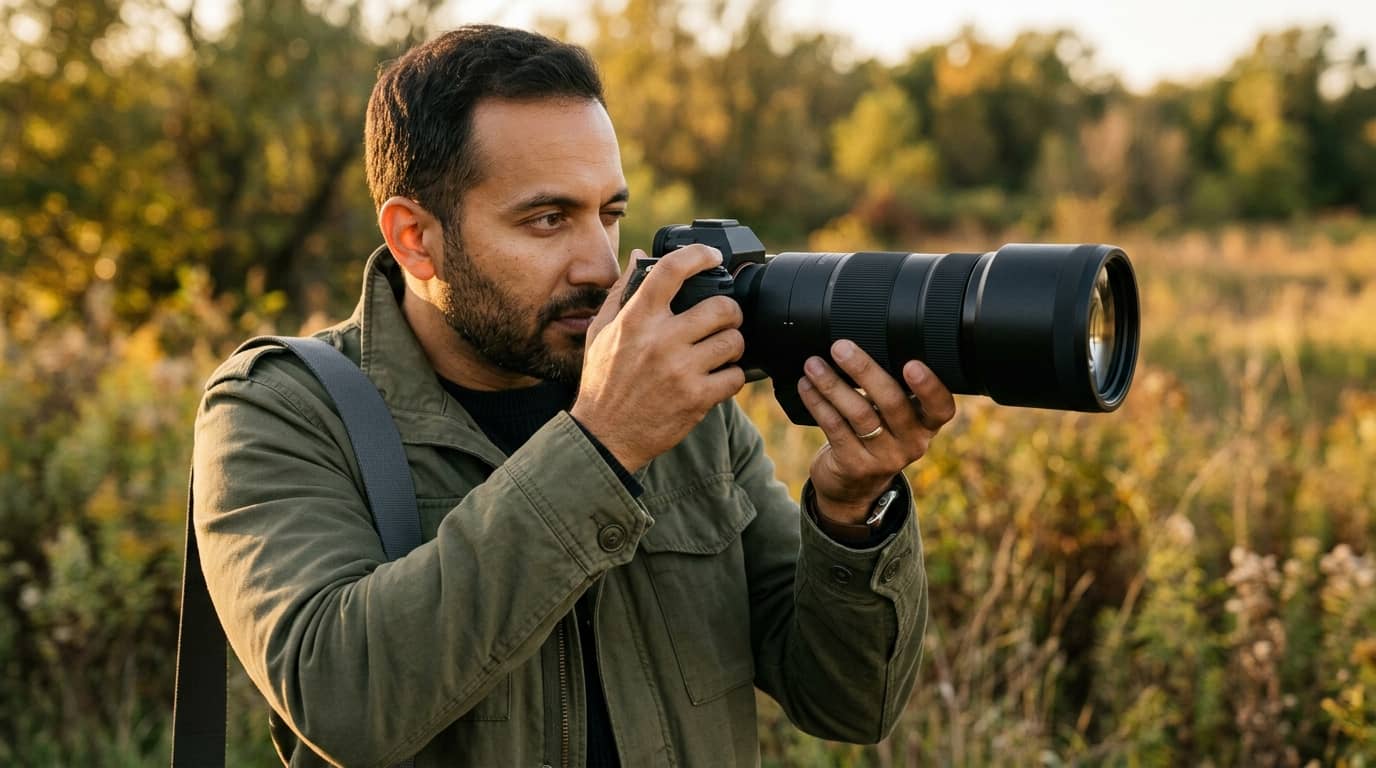
Animal Photography Course
Take your passion for animals and turn it into stunning, technically sharp photography. This course covers everything from camera settings and lens selection to field ethics and post-processing. Whether you're shooting wildlife in the field or pets in a studio, you'll leave with the skills to capture images that stop people in their tracks.
What you'll learn:
You'll build a solid foundation in camera mechanics, autofocus systems, and natural-light management tailored specifically for animal subjects. The course walks you through gear selection, field scouting, concealment techniques, and behavioural anticipation so you can consistently get the shot. You'll also explore composition principles, motion capture, and specialised environments like zoos, aquariums, and low-light settings. Post-processing workflows cover everything from culling large burst sets to colour grading and professional image delivery. Supplementary modules extend your skills into drone photography, underwater imaging, conservation storytelling, and the business side of licensing your work.
How you study in practice Animal Photography Course
How you practise Animal Photography Course
For businesses looking to train their team
With Elevify for businesses, the course includes exercises and examples tailored to your own business and the way your company needs.

Course content
8 Chapters • 40 LessonsDuration between 4 and 360 hours (you decide)
Chapter 1HideHide detailsSee detailsFoundations of Animal Photography
Foundations of Animal Photography
Lesson 1 • Understanding Animal Behaviour Basics
Covers predictable behavioural patterns across common animal groups. Enables anticipation of movement, which directly improves capture rate.
Lesson 2 • Camera Types and Controls
Covers DSLR, mirrorless, and bridge cameras for animal work. Establishes the hardware baseline for all subsequent shooting techniques.
Lesson 3 • Safe and Ethical Approach Distances
Defines minimum approach distances and stress indicators for animals. Establishes ethical standards that apply throughout the entire course.
Lesson 4 • Exposure Triangle for Moving Subjects
Teaches aperture, shutter speed, and ISO as an interdependent system. Applies directly to freezing or blurring animal motion.
Lesson 5 • Autofocus Fundamentals
Introduces AF modes, point selection, and tracking basics. Provides the focus control foundation needed before shooting unpredictable subjects.
Chapter 2HideHide detailsSee detailsLenses and Gear Selection
Lenses and Gear Selection
Lesson 1 • Remote Triggers and Camera Traps
Introduces wireless triggers and motion-activated trap setups. Enables capture of shy or nocturnal animals without human presence.
Lesson 2 • Camera Bags and Field Protection
Reviews weather sealing, padding, and access speed for field bags. Protects gear investment and ensures readiness during fast animal encounters.
Lesson 3 • Wide and Macro Lenses for Animals
Covers wide-angle environmental shots and macro for insects and small creatures. Expands the creative toolkit beyond telephoto-only thinking.
Lesson 4 • Tripods, Monopods, and Bean Bags
Compares stabilisation supports for field use with heavy lenses. Directly reduces camera shake that degrades sharpness at long focal lengths.
Lesson 5 • Telephoto Lenses for Wildlife
Examines focal lengths from 200mm to 600mm and their practical uses. Connects reach and working distance to ethical approach principles from Chapter 1.
Chapter 3HideHide detailsSee detailsLight and Exposure in the Field
Light and Exposure in the Field
Lesson 1 • Golden Hour and Blue Hour Light
Analyses low-angle warm and cool light during dawn and dusk windows. These periods align with peak animal activity, maximising both light quality and subject availability.
Lesson 2 • Flash and Artificial Light in the Field
Introduces fill flash, high-speed sync, and diffusers for animal work. Extends shooting capability into low-light and backlit scenarios.
Lesson 3 • Metering Modes for Animal Subjects
Compares evaluative, centre-weighted, and spot metering for animals. Builds on exposure triangle knowledge to achieve accurate tonal rendering.
Lesson 4 • Overcast and Diffused Light
Covers the advantages of flat, even light for fur and feather detail. Connects diffused light to reduced contrast and easier exposure decisions.
Lesson 5 • Harsh Midday Light Management
Teaches techniques to handle high-contrast overhead light. Converts a challenging condition into usable images through positioning and metering.
Chapter 4HideHide detailsSee detailsComposition and Visual Storytelling
Composition and Visual Storytelling
Lesson 1 • Background and Foreground Control
Teaches aperture and positioning choices to manage distracting elements. Clean backgrounds isolate the subject and elevate perceived image quality.
Lesson 2 • Eye Contact and Catchlights
Focuses on eye sharpness and light reflection as emotional anchors. Eye contact creates viewer connection and is the single most impactful compositional element.
Lesson 3 • Environmental Context and Scale
Covers wide shots that place animals within their habitat for narrative depth. Balances subject prominence with environmental storytelling.
Lesson 4 • Rule of Thirds and Subject Placement
Applies grid-based placement to animal subjects in motion and at rest. Establishes the primary compositional framework used throughout the course.
Lesson 5 • Sequences and Behavioural Narratives
Introduces multi-frame storytelling through behavioural sequences. Builds on single-image composition to create cohesive photo essays.
Chapter 5HideHide detailsSee detailsCapturing Motion and Action
Capturing Motion and Action
Lesson 1 • Continuous Autofocus and Tracking
Covers AI-based subject tracking and continuous AF fine-tuning. Extends AF fundamentals to fast, erratic animal movement scenarios.
Lesson 2 • Burst Mode and Buffer Management
Teaches high-speed burst shooting and managing card write speeds. Maximises the probability of capturing peak action within a behavioural sequence.
Lesson 3 • Shutter Speed Selection for Action
Maps minimum shutter speeds to animal movement types and speeds. Builds directly on exposure triangle knowledge to eliminate motion blur on demand.
Lesson 4 • Anticipating Animal Movement
Combines behavioural knowledge with camera positioning to pre-frame action. Reduces reliance on reaction speed by predicting where action will occur.
Lesson 5 • Panning Technique for Motion Blur
Introduces controlled camera movement to convey speed with a sharp subject. Provides a creative alternative to freeze-frame action imagery.
Chapter 6HideHide detailsSee detailsWildlife and Outdoor Field Techniques
Wildlife and Outdoor Field Techniques
Lesson 1 • Water and Aquatic Animal Photography
Covers shoreline, underwater housing, and surface reflection techniques. Expands field skills to aquatic environments and semi-aquatic species.
Lesson 2 • Weather and Environmental Conditions
Analyses how rain, wind, fog, and snow affect both animals and equipment. Turns adverse conditions into creative opportunities rather than obstacles.
Lesson 3 • Night and Low-Light Field Work
Introduces high-ISO shooting, red-light tools, and nocturnal species techniques. Extends the shooting day into darkness for crepuscular and nocturnal animals.
Lesson 4 • Scouting and Location Research
Covers map tools, trail cameras, and local knowledge for finding animals. Effective scouting multiplies encounter frequency and reduces wasted field time.
Lesson 5 • Concealment and Hides
Teaches portable blinds, natural cover, and vehicle hides for close approach. Reduces animal disturbance whilst enabling intimate behavioural documentation.
Chapter 7HideHide detailsSee detailsCaptive and Controlled Environment Photography
Captive and Controlled Environment Photography
Lesson 1 • Zoo and Wildlife Park Strategies
Covers fence removal, glass shooting, and enclosure background management. Applies composition and aperture skills to constrained zoo environments.
Lesson 2 • Ethical Standards in Captive Settings
Defines welfare-first standards for captive animal photography sessions. Reinforces ethical principles from Chapter 1 within managed environments.
Lesson 3 • Working with Animal Handlers
Teaches communication protocols with trainers and handlers during shoots. Ensures animal welfare and maximises cooperative behaviour for image quality.
Lesson 4 • Studio Setups for Small Animals
Covers portable studio rigs, seamless backgrounds, and lighting for pets and small wildlife. Provides controlled conditions for technically precise animal portraits.
Lesson 5 • Aquarium Photography Techniques
Addresses low light, glass glare, and moving subjects in aquarium tanks. Combines flash management and AF skills for underwater glass environments.
Chapter 8HideHide detailsSee detailsPost-Processing and Image Delivery
Post-Processing and Image Delivery
Lesson 1 • Colour Grading and Tone Adjustments
Introduces HSL, curves, and split toning for animal image aesthetics. Builds a consistent visual style across a portfolio or project series.
Lesson 2 • Culling and Image Selection
Teaches fast rating and rejection workflows for large burst sets. Efficient culling is the first step in a professional post-processing pipeline.
Lesson 3 • Raw Processing for Animal Images
Covers exposure recovery, white balance, and detail rendering in raw editors. Applies field exposure knowledge to maximise image quality in post.
Lesson 4 • Retouching and Cleanup
Covers spot removal, background cleanup, and ethical retouching limits. Maintains documentary integrity whilst producing clean, publishable images.
Lesson 5 • Export, Metadata, and Delivery
Teaches file format selection, metadata embedding, and client delivery workflows. Completes the pipeline from capture to professional image handoff.

Your valid completion certificate
This course is for you:
Nature enthusiasts ready to move beyond casual snapshots of animals.
Pet owners wanting professional-quality portraits of their animals at home.
Outdoor adventurers who encounter wildlife and want to document it properly.
Aspiring photojournalists drawn to conservation and environmental storytelling work.
Veterinary professionals seeking compelling imagery for education or outreach purposes.
Career changers exploring freelance photography with a focus on animal subjects.
What our students say
Hear from those who've already studied with us:
Your lessons are perfect. I purchased the one-year package and finally have the opportunity to follow various topics of interest without needing to change platforms... I'm grateful for everything you do, I've already recommended you to other people...

I like how the lessons are straight to the point and how I can change chapters and skip content I don't need.

I like the content and the way videos are presented and transcribed, which speeds up the process!

The platform is fast and simple to use. The diversity of content and complementary videos really help with learning.

Top upskilling courses




FAQ
Who is Elevify? How does it work?
Do the courses have certificates?
Are the courses free?
What is the course workload?
What are the courses like?
How do the courses work?
What is the duration of the courses?
What is the cost or price of the courses?
What is an EAD or online course and how does it work?
PDF Course