Arboricultural training
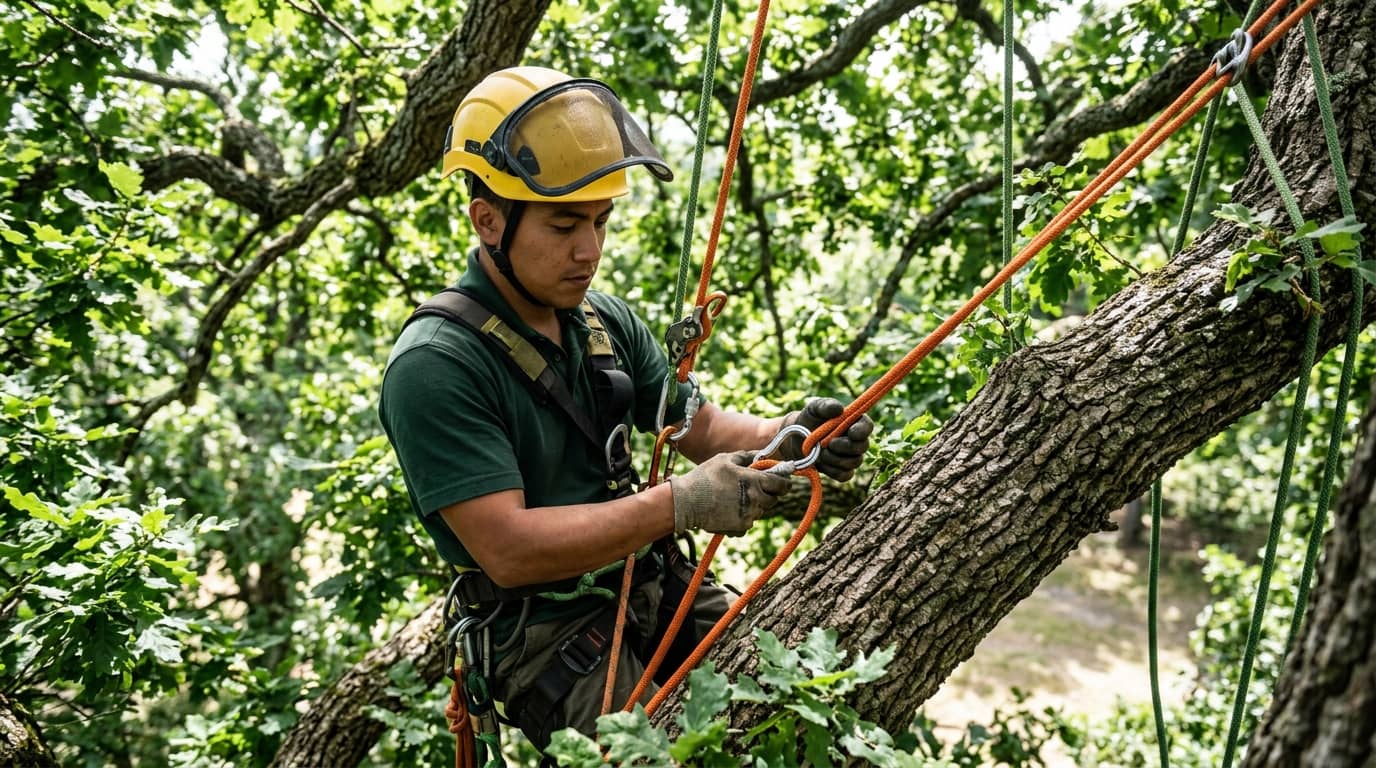
This arboricultural training programme gives you the practical knowledge and technical skills to work confidently with trees in any environment. From chainsaw safety and aerial climbing to risk assessment and tree biology, every topic is grounded in real-world application. Whether you are entering the industry or advancing your career, this course prepares you to meet professional standards from day one.
What you'll learn:
You will build a complete foundation in tree biology, anatomy, and ecology before moving into hands-on skills like chainsaw operation, aerial climbing, and sectional dismantling. You will learn how to assess tree health and structural risk using industry-standard frameworks and advanced diagnostic tools. Pruning principles, planting techniques, and soil science are covered in depth so you can make sound decisions on any site. You will also study pest and disease identification, urban tree policy, and professional report writing. By the end, you will have the technical competence and practical confidence to perform arboricultural work to a high professional standard.
How you study in practice Arboricultural training
How you practise Arboricultural training
For businesses looking to train their team
With Elevify for businesses, the course includes exercises and examples tailored to your own business and the way your company needs.

Course content
8 Chapters • 40 LessonsDuration between 4 and 360 hours (you decide)
Chapter 1HideHide detailsSee detailsFoundations of Arboriculture
Foundations of Arboriculture
Lesson 1 • Tree Identification and Classification
Teaches identification of common broadleaf and conifer species using morphological keys. Accurate identification underpins species-specific care decisions throughout the course.
Lesson 2 • Tree Physiology and Growth
Examines photosynthesis, respiration, transpiration, and seasonal growth cycles. Links physiological processes to practical timing of arboricultural interventions.
Lesson 3 • Tree Ecology and Urban Environment
Explores how trees interact with soil, climate, and urban infrastructure. Establishes ecological context for managing trees in built and natural settings.
Lesson 4 • Tree Biology and Anatomy
Covers internal and external tree structures, from roots to canopy. Provides the biological framework needed to understand tree health and response to management.
Lesson 5 • The Arborist's Professional Role
Defines the scope of arboricultural practice, ethics, and regulatory obligations. Sets professional standards that guide conduct in all subsequent chapters.
Chapter 2HideHide detailsSee detailsHealth, Hazard, and Risk Assessment
Health, Hazard, and Risk Assessment
Lesson 1 • Advanced Diagnostic Tools
Introduces resistograph, sonic tomography, and aerial inspection methods. Advanced tools extend assessment accuracy beyond visual inspection alone.
Lesson 2 • Writing Tree Assessment Reports
Structures professional written reports with findings, risk ratings, and recommendations. Report quality directly affects client decisions and legal defensibility.
Lesson 3 • Recognising Tree Health Indicators
Identifies visual symptoms of stress, disease, and pest damage from ground level. Builds diagnostic vocabulary applied throughout risk assessment workflows.
Lesson 4 • Structural Defect Identification
Covers detection of cavities, cracks, co-dominant stems, and decay columns. Structural defects directly determine hazard ratings and management priorities.
Lesson 5 • Risk Assessment Frameworks
Applies quantitative and qualitative risk matrices to tree hazard scenarios. Standardised frameworks ensure consistent, legally defensible management recommendations.
Chapter 3HideHide detailsSee detailsArboricultural Safety and Work Planning
Arboricultural Safety and Work Planning
Lesson 1 • Emergency Procedures and First Aid
Prepares students for chainsaw injuries, falls, and medical emergencies on site. Rapid, correct response minimises harm and is a regulatory requirement.
Lesson 2 • Environmental and Public Safety Controls
Addresses exclusion zones, signage, and environmental protection during operations. Controls protect the public and sensitive habitats from work-related impacts.
Lesson 3 • Personal Protective Equipment
Covers selection, fitting, inspection, and maintenance of PPE for arboricultural tasks. Correct PPE use is mandatory for all practical sessions in subsequent chapters.
Lesson 4 • Risk Assessment and Method Statements
Teaches construction of site-specific risk assessments and written method statements. These documents form the legal and operational basis for every work operation.
Lesson 5 • Workplace Hazard Identification
Identifies site-specific hazards including overhead utilities, traffic, and ground conditions. Hazard recognition is the first step in every safe work plan.
Chapter 4HideHide detailsSee detailsChainsaw Operation and Maintenance
Chainsaw Operation and Maintenance
Lesson 1 • Chainsaw Components and Selection
Identifies all chainsaw components and matches saw specifications to task requirements. Component knowledge underpins safe operation and effective maintenance.
Lesson 2 • Cross-Cutting and Felling Techniques
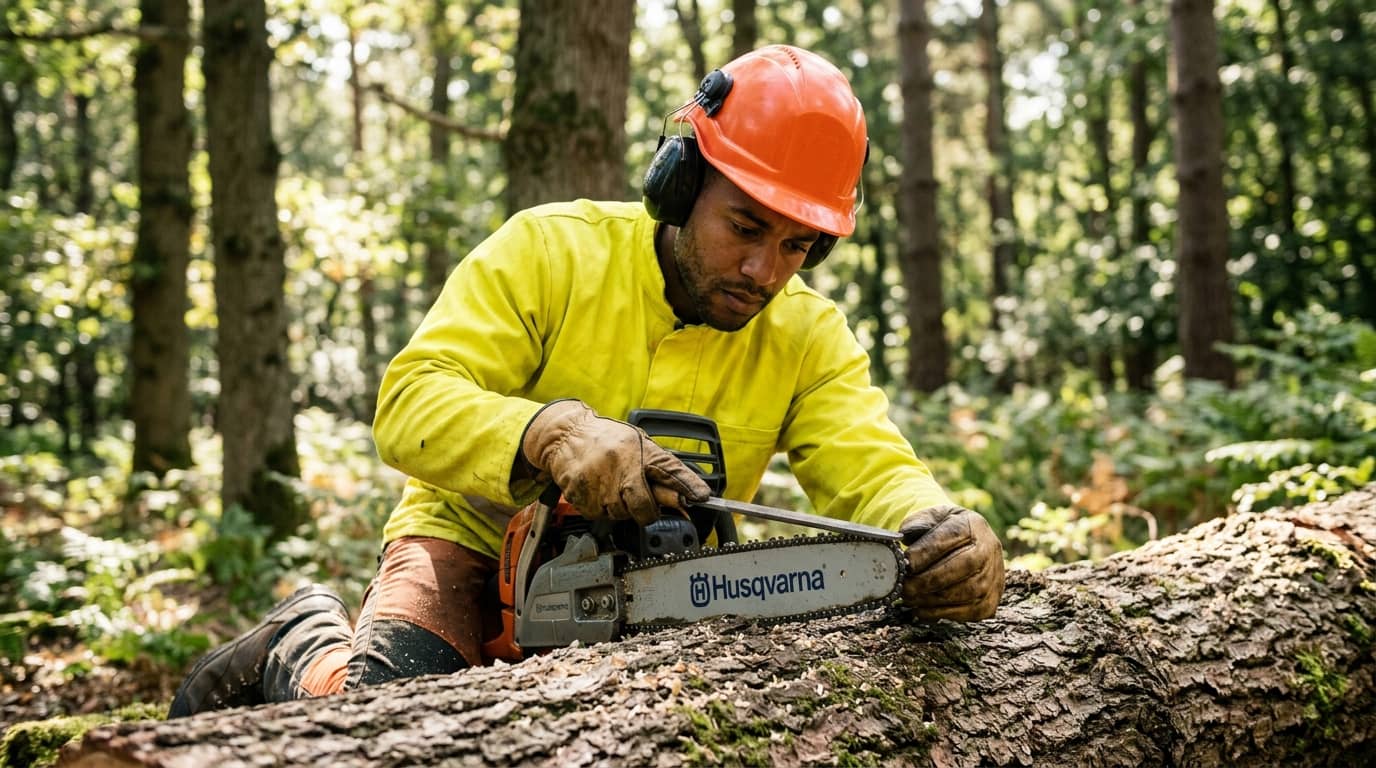
Teaches supported and unsupported cross-cuts, open-face notch, and back-cut sequences. Correct cutting geometry controls wood movement and prevents saw pinching.
Lesson 3 • Kickback Prevention and Control
Explains kickback physics, trigger zones, and chain brake activation. Kickback is the leading cause of chainsaw injury and demands dedicated focused training.
Lesson 4 • Chainsaw Maintenance and Sharpening
Covers daily cleaning, chain tensioning, bar maintenance, and file sharpening. A well-maintained saw cuts efficiently and reduces operator fatigue and injury risk.
Lesson 5 • Safe Start-Up and Shutdown
Establishes correct pre-use checks, starting procedures, and shutdown sequences. Consistent pre-use routines prevent mechanical failures and operator injuries.
Chapter 5HideHide detailsSee detailsAerial Tree Work and Climbing Techniques
Aerial Tree Work and Climbing Techniques
Lesson 1 • Aerial Lift Platform Operations
Covers mobile elevated work platform pre-use checks, positioning, and safe operation. Lifts extend reach and reduce physical demand in appropriate site conditions.
Lesson 2 • Aerial Pruning with Chainsaw
Applies pruning cuts and chainsaw operation at height within a secured work position. Combines climbing and chainsaw skills under elevated risk conditions.
Lesson 3 • Rope Installation and Anchor Systems
Teaches throwline installation, anchor point selection, and redirect placement. Secure anchors distribute load and enable controlled movement throughout the canopy.
Lesson 4 • Climbing Equipment and Inspection
Identifies saddles, ropes, carabiners, and ascenders, and applies pre-use inspection criteria. Equipment integrity is the foundation of every aerial operation.
Lesson 5 • Ascent, Descent, and Canopy Movement
Develops footlock, mechanical ascent, and controlled descent techniques. Efficient movement conserves energy and maintains positional control during aerial tasks.
Chapter 6HideHide detailsSee detailsPruning Principles and Practice
Pruning Principles and Practice
Lesson 1 • Pruning Cut Execution
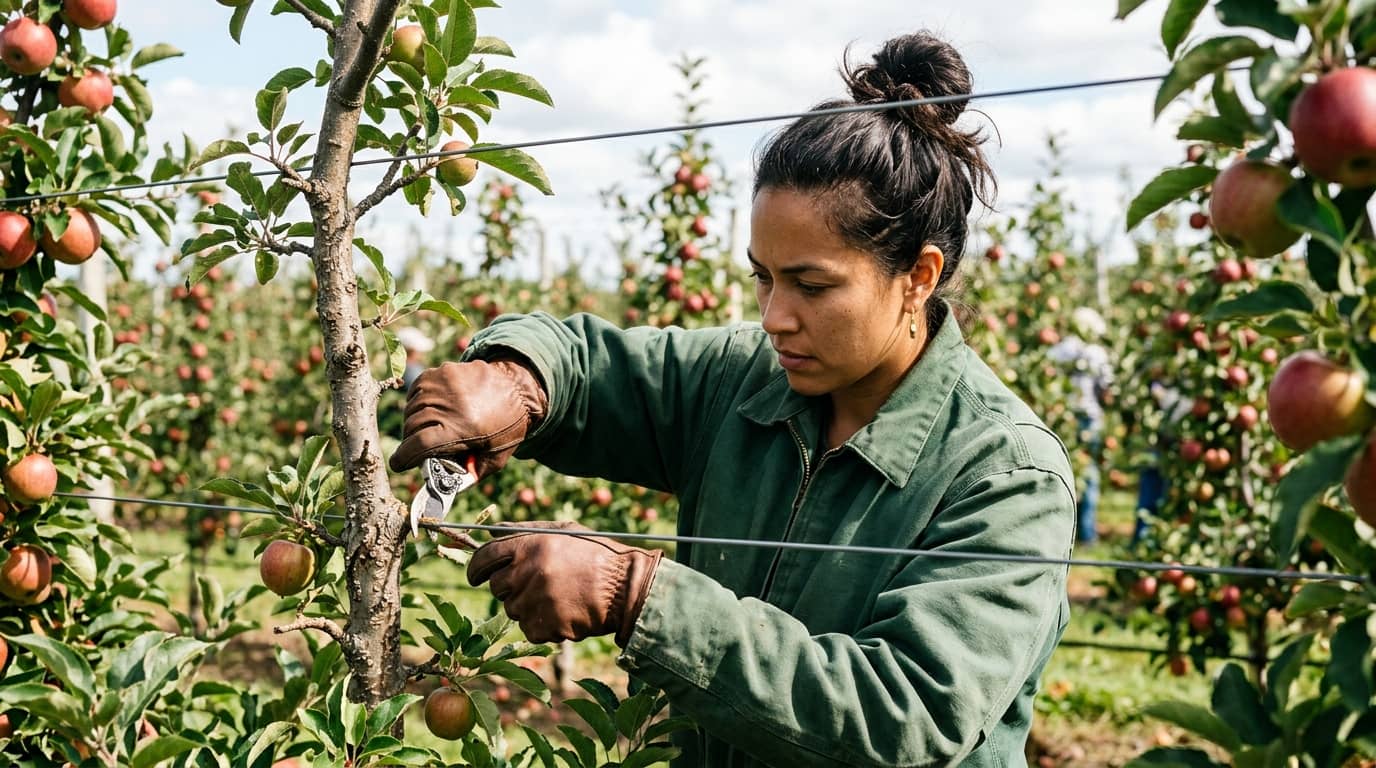
Demonstrates three-cut technique, undercut placement, and final collar cuts. Correct execution minimises bark tearing and maximises wound closure speed.
Lesson 2 • Specialist Pruning Operations
Covers pollarding, coppicing, espalier, and pleaching as managed pruning systems. Specialist techniques require understanding of species tolerance and historical context.
Lesson 3 • Pruning Biology and Wound Response
Explains how trees seal wounds, form callus, and compartmentalise decay after cuts. Biological understanding drives every pruning decision made in subsequent sections.
Lesson 4 • Pruning Objectives and Specifications
Defines crown thinning, lifting, reduction, and deadwooding objectives. Clear specifications ensure work meets client, safety, and biological requirements.
Lesson 5 • Structural Pruning and Training
Applies formative and corrective pruning to establish strong branch architecture. Early structural work reduces long-term hazard and maintenance costs.
Chapter 7HideHide detailsSee detailsTree Removal and Rigging Operations
Tree Removal and Rigging Operations
Lesson 1 • Whole-Tree Felling Operations
Applies open-face notch, back-cut, and felling aid techniques for whole-tree removal. Whole-tree felling is used where space permits and is faster than sectional work.
Lesson 2 • Removal Planning and Site Assessment
Establishes pre-removal survey, drop zone analysis, and equipment selection criteria. Thorough planning prevents uncontrolled falls and property damage.
Lesson 3 • Stump Management and Site Restoration
Covers stump grinding, chemical treatment, and site reinstatement after removal. Stump management completes the removal process and prepares sites for replanting.
Lesson 4 • Rigging Systems and Hardware
Covers rigging ropes, blocks, friction devices, and anchor configurations for load control. Correct rigging hardware selection determines load capacity and operational safety.
Lesson 5 • Sectional Dismantling Techniques
Teaches top-down sectional removal with rigged and free-fall piece management. Sectional dismantling is the primary method for confined-space tree removal.
Chapter 8HideHide detailsSee detailsTree Planting, Establishment, and Aftercare
Tree Planting, Establishment, and Aftercare
Lesson 1 • Species Selection and Sourcing
Matches species to site conditions, climate projections, and functional objectives. Correct selection is the single greatest determinant of long-term tree survival.
Lesson 2 • Irrigation and Nutrient Management
Prescribes watering schedules and fertilisation programmes for the establishment period. Adequate water and nutrients are critical during the first three growing seasons.
Lesson 3 • Long-Term Aftercare and Monitoring
Establishes inspection cycles, formative pruning schedules, and performance metrics. Systematic aftercare converts successful planting into a thriving long-term asset.
Lesson 4 • Planting Techniques and Soil Preparation
Covers pit sizing, soil amendment, backfill compaction, and root orientation. Correct planting technique prevents girdling, waterlogging, and establishment failure.
Lesson 5 • Staking, Guying, and Tree Protection
Applies staking systems, tree guards, and mulch rings to protect newly planted trees. Protection measures reduce vandalism, mechanical damage, and moisture loss.

Your valid completion certificate
This course is for you:
Career changer: wants a hands-on trade with long-term outdoor employment prospects.
Groundskeeper or landscaper: ready to specialise and expand into certified tree care.
Forestry worker: seeking urban and commercial arboricultural skills to broaden scope.
Local government employee: responsible for managing public trees and needs formal training.
Recent school leaver: pursuing a skilled trade with clear professional certification pathways.
Property manager: needs working knowledge of tree risk to fulfil duty-of-care obligations.
What our students say
Hear from those who've already studied with us:
Your lessons are perfect. I purchased the one-year package and finally have the opportunity to follow various topics of interest without needing to change platforms... I'm grateful for everything you do, I've already recommended you to other people...

I like how the lessons are straight to the point and how I can change chapters and skip content I don't need.

I like the content and the way videos are presented and transcribed, which speeds up the process!

The platform is fast and simple to use. The diversity of content and complementary videos really help with learning.

Top upskilling courses






FAQ
Who is Elevify? How does it work?
Do the courses have certificates?
Are the courses free?
What is the course workload?
What are the courses like?
How do the courses work?
What is the duration of the courses?
What is the cost or price of the courses?
What is an EAD or online course and how does it work?
PDF Course